Main

Economics Archives

October 2, 2008

The South Bronx on the $700 Billion Bailout

James Jacobs talks to the NY Times

As always, the Times does a great job of going into neighborhoods and asking New Yorkers what they think about national political or economic events. They went to the Morrisania neighborhood in the Bronx and asked residents about the $700 billion Wall Street bailout. Responses are funny, and show a clear, and justifiably cynical understanding of what's going on:

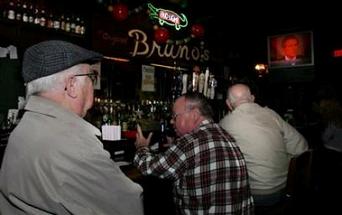
On a chair outside Johnson’s Barbecue on Tinton Avenue in the Bronx, Keith McLean had thoroughly considered the $700 billion bailout of Wall Street. "That’s for C.E.O.'s.," said Mr. McLean. "And I am a P-O-O-R."

The accompanying video captures the best bits, with one guy on camera and another guy shouting commentary off-camera:

"It’s corporate America doing what corporate America does," Mr. Jacobs said.

"Organized crime," Mr. McLean said.

"It's the new organized crime," Mr. Jacobs said.

"Ain’t nothing new about it," Mr. McLean said.

"We're not going to see none of that," Mr. Jacobs said. "Not one red cent."

One woman in the video is worried about her 401k and that the effects of bank failures will eventually trickle down to her. But the guys at the barbecue, who don't exactly raise concerns about their investments, had more to say about the aspect of the meltdown that affects them personally--the irresponsible lending that caused it in the first place.

"I was out of work there for a couple of years, and I ended up with three credit cards. American Express. Visa. I forget the other one. And the banks give all these loans to people knowing they can’t pay, but they get a commission."

These guys should open a financial advisory service. If they tell me I should put my savings in shoeboxes and hide it behind the couch cushions, I'm doing it.

September 18, 2008

The Joads, 70 years later

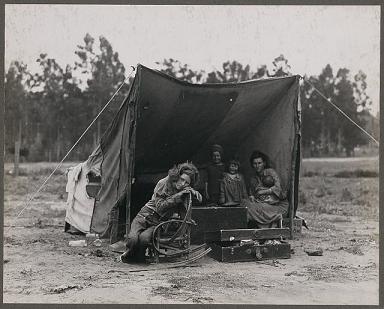
Dorothea Lange's Migrant Mother

One of the books I read in high school English was The Grapes of Wrath, which we read for its social commentary on the Great Depression-era exploitation of desperate people and their struggle to maintain some dignity as they fight to survive. Mostly what I remember about that book is being grossed-out by the last scene in which Rosasharn breastfeeds a dying old man. That one scene probably prolonged millions of teenagers' feelings of confusion and revulsion over their adolescent bodily development for many months or years.

But one other scene I remember is where Pa Joad, the patriarch of the Joad family that we follow on their journey to find work out west, is confronted by a man who explains the harsh economic truth behind the myth of plentiful jobs in California that all the people in the migrant camp have been clinging to.

From the screenplay based on the book:

"How many of you all got them han'bills? Look at 'em! Same yella han'bill--800 pickers wanted. Awright, this man wants 800 men. So he prints up 5,000 a them han'bills an' maybe 20,000 people sees 'em. An' maybe two-three thousan' starts movin, wes' account a this han'bill. Two-three thousan' folks that's crazy with worry headin' out for 800 jobs! Does that make sense?"

Today, AP describes our current economic situation as "the worst global financial crisis since the Great Depression". In another article, they describe modern-day Joad families setting up tent cities in western towns where people have come expecting to find jobs. Except that instead of looking for fruit picking jobs in California, they're looking for casino jobs in Reno:

A few tents cropped up hard by the railroad tracks, pitched by men left with nowhere to go once the emergency winter shelter closed for the summer. Then others appeared — people who had lost their jobs to the ailing economy, or newcomers who had moved to Reno for work and discovered no one was hiring.

Within weeks, more than 150 people were living in tents big and small, barely a foot apart in a patch of dirt slated to be a parking lot for a campus of shelters Reno is building for its homeless population. Like many other cities, Reno has found itself with a "tent city" — an encampment of people who had nowhere else to go.

Out of a dozen people interviewed in the tent city, six had come to Reno over the last year, hoping for casino jobs.

"I figured this would be a great place for a job," said Max Perez, a 19-year-old from Iowa. He couldn't find one and ended up taking showers at the men's shelter and sleeping in a pup tent barely big enough to cover his body.

The casinos are actually starting to lay off employees.

The article also refers to growing tent cities in Santa Barbara, Fresno, Portland, Seattle, Chattanooga, San Diego, and Columbus.

June 12, 2008

Straight people: Start being more like non-straight people

I love my Moms

Lisa "Opt out revolution" Belkin has a piece in the upcoming NYT magazine about parents who, radically, share the work. The Times is clearly prepared for this to be the most-emailed article of the week, having already given Belkin a blog entitled "Equal Parenting". As usual with Belkin, the article is really about middle class problems. Although she claims that the maldistribution of domestic work persists across economic classes, this 'solution' is apparently only appropriate for middle class couples.

Many of the couples in Belkin's article used an organization called Third Path, to help them figure out how to organize work and family time. Third Path will give couples "one-on-one coaching to develop their unique work-family solution" for the low, low price of about $125 per hour. Third Path helpfully suggests that you could give (or request) this coaching as a wedding or baby shower gift. Ew.

This week the Times also published a piece on what straight folks can learn from same-sex couples,(something Belkin also discusses):

"In heterosexual couples, women did far more of the housework; men were more likely to have the financial responsibility; and men were more likely to initiate sex, while women were more likely to refuse it or to start a conversation about problems in the relationship. With same-sex couples, of course, none of these dichotomies were possible, and the partners tended to share the burdens far more equally."

So the take home message seems to be: Be fairly wealthy, be more like gay people, pay for expensive life coaching.

Image by arimoore.

May 13, 2008

Third World? Third Helpings!

McDonalds in India

That title was coined by a friend, T-Rock, when reports of growing obesity rates in developing countries emerged a few years ago.

But now it relates to Bush's recent explanation for why we are in the middle of a global food shortage--people in poor countries are eating too much.

This is incredible: in talking about the food crisis, Bush referenced India and its growing middle class. "When you start getting wealth, you start demanding better nutrition and better food, and so demand is high, and that causes the price to go up."

High demand for food is because of India? So if all those people in India would just stay poor and malnourished, there would be plenty of food to go around! Wow.

A representative from a poverty research institute in India hit back, and is quoted by the Times as saying:

"If Americans slimmed down to the weight of middle-class Indians, many hungry people in sub-Saharan Africa would find food on their plates." He added, archly, that the money spent in the United States on liposuction to get rid of fat from excess consumption could be funneled to feed famine victims.

Americans eats an average of 3,770 calories a day, which is more than anyone else in the world according to the UN, and 50% more than what the average Indian eats per day.

Maybe Bush is coming down on India for being such greedy snack-hogs because they've ignored his recent request to stop their plans to pipe gas into their country from Iran. Of course, they'll probably just use the pipeline to blast in more delicious Iranian cakes and halva and kebabs, those piggies!

April 15, 2008

Tax Day: It's on like a pot of neck bones

Today's a good day to pause and think about the Official Tax Preparer of Amy's Robot, Mo' Money Taxes. You should probably take the time to go and watch all of their brilliant commercials, featuring words of wisdom such as "yesterday I had no money, but today I got mo' money because of Mo' Money Taxes and it's on like a pot of neck bones!"

Another great thing about Mo' Money Taxes is their clever, subtle use of scare tactics:

money.jpg


Here you see three black women being tied up by thuggish white guys who work for a nasty Other Tax Company and are going to take all of their money. Good thing they can go to Mo' Money Taxes instead!

The latest ad is known as Mo' Money Vice which is like Miami Vice, but with more taxes and more bootyliciousness.

April 8, 2008

Childcare solutions

workbaby.jpg

The US has the stingiest parental leave policies in the world, so apparently some companies are now trying something new. According to a number of recent articles, at least 83 companies are now encouraging mothers to bring their pre-crawling babies to the office. There's even an organization dedicated to promoting Babies in the Workplace which claims that "having babies out in society gives people who otherwise don't see babies an opportunity to enjoy the calming and rejuvenating effect of them. " Uh-huh. I could say the same for puppies and loud hip-hop music.

As you can imagine, not all co-workers like the idea:

"I do not go to work every day to listen to the breeders' brats scream all day and to smell their baby poo diapers. And I certainly don't want to walk past a cubicle to see some woman breastfeeding her baby. NO."

Actually, that quote sounds like it's from someone who just hates kids in general.

There's a lot that doesn't seem good about this trend. As Zoe Williams points out: "If you're being asked to do your job and your childcare at the same time, the implication is that one of those things is not work."

Many of the bosses and parents quoted in these stories act like this is a great benefit. Compared to no paid parental leave, I guess it's not a bad thing. But I hardly think most parents would choose to bring their cute little screamer to work if they only had some more appealing options.

February 28, 2008

America's weird orange jumpsuit fetish

America's Prisons

In a study by Pew, we learn that America has more people in prison or jail than any other country in the world. "Is that a higher percentage of the population in prison, or more actual prisoners?" you ask. Smarty pants. Both!

We started 2008 off with 2.3 million people in prison or jail, compared to 1.5 million in China, a country with nasty human rights practices and a population 4 times bigger than ours.

That's 1% of the adult population overall. 1 in 100 American adults is in prison or jail. Among young black men, it's 1 in 9. That's right, 11% of young black men are incarcerated. That's ten times more than the rest of the population.

Why do we lock up so many of our citizens? Because we can. Or rather, we can when our economy is doing well. A director at Pew says, "We tend to be a country in which incarceration is an easy response to crime. Being tough on crime is an easy position to take, particularly if you have the money. And we did have the money in the '80s and '90s." Now that we're broke, we're thinking that violating parole or driving drunk maybe isn't worth $45,000/year per prisoner.

Recently, the states with the most people in prison have reconsidered locking up so many of their citizens--but not because it's a terrible system that doesn't work. Mostly because it's so expensive.

So our country has swung from the "tough on crime" era of the '80's to the "let's spend our money on more important things, like the war on terror and tax rebates" philosophy of the current decade.

The Voice did an article a few years back about so-called million dollar blocks, or individual city blocks where the state is spending at least $1 million per year to incarcerate some of its residents. It was a great piece about all the creative and wonderful things you could do for one city block with a million dollar investment every year, apart from the tempting option of locking up a the same group of people over and over again.

January 30, 2008

Edwards is out

John Edwards

John Edwards is withdrawing his candidacy today after a string of third place finishes in early primaries. Things were looking pretty good after he beat Hillary in Iowa, but since then he's been at around 15% in other early voting states.

The bad news: those of us in later voting states can't support the candidate who more than any other talked about the reality of poverty in America, who kept public attention on the ongoing public service disaster in New Orleans and other Katrina-affected areas, and who spoke most forcefully about how corporate interests hurt regular Americans, especially in terms of health care.

AP writes:

Edwards burst out of the starting gate with a flurry of progressive policy ideas — he was the first to offer a plan for universal health care, the first to call on Congress to pull funding for the war, and he led the charge that lobbyists have too much power in Washington and need to be reigned in.

The good news: we won't have to hear Elizabeth Edwards say shit like "I'm disappointed in Michelle Obama" and "I think I'm more joyful than Hillary is" and "Remember everyone: I have breast cancer!" anymore.

Edwards is expected to announce his withdrawal today in New Orleans, and will probably make the case for better government intervention in rebuilding the city and helping people still suffering from tremendous losses two and a half years after the storm.

January 23, 2008

A Hell's Kitchen Economics lesson

 Olde English 800

Today the Times covered Eliot Spitzer's proposal for increasing NY state revenues for the coming year, which is a strange blend of encouraging some problem behaviors for residents (thousands of video gambling machines installed at the racetracks) while trying to discourage other problems (raising taxes on malt liquor and, weirdly enough, illegal drugs.)

But the political is personal, and the Times is at its best when it captures the reactions of regular New Yorkers to otherwise dull legislative proposals.

So they went into businesses along 10th Avenue in Hell's Kitchen, a neighborhood where people love their 40s, which nobody knows better than bodega workers.

"It's bad for the people," said Niff Alaradem 29, a clerk at Clinton Gourmet Market, at 46th Street and 10th Avenue. "You see so many alcoholic people, it's all they drink, Colt 45, Olde English, everything. They take one of these big bottles and it's dinner."

The Times asked some local residents what they thought about Spitzer's plan--specifically, his proposal to raise the tax on malt liquor from 11 cents to $2.54 per gallon. The responses they got perfectly illustrate a number of key economic concepts:

Regressive Tax: "It's messed up, it's wrong!" said Darryl, who looked as though he was in his 50s and was bundled up against the cold. "You got mostly poor people like me buying malt liquor."

Inelastic Demand: Roman Isre, 28, a barber at Erik’s Barber Shop on 10th Avenue, said he bought malt liquor once or twice a week. "That's bad!" Mr. Isre said when told about Mr. Spitzer’s proposals. Would he buy less malt liquor? Mr. Isre smiled. "Nah. You got to do what you got to do," he said. "It’s like gas. You drive the same mileage for $2 a gallon or $3.50 a gallon."

Cost-Benefit Analysis: A and A Market and Deli, at 45th Street and 10th Avenue, used to sell as many as 40 cases of malt liquor a week, but it became too bothersome to stock. "We have arguments here, very loud arguments," said Mustafa Saleh, 27, the deli’s manager. "They don't want to pay." When customers did pay, it was annoying, he said. "They paid in change," he said, "$2.50 in nickels, dimes and pennies; that’s the kind of money they have."

You can argue that raising the price of a 40 through taxes will encourage people to stop drinking so many of them, but my guess is that this population isn't likely to respond to higher prices by quitting drinking. If anything, they'll just switch to beer, which will continue to be taxed at a lower rate due to its lower alcohol content.

But they won't be happy about it! Darryl, the bundled-up 50 year-old, was asked why he bought malt liquor rather than beer: "Darryl looked quizzically at a reporter and replied, 'You get twice as much, and it’s got a bigger kick to it.'" Smart shopper.

January 22, 2008

Always be Deciding

decider.jpg

I guess Ben Bernanke woke up this morning and was all "Oh shit, I guess the Times just said I was the decider" so he decided to slash interest rates while everyone was still asleep. I wonder if sometimes he wishes he could just go back to being a regular baseball nerd economist.

December 3, 2007

How you can help with the national debt

National Debt Clock

AP tells us today that our national debt is growing by $1 million every minute. This rate is so fast that about a year from now, the debt clock pictured above that used to be on West 43rd St (it was moved recently to make way for fancy new green building One Bryant Park) won't even have enough digit spaces to express the whole number.

That's $10 trillion! $10,000,000,000,000.00! God bless America.

Since we're obviously a totally irresponsible bunch of financial reprobates, and considering that rising interest rates are only going to make things worse, this makes me wonder: What kind of idiot is still willing to lend us money?

According to AP, part of our debt is held by U.S. citizens who live here and read the paper every day and still think that buying government bonds is a good investment. But a lot of investors are foreign: 44% of our publicly held debt we owe to foreign governments and investors. Japan has the biggest share.

Former Congressional budget anaylst Stanley Collender is concerned. "The first day the Chinese or the Japanese or the Saudis say, 'we've bought enough of your paper,' then the debt — whatever level it is at that point — becomes unmanageable," he says.

Our individual debt allocations are already $30,000, so what the hell--we might as well be patriotic consumers and start buying as many products as possible directly from the countries that our government owes money to. Go ahead and stand in the huge, crazy line that forms outside the Nintendo store at Rockefeller Center at 7:30 AM every time they get a new shipment of Wii consoles in. It's good practice for the bread lines we'll all be standing in when we're old and Social Security is a distant memory.

And while you're at it, support our nation's fiscal philosophy and get some new credit cards. With a few more big credit limits, your salary is doubled!

November 27, 2007

Young Kenyan men enjoy same gifts-for-sex benefits young women have had for centuries

Charlotte Rampling in Heading South

Reuters had an article yesterday on the trend of older white English women going on vacation in Kenya, and while there, taking out hot young men, buying them clothes and expensive dinners, and having sex with them.

The white beaches of the Indian Ocean coast stretched before the friends as they both walked arm-in-arm with young African men, Allie resting her white haired-head on the shoulder of her companion, a six-foot-four 23-year-old from the Maasai tribe.

He wore new sunglasses he said were a gift from her.

"We both get something we want -- where's the negative?" Allie asked in a bar later.

Apparently the negative is that a lot of hotel managers and members of the Kenya tourism board are lumping these women in with other sex tourists who come to Kenya to pay 12 year-old girls or boys for sex.

Which is nuts. Old, wealthy sugar daddies everywhere have long enjoyed taking much younger women out, showering them with gifts, and having sex with them. Some might go so far as to marry them (Billy Joel, Donald Trump, Fred Thompson, Ben Kingsley, Les Moonves, I could go on all day) but plenty more just enjoy the arm candy for a while then drop them (George Soros).

At last, young men from poor countries with little opportunity for living in economic security get to enjoy the same temporary access to nice clothes and fancy dinners that young American women have been hustling to get their hands on forever! Why should sex-for-goods be exclusively a rich man/poor woman transaction? I'm so glad to see these enterprising young African men are finally able to exploit their youthful hotness with all the savvy of a midwestern high school dropout draping herself over aging producers at Hollywood parties.

22 year-old Joseph, a Kenyan man who says he has slept with over 100 white women, says:

"When I go into the clubs, those are the only women I look for now," he told Reuters. "I get to live like the rich mzungus (white people) who come here from rich countries, staying in the best hotels and just having my fun."

He could be half the girls in their early 20's who hang out at expensive Tribeca bars hoping to snag free drinks from an investment manager.

The movie Heading South came out in 2006 and featured Charlotte Rampling (in the photo above) traveling to Haiti to have sex with young men in the 1970's. A long article about the movie goes into all these complicated arguments about sex, economics, political power, gender roles, exploitation, and on and on.

Seems like the only new or interesting thing happening here is that the older, richer person in the dynamic is female and they have to go to other countries to find young men willing to do what many young women in rich countries have done basically forever. Yawn.

November 21, 2007

Eliot Spitzer reconsiders that whole "steamroller" thing

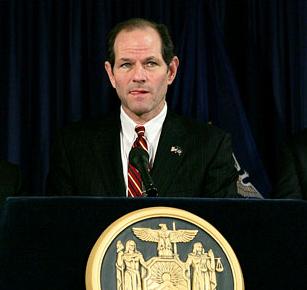
Eliot Spitzer reconsiders

It's been a rocky time for our governor, who swept into his first year of office promoting himself as a "fucking steamroller", guns blazing, ready to take on a mess of a state legislature and make some big changes.

Last week, a poll set his favorability rating at a crappy 41%, with only 25% of voters saying they would re-elect him. That's less than a year after winning almost 70% of the vote in an election in which many New Yorkers were relieved to finally have a Democrat running the state again. The two biggest stories about his governorship so far have been his proposal to offer driver's licenses to undocumented residents that nobody liked, and the "Troopergate" debacle.

It's been a total public relations disaster.

So he announced yesterday that single-swipe subway fares would hold steady at $2. This is being regarded by some media, including the Post of course, who calls Spitzer a tooth fairy, as pandering to grumpy voters in the face of fiscal experts who predict a major downturn in the region's economy in the near future, which will make fare increases necessary eventually.

Who knows? Maybe Spitzer is trying to change his public image and soften the pit-bull approach he's taken since the start of his term. But if he really is trying to get people to like him again, this approach isn't going to mean much to New Yorkers.

The Times interviewed several subway riders to ask them what they think about the single-ride price staying at $2. Considering only 7% of subway and bus riders actually pay $2 per ride according to the Straphangers Campaign, their responses aren't surprising:

"If they’re not hiking the $2 rates, there’s some way it will come out of our pocket," said Ellene Wundrok, a real estate broker from Flushing, Queens. "The tourists might benefit. They’re the ones that buy the $2 fares, not people who live in the city."

Joseph Rivera, 20, a graphic design student from Brooklyn, said that riders might react angrily once the authority announces what the increases in other types of fares will be. "This has the potential to backlash on him."

And this is hilarious: the Daily News jubilantly takes full credit for the non-increased $2 fare through its Halt the Hike campaign, and quotes chirpy reader Elsa Butler who gushes "The Daily News coverage has been fantastic!" I sure hope all those happy tourists getting a price break start picking up the Daily News down at the Publix!

I think actual New Yorkers understand that all the capital improvements the MTA plans to make over the next few years will require a big cash influx. A NYT editorial states that the MTA wants to bring in $580 million of new money in the next 2 years, so a fare increase for unlimited Metrocards may be unavoidable in that period. The MTA decides on its entire new fare plan on December 19.

But until then, we should use the Pizza Connection economic law to demand that midtown pizzerias stop charging $2.25 for a slice.

October 24, 2007

San Diego and New Orleans now have at least one thing in common

Big fancy burned houses

Once the fires stop burning, San Diego and surrounding areas will be left with a lot of charred houses and a lot of displaced people. Reports are talking about 1,500 homes destroyed as of right now. A lot of them were probably very big houses, like this photo of the remains of a multi-million dollar house in Rancho Santa Fe.

Comparisons are already being drawn between this disaster and the hurricanes of 2005. The Times has put together a simple chart comparing the populations of New Orleans and the areas around San Diego that were evacuated, and as you can probably guess, the people in San Diego are a whole lot richer, whiter, and have more cars to evacuate in. The Red Cross estimates that 350,000 homes were destroyed in Katrina and Rita.

But there are some things that these two very different regions of our country share: a take-no-prisoners approach to defending one's home against the perceived threat of looters.

In a article that compiles comments posted by San Diego-area readers, the Times quotes Jason S., whose family members made their way back into their evacuated neighborhood in Poway:

"Last night, my brother snuck past police barricades to check on our family home and watch for looters," he wrote. "Despite the risk, I think everyone is really proud of him for doing this."

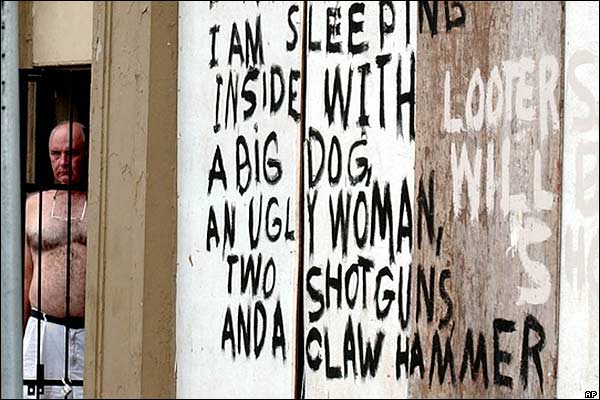
After he returned from the home, his brother reported that a neighbor was camped out on another lawn with a shotgun and a sign that read "Looters will be shot."

"Looters will be shot"... where have we seen that before? Oh, hey! It's that guy! From New Orleans!

New Orleans looters beware

He must have moved to Southern California to get away from natural disasters and find a prettier woman.

September 6, 2007

Now you can be a patriot AND an elitist

Made in USA

Remember when campaigns trying to get people to Buy American were mostly Wal-Mart territory and made you think of eagle-emblazoned sweatshirts and visors with flags on them?

Today, the NY Times tells us that the fashionable liberal elite has embraced Made in USA products. The local food movement, the high carbon footprint generated by buying European bottled water, and toxic Chinese toys have all inspired the urban cognoscenti to start supporting some domestic companies, particularly when their products are more expensive than foreign ones.

Price seems to be the determining factor when wealthy people decide it's cool to buy American; as the Times says, "It is hard to imagine, say, that people who tote reusable cotton bags to Whole Foods will ditch their beloved Saabs for an American-made Chevrolet Cobalt." But $1,250 custom-made bikes, designer t-shirts with flags on the tags, or top of the line New Balance sneakers with big USA logos? Sold! Conspicuous consumers are suddenly turning into a bunch of flag-waving patriots.

But this is still a pretty recent demographic shift for the Buy American market. Many products that proudly display their Americanness might be a little too patriotic for those who are really just "people wanting to have guilt-free affluence,” as Alex Steffen, editor of a sustainability website, calls them.

Yes, the less prestigious side of "Made in USA" is still with us--it's not all hand-painted sustainably-harvested wooden toy trucks. You can still be outrageously tacky while spending an assload of money on showing the world that your purchases are not just more mass-market knockoffs from China:

Hyper-patriotic car:

Flag gown:

Flag iPod case:

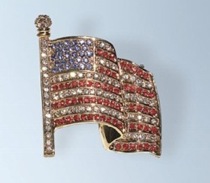
Flag jewels:

America, fuck yeah!

May 30, 2007

Immigrants in NYC

NYC locksmiths

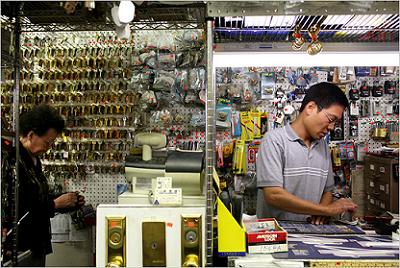
The NYT has a great feature today on how the immigration legislation now in Congress, the first major new legislation in 40 years that might actually pass, will affect the social fabric of New York City.

Among urban areas with high populations of immigrants, New York has an especially high ratio of legal to illegal immigrants, and a large majority (72%) of those immigrants come to the city to be reunited with family. Since the new legislation would value education and marketable skills over family members already in the country, it will have an especially big impact on cities like New York.

A couple of the families interviewed for the article really show how much the city needs the highly motivated people who come here looking for a better life. Jamal Hussain, 26, is a Bangladesh-born owner of a deli at Delancey and Allen streets. He got loans from family members to open his business four years ago. He says, "'I’m a hard worker, motivated.' said Mr. Hussain, who has repaid the loans, married, had a baby, and bought a house in the Bronx. 'Kids are going to school, they’re being doctors, lawyers,' he added, citing a niece who is a graduate student in science at New York University. 'Bottom line, instead of bringing those people already educated from over there, we have the opportunity to be homegrown Ph.D.’s.'"

The article says that Mexicans have entered the top three biggest immigrant groups in the city, along with Dominicans and Chinese. But of course, New York's growing Mexican population tends to be viewed differently than in other, less diverse parts of the country: "In dense and diverse city neighborhoods, they generally have been absorbed as just one more immigrant group."

With so many different kinds of people coming to the city, New York even has its own, weirder, more high-brow version of coyotes, which the Times coincidentally also covered today. A guy named Ralph Cucciniello was charged with fraud for swindling illegal Irish immigrants out of $5,000 each for non-existent aid in getting legitimate papers through the Yale Immigration Law Clinic, which he made up.

He operated the fake law clinic from a desk at the Yale Law library, but has never been affiliated with the school apart from doing some volunteer research for a professor. Over the last two years, he got over 200 immigrants who wanted to be legal to give him millions of dollars, giving them nothing in return. Many of his victims won't talk to prosecutors for fear of getting deported; as one said, "Now I feel like my head has a flashing light on it screaming ‘I’m illegal’."

April 16, 2007

IRS suddenly seems like the most reasonable office in our government

1040

It's tax time! The season when even those who truly believe in a strong social safety net start thinking how those kooky Libertarians might actually make some sense. Or, if you got a refund, a flutter of benevolent gratitude for that most generous of government institutions, the Department of the Treasury.

The Times has a piece today about how more and more undocumented immigrants are filing their tax returns. The number of returns that had an individual taxpayer number issued by the IRS to people who don't have social security numbers, known as an ITIN, went up 30% from 2004 to 2005, and new ITINs were issued to more people in 2006 than ever before. In 2005, people submitting their returns with an ITIN paid a total of $5 billion in taxes.

Which explains why the IRS doesn't ask about immigration status, and has created an identification system for people who are living and working illegally in the country--they pay. The pragmatic Commissioner of the IRS Mark Everson said, "We want your money whether you are here legally or not and whether you earned it legally or not."

If only the rest of our government took such a practical approach to how to deal with people who immigrate here to work, right? Commissioner Everson probably would love to see drugs legalized too, since it would increase his agency's revenue by at least one hundred million percent.

Despite the growing tax dollars that undocumented workers pay, people who think immigrants come here to rob convenience stores and go on welfare still assume the worst. Mark Krikorian, director of the Center for Immigration Studies says, "First of all, almost all the people filing tax returns are doing it because they’re going to get tax refunds. It’s a bad thing, because they’re not obeying the law — they’re deciding which laws they prefer to obey."

This doesn't seem to be true, at least not in New York. A nonprofit in Jackson Heights that helps low-income people prepare their tax returns, Food Change, says that two-thirds of the 1,700 ITIN returns they've done this year end up owing more taxes, not getting refunds. The average income of these returns was $9,400--further demonstrating that undocumented workers aren't exactly living the high life in this city.

One immigrant in the article, Elsa Forero, is from Colombia. She works as a baby sitter and gets paid in cash. Now I don't know about you, but I wonder how many teenagers in wealthy suburbs are declaring their babysitting income to the IRS. Elsa had to pay the federal government $579, and expected a state tax credit of $115. "I want to pay taxes because I live in this country and I like to follow the rules," she said.

Paying taxes will probably be a step toward legalization in whatever immigration reform bill finally gets passed in Congress. Maybe the IRS should act like any other industry and start running some PSAs and making campaign contributions to key Senators if they want to keep seeing their revenues rise.

April 12, 2007

The nicest thing I will ever say about Paul Wolfowitz

Wolfwitz

A few things about Wolfowitz. He is: universally hated at the World Bank, wears socks full of holes (warning: gross), is apparently still married, but got his girl on the side a job at the State Department that is still paid by the Bank, to the tune of $193,500 ($10,000 more than Condoleezza Rice makes!), and is just generally a misguided corrupt ghoul. And I'll never get over that comb video.

But I will give him this: when the man decides to apologize for something, he actually gets around to apologizing, and does it in a way that at least sounds sincere.

"I made a mistake, for which I am sorry." He says that he will accept any remedies the World Bank's board proposes.

See how easy that is, politicians and talk show hosts across the land?

November 16, 2006

NYC is really, really big

US population map

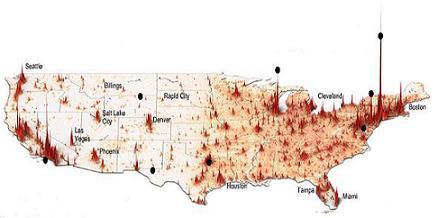
[Time's visualization of US population density]

Most of us who live in New York probably only experience a few small bits of the city in our daily lives--our home neighborhood, work, favorite bar, Trader Joe's. It can be easy to forget how absolutely enormous this city really is, and how impressive it is that this whole operation functions as well as it does (notable exceptions: finding affordable housing, transit strikes, Ludlow St on Saturday nights, walking through Rockefeller Center anytime between now and New Year's Day.)

Last night at an event held by Robin Hood, Mayor Bloomberg threw out a few statistics that reminded me of the giganticness of our city:

  • The projected increase in New York's population over the next 10 years will be larger than the population of Pittsburgh (pop. 335,000)
  • The number of students in the NYC public school system (1.1 million) is more than the population of Detroit (887,000)
  • The number of people that will live in the new affordable housing units slated to be built is more than the population of Atlanta (471,000).
  • NYC's annual budget ($53 billion in 2007) is bigger than every US state budget except for New York, California, and Texas.

Plus, over 300,000 people work for the city.

Then when I think about how most of us all take showers at about the same time as everybody else every morning, my head really starts to spin.

October 17, 2006

Mail order brides stalled by anti-commercial-romance legislation

Russian mail order brides

The NY Times today has a pretty standard piece on men who buy wives for themselves through internet "don't call it mail-order" dating/marriage sites. As if not being able to get anyone in your own country to marry you weren't bad enough, these guys are suffering through some added inconveniences at the hands of their own government.

Congress created the International Marriage Broker Regulation Act, or Imbra, in March. The legislation "is intended to give foreign women and the American government more information about the men who seek so-called mail-order brides." In other words, Congress recognized an alarmingly fast rise in reports of abuse from women who came to the US to marry guys they met online. So they made a law that gives these women more information about the criminal record and marital history of their future husbands before they pack their bags and become legally bound to a man who has gone out of his way to find a wife who has no way of knowing any objective information about him. Men must now also provide this information to the government when applying for a fiancée visa. Sounds like a great idea, right?

Not so, according to the buyers. The customer is always right, and that should extend to spousal transactions, say purchasers of foreign brides. “We should have the right to correspond with, date and marry the person of our choosing,” said David Root, who has been involved with many women from the former Soviet Union in the past decade but has not married any of them. “The government shouldn’t interfere in this.”

He may have a point--Americans can indeed marry whomever they please. And it's not like they're forcing these women to leave their homes for a lifetime of marriage to a man who is often, let's face it, a total stranger. The man that the NY Times story follows, Adam Weaver, sounds like a nice enough person who was seeking an "old-fashioned girl", and now just wants to marry his Colombian fiancée (she's 17 years younger than he is, does that mean she qualifies as a "girl"?) without a lot of delays.

But some men who get into foreign marriage services clearly are delusional: there's a hilarious example in Sam Smith, who owns a company called I Love Latins, based in Houston [site not really safe for work]. In explaining the appeal of his service, he says, “It all started with women’s lib. Guys are sick and tired of the North American me, me, me attitude.”

"Me, me, me", huh? And what kind of attitude is it that compels a wealthy American man to search for another human being on a shopping site using criteria like age, weight, height, religion, and command of English, and then pay thousands of dollars for this probably low-income person from a poor country with few or zero opportunities for a stable life to leave their home and enter into a legally-binding contract with them that allows that person to live legally in the US only if they remain married? That's altruism! Right, Sam Smith?

June 9, 2006

Gulf Coast: still a mess

Here on the East Coast, it can be easy to forget about Katrina and how little recovery has been made in the nine months (!) since the hurricane. For the people living down there, or unable to return to their former homes, it's all still happening.

To illustrate just how much life is not back to normal on the Gulf Coast, the NY Times is doing a series of articles on the current state of the towns along US Highway 90. The first article is about shrimp season, which is starting up in Bayou La Batre in coastal Alabama, and all the fishing boats that are still grounded, stuck in bushes or in the woods.

These stranded boats mostly belong to immigrant Vietnamese fishermen who didn't have insurance. FEMA apparently won't retrieve private property, and the Army Corps of Engineers has yet to figure out how to move these 100-ton boats, some of which are half a mile from the water, without disturbing protected wetlands. So they're still up there.

grounded fishing boat

"If Katrina ever slips momentarily from one's mind here — if — the plain sight of these boats in the woods snuffs the daydreaming. The slow, complicated efforts to extricate the hurricane-stranded vessels mirror the slow, complicated efforts to extricate this hurricane-damaged city of 2,100 from that one day last August."

Another great and strange picture in this piece features some Mennonite volunteer recovery workers playing volleyball near their temporary housing site.

Mennonites playing volleyball

May 31, 2006

Sweet Cherry: the immovable object of strip clubs

Sweet Cherry topless bar

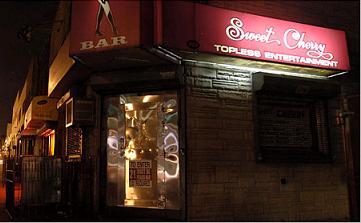
The NY Times has an unbelievably extensive article today on a Brooklyn strip club, Sweet Cherry, that has been under attack by city council, local residents, and state politicians for years, yet refuses to close. Back in the '90's with the introduction of Giuliani's new "zoning laws" (aka rampage of sanitized Disneyfication,) a lot of strip clubs, topless bars, and porn shops closed down. Apart from a stretch of 8th Avenue in the 40's, most of the city's smut has been banished to industrial areas like 11th Avenue, and Long Island City in Queens.

But the intrepid Sweet Cherry just won't quit, despite an impressive criminal history. The Times says,

Sweet Cherry is a great champion, brazen and near untouchable. The authorities have documented an in-house narcotics trade, pronounced the club a brothel and charged the manager with rape. (He has pleaded not guilty.) Once, patrons repeatedly stabbed an off-duty police officer, who lost partial use of his right hand. Once, a manager of bouncers for Sweet Cherry was shot dead in his apartment.

But despite two civil actions by the Police Department, voluminous criminal charges and neighborhood protests, the club has been closed for a total of just six days this year. Eleven days after its latest reopening, two dancers were charged with breaking a beer bottle over somebody's head.

The bar is in compliance with zoning laws, so the city has tried to go after it for all its other, very plentiful violations. And failed every time. Now that some small-scale industry and more families are moving into the area, they're stepping up their consistently ineffective efforts.

The article is a great read, with exhaustive details on the many drug busts that have happened at the bar, the employment and possible harrassment of underage dancers, the off-duty cop who mowed down three people after leaving another strip club on the same street, and the dancers such as "Diamond, whose real name was Jennifer, and Chastity, whose real name was Chastity."

There's also an interesting map of the still-standing strip clubs, topless bars, and peep shows in the city that have also resisted closure. Still a few hanging on in Times Square/Hell's Kitchen. My favorites are Wiggles and Goldfingers in Queens.

May 10, 2006

Katrina horror stories just keep coming

Michael Brown's hair mousse

In case you've started to forget the jaw-dropping political failure of responsibility we witnessed in the aftermath of Hurricane Katrina in New Orleans, a couple of stories today should freshen up those memories.

First up: what happened to the teenagers in New Orleans' juvenile detention center. The Juvenile Justice Project of Louisiana, which was working to improve the conditions that incarcerated juveniles lived in even before the hurricane, held a press conference yesterday. 15 year-old Eddie Fenceroy said he spent three days without anything to eat or drink, standing in sewage-filled water that reached past his hips. 150 kids under 17 years old were housed with adult prisoners at the parish prison (minors aren't supposed to have contact with adult convicts,) and were later evacuated with the adults to a highway overpass, where police held them at gunpoint. Which I suppose is arguably a step up from standing in sewage up to your hips.

Next is a report from the Center for Public Integrity, which includes even more embarrassing emails from Michael Brown to various colleagues in the days after the storm. On the day the storm hit, the always immaculately-groomed Brown was getting ready for a TV interview and emailing with his then-deputy, Patrick Rhode:

"Yea, sitting in the chair, putting mousse in my hair," Brown e-mailed Rhode.

"Me too!" Rhode replied.

Of course, FEMA and the rest of the government soon started getting attacked in the press as an inept, racist institution. On September 7, around the time that Eddie Fenceroy was being held at gunpoint on a highway overpass as part of his prison's evacuation, Brown wrote to his press aide: "I am tired, no, angered by charges of racism. You know that neither me nor anyone associated with me is a racist. Grrrr.

"How was that Sonic burger?"

February 9, 2006

Vamos Army!

What's the U.S. Army to do when its go-to population for new recruits becomes disillusioned and stops enlisting? African-Americans represented 22% of new Army recruits 4 years ago, and now make up only 14%. How about moving on to another population of young people that are poorer, less educated, and have fewer job opportunities than average?

Yes, the Army is recruiting hard among Latino teens. As the NY Times reports, in cities with high Latino populations, those young people have become a top priority for the military. Latinos make up the fastest growing pool of military-age people, and as Lt. Col. Jeffrey Brodeur, commanding officer at the recruitment office for several western states says, "They are extremely patriotic."

However patriotic they may be, these kids also have parents, many of whom are wary of the recruiters that don't speak their language. And, you know, are trying to convince their kids to go off to war. "My parents think I'm going to go in the Army and die, but I wanted to do it," said an 18 year-old who has already enlisted and will go to boot camp once he graduates from high school.

The military can be an effective way to get out of poverty, but poor people who aren't white have historically been better represented on the front lines than among officers. The Times says, "Critics say that Latinos often wind up as cannon fodder on the casualty-prone front lines. African-Americans saw the same thing happen during the 1970's and 1980's, an accusation that still reverberates. Hispanics make up only 4.7 percent of the military's officer corps."

Let's just call this new initiative Operation: Escudo Humano.

February 1, 2006

America slowly starts to wise up

Americans watching State of the Union

Last night's State of the Union address saw our President somewhat less ambitious and cocky than in earlier speeches. Alessandra Stanley thought he looked "defensive". And as AP found during interviews with viewers across the country, Bush has good reason to feel less sure of himself: Americans are finally seeing through the bullshit, even when he talks about topics everyone can relate to, like the economy and education. Nice timing, America.

Here are a few excerpts:

At a viewing party in Costa Mesa sponsored by MIKA CDC, a Christian nonprofit, 57-year-old high school U.S. history and economics teacher Paul Stroud said, "We're going to go bankrupt and my students are going to end up in an economy that has the rug pulled out from under them. I think George Bush Jr. is probably the worst president in the history of this country."

Anne Jowaisas, an independent 38-year-old nanny from Richmond, said, "In terms of his speech, it was a good speech and he delivered it pretty strongly. But I had a lot of skepticism on what he had to say." She said that Bush's plan to reduce the deficit by 2009 by cutting programs raised plenty of questions, asking, "how is all this going to balance out?"

World War II veteran Joe Benavidez from Albuquerque said, "He wants to cut taxes and do good on the deficit? How do you do that? He'll cut a lot of programs — programs people need. Talk is cheap."

After Bush mentioned the Gulf Coast in one or two sentences deep into his speech, Tom Short, 75, a Republican and a Korean War veteran in New Orleans exclaimed, "Did I miss something? I think that's a crying shame."

But some Bush supporters stood behind the speech. Particularly the young, moronic, selfish ones.

Jesse Samora, 21, a political science and history major at Metropolitan State College of Denver, treated Bush's speech like the Super Bowl, hanging out with friends and barbecuing hamburgers. They leaped out of their seats to cheer Bush when he said "hindsight alone is not wisdom" and "second guessing is not a strategy," as he referred to recent criticism of the war in Iraq.

Samora said the speech only strengthened his belief that Bush was doing a good job protecting the country from terrorists. "As long as I can go to sleep at night and know I'm safe," said Samora.

Jesse. Could some of your false sense of security come from the fact that you live in DENVER? Do you want the president to protect our entire country, or just you and your high-fiving friends on your college campus?

December 13, 2005

Superman at the WTO

Superman protester

Superman: fighting for truth, justice, and limitations on free trade

Related?: Superman's gigantic package out of control in the upcoming Superman Returns, aka Gay Superman, aka Brokeback Krypton.

November 15, 2005

Total psycho of a CBO Director to leave post

Holtz-Eakin is out

Douglas J. Holtz-Eakin, Director of the Congressional Budget Office, and former White House economist, has announced that he is leaving his position at the end of a year, one year short of his full four-year term. Holtz-Eakin has been a promiment economist for many years, holding teaching positions at Columbia, Princeton, and Syracuse Universities, and was appointed to lead the White House Council of Economic Advisors during Bush's first term. He's no chump!

But something seems to have gone dreadfully wrong with Holtz-Eakin's economic judgement in the last few years. Let's look at some of the outrageous things this guy has done as Director of the CBO:

  • Said that Bush's tax cuts and big spending plan could not lead to economic growth: "The message is that you cannot grow your way out of this," he said, referring to our explosive deficit.
  • Released a report noting that Bush's tax cuts strongly favor the very wealthy.
  • Questioned the validity of privatizing Social Security.
  • Stated that getting rid of the estate tax would reduce contributions to nonprofit organizations.
  • Determined that allowing same-sex marriage would increase federal tax revenues.

Holy Moses! This guy is a maniac! He clearly does not understand this administration's economic or political views at all. Thank God this moron is history.

But seriously, we can imagine that life must have been total hell for Holtz-Eakin these past few years. We hope he'll have a much less combative experience at the Council on Foreign Relations, where he plans to work starting next year. But we'll be left with some new robot CBO Director who won't cause so much trouble for the administration.

November 10, 2005

A brief note on the riots in France

Riots in France

Now that the riots in France are starting to quiet down, let's take a look at the larger history of French agitation.

In the late 18th century, groups of poor French people were fed up with years of oppression and social and economic injustice. They took to the streets in a variety of attacks on the upper classes and the structures that supported them. From the Wikipedia entry on the French Revolution:

"A number of factors led to the revolution; to some extent the old order succumbed to its own rigidity in the face of a changing world; to some extent, it fell to the ambitions of a rising bourgeoisie, allied with aggrieved peasants and wage-earners."

For the past two weeks, groups of young French people, mainly immigrants and the children of immigrants from North Africa, have taken to the streets to burn cars and break things out of frustration at years of oppression and social and economic injustice. Specifically, unemployment, police harrassment, racism, poverty, and an interior minister who refers to them as "scum" and pledges to clean out the public housing projects where many rioters live.

The main differences between the events over 200 years ago and those happening now seem to be that 1) white French people don't seem to understand that they themselves are the oppressive force of injustice to be toppled this time, and 2) the rioters of today are far less violent than during the first revolution. Cars have been burned, sure, but hardly any people have been hurt or killed in two weeks of widespread rioting.

I have yet to talk to anyone who isn't at least a little bit pleased that France is finally being exposed as a discriminatory and racist country that has been totally indifferent to its unequal treatment of its citizens. Especially when French people are often pretty condescending about issues of race in America and everywhere else. Time to wake up, people! Sorry about your cars.

By the way, I can't wait to see The Economist bitch-slap France for its handling of all this in tomorrow's issue.

September 23, 2005

Botched evacuation, take 2

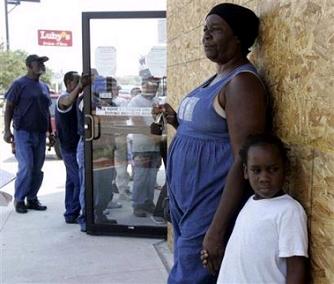
Wilma Skinner and Dageneral Bellard in Houston

How have our nation's emergency preparation systems learned from the failure to effectively evacuate the Gulf coast in advance of Hurricane Katrina, resulting in needless loss of life? Let's look at an AP piece on what's happening in Houston.

Wilma Skinner would like to scream at the officials of this city. If only they would pick up their phones. "I done called for a shelter, I done called for help. There ain't none. No one answers," she said, standing in blistering heat outside a check-cashing store that had just run out of its main commodity. "Everyone just says, 'Get out, get out.' I've got no way of getting out. And now I've got no money."

"All the banks are closed and I just got off work," said Thomas Visor, holding his sweaty paycheck as he, too, tried to get inside the store, where more than 100 people, all of them black or Hispanic, fretted in line. "This is crazy. How are you supposed to evacuate a hurricane if you don't have money? Answer me that?"

Some of those who did have money, and did try to get out, didn't get very far.

Judie Anderson of La Porte, Texas, covered just 45 miles in 12 hours. She had been on the road since 10 p.m. Wednesday, headed toward Oklahoma, which by Thursday was still very far away.

"This is the worst planning I've ever seen," she said. "They say, 'We've learned a lot from Hurricane Katrina.' Well, you couldn't prove it by me."

On Bellaire Boulevard in southwest Houston, a weeping woman and her young daughter stood on the sidewalk, surrounded by plastic bags full of clothes and blankets. "I'd like to go, but nobody come get me," the woman said in broken English. When asked her name, she looked frightened. "No se, no se," she said: Spanish for "I don't know."

Her daughter, who appeared to be about 9, whispered in English, "We're from Mexico."

Skinner, accompanied by her 6-year-old grandson, Dageneral Bellard [Ed. note: This kid has an awesome name], would settle for a bus.

"They got them for the outlying areas, for the Gulf and Galveston, but they ain't made no preparations for us in the city, for the poor people h