Main

Culture Archives

February 8, 2010

Watch the game, hate your life

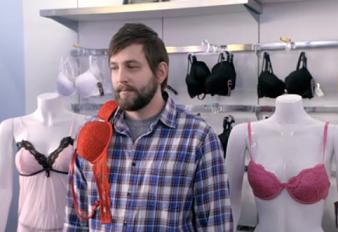
FloTV Super Bowl ad

I noticed a theme in some of last night's Super Bowl ads: in addition to the usual inscrutably unfunny Doritos ads and unoriginal but instantly recognizable Go Daddy ads (those people really understand brand consistency) there was an undercurrent of male misery. It's standard for ads to make the viewer feel uncomfortable or insecure, then offer the product as a solution to your self-esteem problem, but a couple of these ads suggested that the problem in your life is not really your athlete's foot--it's your girlfriend.

The Dodge ad was an especially bitter girl-hating ad, which is odd, considering that it's basically one long whiny bitch fest (with a few pissy little jokes thrown in.) It features lots of guys looking directly into the camera, with a voiceover listing all the indignities they suffer as part of living with a woman, such as being forced to separate the recycling. Life for a man, according to this ad, is an endless series of irritations piled on by that bitch you married (or who's pressuring you for a ring, probably) and the only recourse is to drive a Dodge, the one thing in this world she can't take away from you.

Geez, guys, if it's really that horrific to pick up your underwear, you could find a lady with less stringent household tidiness expectations. Or support Chrysler by suffering in silence and driving a shitbox car.

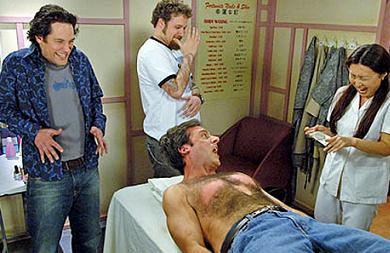
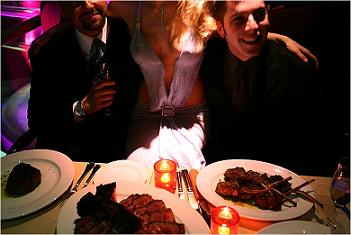
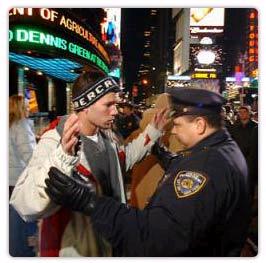
Then there's the poor doofus who let his girlfriend drag him along underwear shopping (above) instead of letting him watch basketball. Another hapless fellow whose simple yearning for happiness has been denied by his selfish cow girlfriend who needs a new bra. Poor, poor widdle man!

The long-suffering man ad that I did like was the one for Dove Men, which is admittedly an absurdly tough product to try to sell during the Super Bowl. Anyway, the Dove Men approach is to depict one man's life, from fetus to adulthood, and the many challenges he has faced and overcome along the way. Living with a lady in this ad can also be a trial, but these difficulties are shown as small victories to be proud of rather than opportunities to complain about how much women suck. And it's funny. A decent ad.

Actually, the Dove Men ad is probably targeted exclusively to women. How many guys out there are going to purchase Dove Men bodywash at the supermarket? They could at least rebrand this line to something like Falcon or, to continue the political metaphor, Hawk. This ad probably presents a less toxically bitter attitude toward women because they're the buyers. (Though I see that Dove got last night's MVP Drew Brees to appear on the website, lathering up a very masculine and non-drying foam in the shower.)

My favorites were the Kia ad about toys going out on the town (particularly the shot of the robot and a human in a Vegas club, both doing the robot) and the Audi ad using Cheap Trick's "Dream Police" as a soundtrack for scenes of an army of draconian eco-fascists handcuffing people for using styrofoam cups. I love it.

You can watch all the ads on Hulu, though you have to watch a few seconds of a Coke ad before you watch each of the other ads, which seems unjustifiably cheap.

February 1, 2010

Tweens and Axe

Tween boy loves his Axe

In the Styles section, the NY Times ran an article about tween boys and their devotion to Axe body spray that's basically the exact same piece that the Washington Post ran almost 4 years earlier. Both articles are great reads and very funny, but the story has hardly changed over the past few years: boys are becoming self-conscious at younger ages, and 11 year-olds are dousing themselves in $6 bottles of spray perfume in an attempt to copy the older kids and get girls.

A few interesting things both articles point out:

  • The companies that produce these popular products insist that their target markets are 18 to 24 year-old men, despite the evidence that a lot of their customers haven't reached puberty yet. The Post suggests that this is because their marketing is so direct in its claims that using Axe (or whatever) will make you irresistible to women, and no one wants to think about a 12 year-old boy getting busy. The Times says Axe marketers are reluctant to talk about their younger fan base publicly because "nothing would make older teenager run from a product faster than for its manufacturers to acknowledge that it's a must-have among the sixth-grade set."
  • Young boys appear to interpret Axe's obviously jokey ads, in which guys wearing body spray are swarmed with lust-crazed girls, pretty much literally. A 12 year-old at a suburban Maryland middle school said, "I was watching the commercial, and there was this guy and he was mobbed by a bunch of girls, and I thought, 'Wow, that's tight! ' So I went to CVS and bought it."
  • Everybody apart from middle school boys seems to hate it, because boys tend to use it too liberally or as a substitute for bathing: "It's not necessarily a hygiene thing," said Paul Begley, a physical education teacher at Messalonskee Middle School in Oakland, ME. "If they've been sweating, they'll use it as a mask instead of a shower."

    And my favorite quote of these articles, from 14 year-old Allison Testamark: "Someone by my locker uses it, but he uses so much that you can taste it in your mouth," she said, scrunching up her nose in disgust.

Also, the author of Queen Bees and Wannabes, Rosalind Wiseman (who has things to say about 12 year-old boys highlighting their hair), has a new book out called Boys, Girls, and Other Hazardous Materials. Tina Fey, who adapted her earlier book for Mean Girls says, "You can't put this book down... or it will talk about you while you're out of the room."

January 5, 2010

You can't help but love that Jeff Bridges

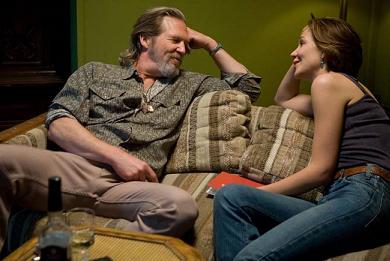
Jeff Bridges and Maggie Gyllenhaal in Crazy Heart

Crazy Heart is a small, simple movie about people you've seen before in lots of other movies--an alcoholic country singer past his prime, a woman who's been through hell but is willing to take a chance on him, and a straight-shooting Texan played by Robert Duvall. It's a formula you've seen a lot of times before, but you've heard lots of versions of "Your Cheatin' Heart", too.

It's easy to compare the story and its style to other movies, especially The Wrestler and Hedwig and the Angry Inch. The main character's very listenable songs were written by T-Bone Burnett, who also did the music for O Brother Where Art Thou?, and one of the musicians in the movie who co-wrote the theme song is named Ryan Bingham, the same name as George Clooney's character in Up in the Air.

I bet Clooney and Jeff Bridges are going to be the top contenders for an Oscar this year, but Bridges is probably going to get it. Last year, the race was basically between Sean Penn and Mickey Rourke, and because both performances were great, and because Mickey Rourke pissed off a lot of people in Hollywood for the past 20 years, it went to Sean Penn. This year, Jeff Bridges gives a similarly fantastic performance of a really similar character, but everyone loves Jeff Bridges, and he's been nominated four times already and never won. So I think he's got it.

Politics aside, he deserves an Oscar for this. This is a role and a movie that could spill over into sappy, self-pitying melodrama, like bad country music does, but it stays honest and wistful and a little bit reserved, like good country music. He does all his own singing (as does Colin Farrell) and guitar playing. He also spends the majority of the movie with his pants partially unbuttoned, which tells you pretty much everything you need to know about his character.

The Times did a good article about how Crazy Heart almost didn't get released this year. The story has a lot of similarities to Slumdog Millionaire, last year's surprise hit and big Oscar winner. It was only toward the end of 2009 that Fox Searchlight bought Crazy Heart from Viacom, which produced it through Country Music Television but was going to release it straight to cable or video. Fox originally planned to wait until 2010 to release it in theaters, and only decided to do it in 2009 a couple of months ago.

So far, Jeff Bridges has been nominated for a Golden Globe, and the theme song got a nomination as well. Both will probably get Oscar nominations, too, and the movie should get a much wider release. It's an accessible, not-too-cheesy movie about a rough but lovable country singer, so I could see it doing well. One of the movie's producers says he hopes it "has legs in a part of the country that is typically underserved by Hollywood," i.e. country fans in middle America who might not go nuts for a movie whose hero is an antisocial jerk who flies around the country blithely firing people from their jobs.

December 7, 2009

Holiday gifts for kids

Mr. Squiggles and Chunk

Like a lot of people out there, I have a growing number of small children in my life, and all those children need presents. When you don't spend a whole lot of time around kids, it can be hard to keep up with their interests and obsessions. For example, I only recently found out about Bakugan and its vast universe of Battle Brawler merchandise that any self-respecting 6 year-old is required to possess. You could randomly select a few toys from this product line, but how do you know if you're choosing the coolest action figure, video game, or, God help you, activity book?

And now that this year's insanely popular Zhu Zhu hamsters have turned out to have too much of the toxic fire-resisting agent antimony in them (surprise!), you've got to find some alternatives.
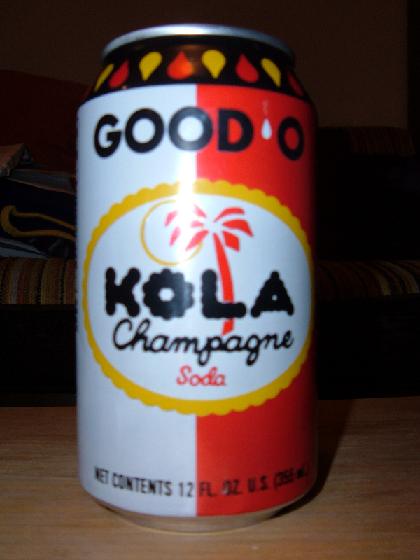
If you're playing the role of the cool but untrustworthy aunt/uncle/family friend, you could just give all the kids on your list a carton of Kool cigarettes and a handle of whiskey. Or if you really want to ensure that you'll never be invited to a Christmas celebration again, give them a new book for families that I received an email about today, just in time for the holidays. It's called Why He Hates You!, and it's a book that invites mothers and sons to explore all the ways they hate each other.

The targeted audience of the book is black women who raised their children alone and black boys raised by single moms, but why not share the hate? Author Janks Morton uses his own experiences as the basis for uncovering "angst-creating parental techniques such as negotiation, manipulation, and castigation"--techniques that, let's be honest, span all races and backgrounds, and lead to deep-rooted parent-hating. Actually, mother-hating.

(Not surprisingly, Janks is a big conservative who is very unhappy about Obama's stimulus efforts and thinks making a case for reparations is "a waste of energy." His hero is his dad, Janks Morton, Sr., and in case you were unclear on this, he hates his mom.)

Give out a few copies of Why He Hates You! to the boys and mothers in your life, and watch the magic of the Christmas season unfold.

November 30, 2009

Switzerland and its nuanced form of bigotry

Anti-minaret signs in Switzerland

In a spasm of racist panic, Switzerland voted in a referendum to ban all new construction of minarets. Muslims make up only 5% of the Swiss population, and there are only four minarets in the entire country, but enough people are scared of Muslims to "want to stop further Islamisation in Switzerland," according to the leading political party that sponsored the referendum, which sounds about as reasonable as hetero Americans being afraid of the approaching takeover of the country by the 5% of the population that's gay. Which, well, right, OK.

Yeah, minarets are just symbols: it's not like Islam itself has been banned. The Swiss just hate hate hate minarets! Muslims will just have to practice their religion more quietly and unobtrusively. Sort of like, say, sitting in the back of the bus.

Despite the fact that it's got a lot of reactionary bigots in it, Switzerland is a little like the New Hampshire of Europe. They're as close to libertarian as Europe probably gets: taxes are relatively low and they seem to want the rest of the world to just leave them alone and let them shelter questionably-gained cash for the world's shady businessmen. The Swiss are not joiners. They're not quite members of the EU, they're into direct democracy, and they still half-pretend to be neutral.

On the positive side, Switzerland offers civil unions for same-sex couples with most of the same rights and benefits as married couples. And true to its libertarian tradition of not messing around in other people's business, New Hampshire legalized gay marriage this year. It's helping to push the US in its jerky, slow-motion lurch toward marriage equality.

But come on. Switzerland just violated international human rights conventions by banning the religious buildings of a small minority. They look like backward morons.

So the real lesson of this story is: New Hampshire beats Switzerland in the battle of libertarian non-conformist weirdo states.

November 4, 2009

Risk: the movie that takes at least 8 days to watch

Risk board game

Risk, the favorite board game of global domination nerds who think nothing of playing same game for days at a time, is going to be adapted into a movie. I'm hoping it'll be pretty good, with lots of cool, unstoppable characters from all corners of the world strategizing for epic takeover, which since this game involves human soldiers and not just robot machines, could actually happen.

The interesting thing here is that the game was created in 1957 by a French filmmaker, Albert Lamorisse, who called it La Conquete du Monde. Considering France's experiences in the first half of the 20th century, it must have been a great fantasy for French people wanting to experience taking over the world instead of getting invaded and occupied.

But Lamorisse actually had a much gentler career as a short filmmaker: he made The Red Balloon, the 1956 short movie about a turtlenecked boy, Pascal, who befriends a friendly, sentient balloon. His own kids played the boy and girl in the movie. I feel like this movie was on PBS all the time in the 80s, and it's sweet and kind of mesmerizing, almost like a silent film, with a lovely score and almost no dialogue.

And it's online, so you can watch the whole thing!

It would be great if the new Risk movie was produced in the same style as The Red Balloon, with some pensive soldiers in turtleneck sweaters running through picturesque city streets, followed by bands of inquisitive colorful pinwheels as they amass their empires through whimsical, French military domination.

October 28, 2009

Phillies/Yankees borderland

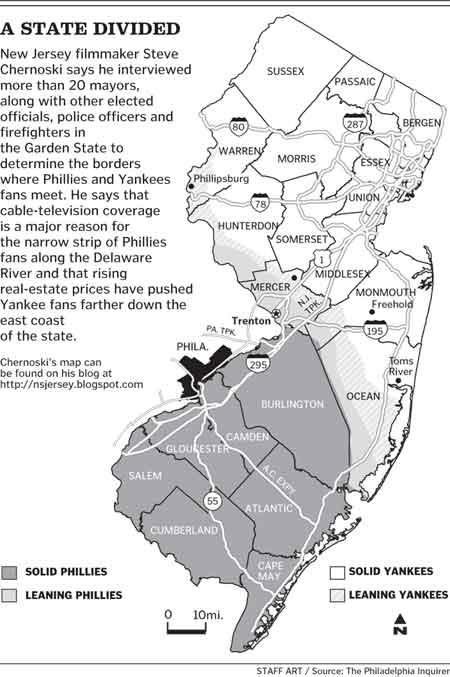
Phillies/Yankees fans map

The Yankees-Phillies World Series starts tonight, and the close geographical proximity of the two teams means emotions are running high along the northeast corridor. With Philly and NYC just a two hour drive apart, New Jersey has become the two teams' shared suburban tangle of fandom. Where do Phillies fans stop and Yankees fans begin?

The Times sort of looked at this question today by examining the volume of ticket sales and people looking for tickets for World Series games in New York and in Philly, with a map. Phillies fans seem to be less interested in finding tickets for New York games than Yankees fans are for tickets to Philly games, but there's obviously a huge population difference, and there are fewer Philadelphia game tickets because the stadium there is smaller. For whatever reason, tickets to Philly games are going to be harder to find: "The average ticket listed for Games 1 and 2 in New York is $650, compared to about $1,500 for the three games in Philadelphia."

But that doesn't answer the mystery of New Jersey and where the dividing line falls. A local Philly site has an actual map with Solid Phillies, Solid Yankees, and Leaning areas color-coded. A poll reports New Jersey residents favor the Yankees over the Phillies 44 to 20, but, the site claims, this is due to so many New Yorkers who have "spilled over the bridges with their football teams and packed themselves together in North Jersey like rats."

According to this map, it's Yankees country down almost the whole Jersey shore, while Phillies fans are holding on way up the Delaware River border with Pennsylvania, mostly because New York sports radio airwaves can't reach that far.

This kind of mapping of sports fans in border states reminds me of an exhaustive study the Times did back in 2006, in which they drew a line across Connecticut, showing how Yankees and Red Sox fans divided the state. Mets fans, to their credit, apparently aren't interested in living in Connecticut.

The tricky Yankees/Sox border seemed more important in 2006 than it is now, maybe, but I bet the Phillies/Yankees border will be getting more scrutiny and documentation if the Phillies keep getting into the playoffs all the time.

October 18, 2009

Putin: Everybody Dance Now

Putin rocks it

Ever eager to show the world that Russia is an equal to the West, Putin has suggested that Russia host a new international song competition. It will be just like the long-running televised Eurovision song contest, except it will be called "Intervision", and the only participating countries will be Russia, China, Kazakhstan, Kyrgyzstan, Tajikistan, and Uzbekistan. These are all the members of the Shanghai Cooperation Organization, which according to member countries is "not a NATO clone". OK.

Kazakh Eurovision sounds almost too good to be true. [Cue video of Borat singing "Everybody Dance Now".]

I'd love to see what kind of elaborately staged pop songs are put forward by quasi-authoritarian states as part of their effort to show the world that Central Asians can do flamboyantly choreographed dance numbers in glittery makeup and spandex dirndls while sing synth-pop, too, just like the Swedes and Germans.

In response to Putin's idea, Eurovision says "it would be delighted to license Mr Putin the Eurovision Song Contest format," but they can't do Intervision without paying up.

Russia actually won Eurovision last year, so they were this year's host country. This year Norway won. Since Putin seems to be a man who doesn't enjoy losing, the upside of Intervision would be that Russia would probably get to win every year, with maybe an occasional courtesy victory for China.

As a side note, Sacha Baron Cohen is reportedly on board to play a new, non-Borat character who enters the Eurovision contest in a movie with the self-explanatory title Eurovision: The Movie. It's being written by Dan Mazer, one of the writers for the Ali G/Borat/Bruno empire, so I think it's going to be great. A Eurovision parody is such a logical next step for these guys, though the biggest challenge might be creating parody acts that are funnier and weirder than the real ones.

Here are a few Eurovision videos to give you an idea of how bizarre a spectacle it can be, both intentionally and unintentionally funny. Norway's winning song from this year, an emo violin folkpop tune; Apocalyptica, a Finnish hard rock cello band from 2007, with stage dancers wearing some sort of pelt tutus; and Ukrainian comedian/insane disco robot Verka Serduchka from 2007.

October 1, 2009

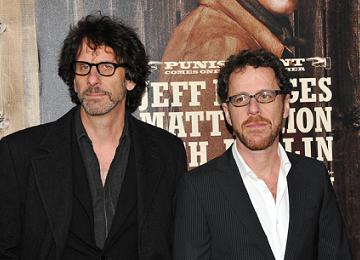
Coen Brothers make fun of their movies, their fans, Judaism...

A Serious Man

The funniest and most aggravating interview subjects working in movies today have got to be the Coen Brothers. Getting them to talk in a revealing, insightful way about their movies seems to be just about impossible. The experience of interviewing the Coens about what their movies mean is probably not far off from asking a marginally observant Jew to explain exactly what's so important about circumcision.

They're doing press for A Serious Man, which comes out tomorrow, but the interviews shed more light on how much fun it would be to hang out with these guys in regular life, and not so much on the writing/directing movies part.

In an interview in Time Out, they reveal that they wrote this screenplay at the same time they were doing Burn After Reading and No Country For Old Men, which is pretty funny if you think back to how many critics slammed Burn for being inconsequential and fluffy compared to the weighty metaphysics of No Country. Both were funny, dark movies about ordinary people trying to get something more than what life has offered them, and failing completely. The main characters either end up right back where they started, or burned from their failure, or dead. You could say that about most of their movies. Yeah, I liked No Country better, but both movies were perfect examples of what the Coens are good at.

But after that big reveal, and the statement that "There’s a big difference between 'prairie' Jews and coastal Jews," (a big difference they don't define), they go on to jab the Big Lebowski fans who participate in Lebowskifests in bowling alleys across the country:

"Maybe [A Serious Man] will become a cult film…" Ethan says, and Joel finishes the thought: "…and then they’ll start holding conventions."

"'Gopnikfest' has a nice ring to it, I think," his brother muses.

"They could have them in Vegas, Los Angeles and Tel Aviv…" Joel continues.

"…and you’d drink Manischewitz every time a character says 'Meshbesher,'" Ethan adds, referring to the film's oft-mentioned unseen lawyer.

Other useful information: Joel calls his wife Frances McDormand "Frannie" (??!!).

A reporter for the Canadian press asked them if they considered themselves serious men, and Ethan replied, "I don't think either of us would. I don't know. It's just, you know, the weakness for fart jokes and the like."

A Serious Man has zero big stars in it, which after the superstar megacast of Burn After Reading should make for a less distracting, undiluted Coen experience. Sort of like Blood Simple.

The Times has done two features about A Serious Man lately, neither of them reviews. One from a week or so ago is structured like an interview with the filmmakers, though since they offer so little in the way of insightful comments, ends up being a musing about the Jewishness of this movie and other Coen Brothers movies. The brothers do report that their professor father ate bacon in his Welsh rarebit at the campus restaurant, and that they used to sneak ham at their neighbor's house. They seem to acknowledge that this movie is in part about what it means to be Jewish (it includes a disclaimer: "No Jews were hurt in the making of this motion picture") but they brush off speculation that other movies like Miller's Crossing make any kind of Jewish statement, or as is sometimes speculated, anti-Jewish statement.

The Coens obviously aren't anti-Jewish, but they clearly take pleasure in the suffering and misery of their lead characters. "For us," Ethan said, "the fun was inventing new ways to torment Larry."

Then today A.O. Scott came out with a feature on Jewishness in recent movies, which is really great. He looks at Adam Sandler and Seth Rogen in Funny People and everybody in A Serious Man, and notices the two movies could have traded titles. And he has to bring up Inglourious Basterds: "now even the Holocaust has become a safe subject for pure entertainment."

Both Times features begin with Jewish jokes, but A.O. Scott's is better, and it sounds like it could be the opening quote of the movie: "'Why does a Jew answer a question with a question?' my grandfather — an atheist, a socialist and a righteous man in the best Biblical sense — used to ask. 'Why not?'"

UPDATE: A.O. Scott wrote one of the best reviews he's ever written for A Serious Man, and also has really smart things to say about the Coens' movies in general. Good stuff.

September 21, 2009

Hey, Jennifer's Body is actually good!

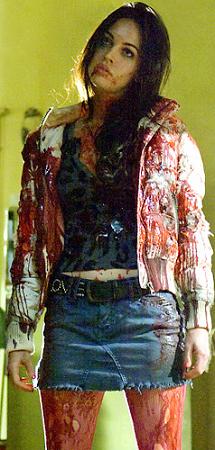
Jennifer's Body

Maybe this is some kind of delayed backlash to the Diablo Cody backlash, but I'm going to say it: Jennifer's Body is a better movie than Juno. It's also an unapologetic teen horror movie, so I probably like it in part because I love teen horror movies, and I'm ambivalent about twee little indie movies about meaningful teen issues with a hideously grating soundtrack.

There's a robust tradition of horror movies with gutsy heroines kicking ass (The Final Girl, etc) but this is the first one I've seen that is of, by, for, and about girls. With every boy she devours, Jennifer is really trying to provoke her best friend Needy's attention, jealousy, love, and loyalty--she's the twisted friend who shows her devotion to you by randomly making out with you, then hitting on your boyfriend.

You could read the movie as: a metaphor for combustible female teenage sexuality and sexual power; a revenge fantasy about killing men who exploit teenage girls and turn them into literal and figurative monsters; a story about how best friends navigate their friendships when they start getting into boys; a thoughtful analysis of our cultural obsession with Megan Fox; and a big middle finger to our cultural obsession with Megan Fox.

And while all these layers are going on, it's still a really fun horror movie about an occult ritual gone wrong, and the resulting demon-babe with an insatiable appetite for boy guts. With a decent soundtrack!

While I was watching the movie and thinking about how it's all about the Megan Fox media saturation we live in, I was reminded of Steven Soderbergh casting Sasha Grey to play an expensive prostitute in The Girlfriend Experience, which was about buying and selling the fantasies that we create about people. By casting Sasha Grey, he made an interesting statement about audiences wanting to believe in the characters we watch in movies, even though we know they're really actors playing roles. It was a great idea, but the downside was that Sasha Grey played her character with such flat affectlessness than it was impossible to care very much about her or anything she did. You could argue that Soderbergh isn't interested in audiences caring about his characters and just wants to make experimental movies about the roles people play in society or something like that, but a lead actor that failed to bring any life at all to her character made for an empty-feeling movie. That I still liked. I can't help myself, Soderbergh!

Megan Fox can act rings around Sasha Grey. Megan Fox knows how to play a man-eating sexpot, because she does it in every one of her movies, magazine interviews, TV appearances, and in the thousands of red carpet and publicity shots we've all seen of her. Casting Megan Fox as a sexy demon in a Diablo Cody horror movie is stunt-casting in the same way that casting Sasha Grey to play an expensive hooker is stunt-casting, but this time it worked. Our friend Emily once said that Megan Fox is the most unmediated celebrity in the world--she's famous for appearing sexy, dangerous, and unhinged in interviews. She's unpredictable, and maybe a little nuts. Her recent Rolling Stone interview about cutting herself and her own insecurity sounds like it was created specifically for Jennifer's Body marketing.

In the press, there's Megan Fox, the a gorgeous sexual dynamo who exists to fuel boys' fantasies about her so people will go see her movies. In the movie, there's Megan Fox, the gorgeous sexual devil who exists to fuel boys' fantasies about her so she can feed on their flesh. It's beautiful.

Vulture claims that critics are anti-Jennifer's Body, but I disagree. A.O. Scott wrote a glowing review, and especially likes the movie's treacherous world of female friendship, and Dana Stevens from Slate says whatever you expect of this movie based on what you think about Diablo Cody, you're wrong.

Also, she won't get enough attention for this movie, but I loved Amanda Seyfried as Needy, the best friend heroine. Jennifer's the hot one that all the boys want, but Needy has the world's sweetest boyfriend, a supportive mom (Amy Sedaris!), and a healthy dose of self-respect. I loved the image of Needy tearing across a field in her gigantic poofy hot pink princess prom dress and fluffy blonde hairdo to save her boyfriend and kill the demon. I was glad that director Karyn Kusama (who also did Girlfight) could make a formidable heroine who doesn't need boxing gloves to be tough.

September 17, 2009

Store Fronts

Phil's Stationery

Yesterday I was out looking to buy some airmail stationery, which if you're like me, is something you haven't thought about since the time in your life when friends were studying abroad in college and you hadn't quite started using email as the sole means of communication with everyone you know. These days it's not so easy to find.

So I went into Phil's Stationery on East 47th, right smack in the middle of midtown and standing between a Chinese noodle shop and a nail salon, offering office supplies and "Zerox copies", according to the sign. It looks like the kind of place that would have functional, cheap, non-wedding-invitation-oriented stationery that hardly anyone has been interested in buying for at least ten years.

They did! The employee who helped me walked past a small display of day planners and toner cartridges and randomly piled stacks of paper, dug around among the dusty boxes, then rummaged through a huge, falling-over pile of stuff on a back shelf. He pulled out a crumpled pad of airmail stationery with the price $1.89 printed right on the front sheet, and a package of airmail envelopes (the kind with a red and blue pattern along the edges) that had already been opened and half used and was yellowing with age. An unseen manager in the basement shouted back and forth with the employee through an old dumbwaiter shaft that opened onto the sales floor, and they decided on a price of $1.50. "Perfect!," I said, and bought both from a seriously elderly woman with an impressively thick (Polish?) accent.

The whole process reminded me of a great exhibit I saw the other day at the Clic Gallery on Centre Street in Soho. The exhibit is a collection of photographs by James and Karla Murray called "Store Front: The Disappearing Face of New York", and features lots of oldtime store fronts from all over the city for bakeries, discount stores, record stores, diners, and barber shops, all from before the era of printed awnings that identify most street-level businesses today. There are lots of places I see all the time in there, like the Film Center Cafe, Smith's Bar & Restaurant, and Clover Delicatessen, and some that are dearly missed, like McHale's. The show is up through this weekend, and there's a book available.

The artists mention in the intro of the book that almost 1/3 of the stores have closed since they photographed them. I'd be surprised if Phil's is still hanging on this time next year.

September 13, 2009

Remakes and non-resurrections

St Etienne's Fox Base Beta

Some bits of news from the last few days:

August 26, 2009

RIP Dominick Dunne

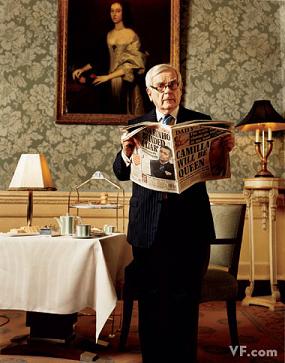
Dominick Dunne

Dominick Dunne, the man who knew everybody, went everywhere, and did everything, all while looking like a million bucks, died today.

Most recently he was a columnist for Vanity Fair, focusing on celebrities and the crimes and scandals that bring them down. He also covered all the major celebrity murder trials, got sued by Gary Condit, and crusaded for victims' rights, and that was all after a long career in TV and movie producing.

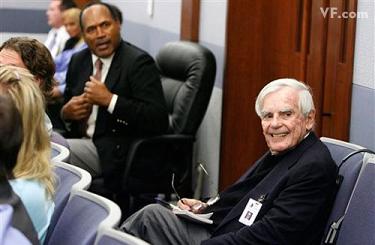
Vanity Fair has an obituary, a letter from Graydon Carter about his amazing career and what it was like to know him, and a retrospective of his career in pictures. There are great ones of Dunne with a young Elizabeth Taylor, with his pal Princess Di, hanging around at parties attended by Claus von Bulow, and my favorite, sitting near a surprised O.J. at his recent criminal trial, wearing a huge smile:

Dominick Dunne and OJ

During a brief conversation they had during the trial, he said he started to like O.J., but no one was happier about that conviction than old Dominick Dunne.

Here's the last article he wrote for Vanity Fair, "What a Swell Party He Wrote", which is just incredibly great. Here's an archive of his other VF columns. ADM once declared on this site that Dominick Dunne is a national treasure. Sure was.

August 21, 2009

"Let's get one of Bambi holding the gun"

waitress with a rifle

  • Some cops in Midland, TX got in trouble for taking this week's best picture, above. Someone called the cops after seeing this young waitress holding a big rifle and hanging out in the parking lot outside a restaurant. When they arrived, it turned out the guys she was hanging out with were other cops, who had been in the restaurant when they invited the waitress out for a little photo shoot. Her name tag, The Smoking Gun points out, reads "Bambi". I love that she still has on her apron with straws and pens in it.
  • New study: "the typical adult video game player is overweight, introverted and may be a little bit depressed."
  • Tuesday night's wild storm knocked down 500 trees in Manhattan.
  • A lot of the big movie star vehicles this year haven't done so well, and studios are trying to compensate, in part by paying stars less. Land of the Lost, Pelham 1 2 3, Duplicity, Funny People all had big stars and did worse than expected. The movies that did well are Harry Potter, Transformers, and Up, none of which were really popular because of their stars.

    And don't forget about that relatively small budget South African movie with zero stars where half the dialogue is subtitled. District 9 was mostly pretty good (except for some terrible dialogue toward the end,) but what I especially like about it is that studios will notice, again, that when a movie is well made (and well marketed) it doesn't need a huge budget, a famous director, big actors, or a dumb plot that's spoon-fed to the audience to make money. I love when people turn out for good, atypical movies and make them hits.


August 4, 2009

More movie news, other news

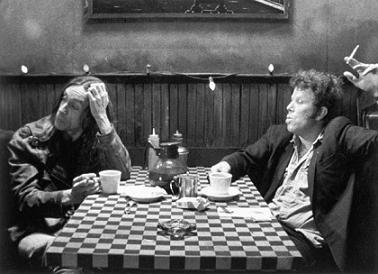
Coffee and Cigarettes

A few links for today:

  • A new study shows that people have a lot less self-control than they think they do, and people who think they're good at resisting temptation are actually terrible at it. One of the tests involved college student smokers watching Jim Jarmusch's Coffee and Cigarettes (which features Iggy and Tom, above) while holding an unlit cigarette in their hand or, for the hardcore delusional people, in their mouths. Three times more students who thought they had unbreakable self-control smoked during the movie than the other students.

    The lesson: you are helpless to resist that donut/cigarette/drink/cute flirt, so who do you think you're kidding? As Wilde said, the only way to get rid of temptation is to yield to it.

  • Latest cast addition to Zack Snyder's Sucker Punch: Carla Gugino. If this movie isn't fantastic I'm going to cry.
  • Review copies of G.I. Joe aren't going to be released, which is usually a bad sign. But really, what have they got to lose? Transformers 2 showed that fans don't care what critics say anyway, so why put what's probably a pretty disappointing movie out there to get bad reviews? One reviewer who has seen it called it "a big, silly, pulpy, cartoony action film." Yeah, no kidding.
  • Some statisticians who think language used in song lyrics and on blogs indicate our national mood found that teen blogs use "an abundance of 'sick,' 'hate' and 'stupid.' "
  • Michiko Kakutani weighs in not so positively on Thomas Pynchon's Inherent Vice, which sounds like an intentionally breezy read: "it feels more like a Classic Comics version of a Pynchon novel than like the thing itself."

July 23, 2009

Stepping in for the Linky

Tony Hsieh at Zappos

Since the Robot Linky on the right has been down for a while now (system problems, hopefully resolved soon) I thought I'd put some interesting links up here through the day.

  • Amazon is acquiring Zappos. Nice move, as long as they keep everything exactly the same: Zappos is everything you could want in online shopping. The head, Tony Hsieh (above) will still be in charge.
  • Times has a good article on the young woman with a $23,148,855,308,184,500 negative balance on her Visa debit card this month. 12,000 other customers had similar crazy charges that rivaled the gross world product.
  • Manhattanites respond to news that they live in the state's thinnest county. The Times interviews representatives of the borough's "disparate subcultures of the skinny," (i.e. if you're well-off, you're probably thin) with everyone's height and weight included. Pretty fascinating, especially that 42% of the Manhattan population being overweight or obese now means that we're "skinny". All relative, I guess.
  • Maybe the Cambridge cop who arrested Henry Louis Gates, Jr. can claim that he's not racist just because he investigated a break-in call, but he cannot claim he's not racist because he once performed mouth-to-mouth on a black Celtic, in 1993.
  • It's now legal in Tennessee and Arizona (and 14 other states) to bring your concealed gun into a bar, though you're not supposed to drink if you're armed. Bar owners are complaining that they'll be responsible for refusing to serve "designated shooters." Times article includes a clip from Colbert.

July 20, 2009

TUSH 2009, a late bloomer

I Gotta Feeling

Now that everyone's become an expert on the phenomenon of the song of the summer, there have been predictions about the Totally Ubiquitous Summer Hit on every pop culture website you read. Vulture at New York Mag has owned the debate this year, with a weekly post ranking contenders that I guess will keep plugging along until everybody gets their hands on advance copies of The Blueprint 3 and loses interest in disposable pop.

I've been waiting to see if any TUSH was going to emerge from underneath the Lady Gaga juggernaut of year-old songs that are still cluttering up the charts. Then the Michael Jackson shockwave hit, which has kept the record industry afloat for at least another couple of months. The sales story of the year belongs to MJ. Check out this Billboard chart of album sales--he owns it, and probably will for months to come.

So if I was going to declare the 2009 TUSH to be the one song that I've heard more than any other for the last month, it would be "Billie Jean". Obviously. That's the ubiquitous song (Sasha Frere-Jones claims this year's summer jam is defined by Michael Jackson's death, but doesn't say which song.) But in the long term, "Billie Jean" doesn't belong to this year. You won't associate it with the places where you heard that song over and over again this summer, because it will always take you back to the 80's. So I'm going to stick to the spirit of the TUSH and pick a new song that isn't popular only because of a sad death and the resulting media hyperventilation.

It was looking like this year's TUSH would be some Lady Gaga song. She is everywhere -- still -- and it has been suggested that her persona might be a creation of Sacha Baron Cohen. But her album came out last fall, even if it didn't really take off until this spring. "LoveGame" [video] could be a TUSH contender--it's irresistibly catchy and has the best vocal hook of the year, and any song whose beat is self-described as "sick" I am automatically going to love. But by now it's too old and it's not sunny enough to capture the feel of a summer hit.

Then came the Black Eyed Peas. Their new album The E.N.D. was released in early June, and shortly after its release they had the #1 and #2 songs on the charts, something that no one's done since OutKast in 2004. Here's this week's chart.

Their first single was "Boom Boom Pow" [video]. I don't like it. Doesn't go anywhere and isn't actually that fun.

But the song that was born to be a TUSH is their most recent single, "I Gotta Feeling". This is the song that all of a sudden I hear everywhere. It's on the radio when I set the alarm at night, it's on the radio when the alarm goes off in the morning, it's in the Indian fast food place on West 48th, at the gym, everywhere. It didn't come out until the end of June, but already sounds like it's been around forever. It was produced by French electro-dancepop producer David Guetta.

Plus the admittedly ridiculous video is pretty great--the band goes to a wild house party which is like a condensed version of every 80's teen movie party montage you've ever seen. Everyone's jumping on the bed and spraying beer all over everything and making out with each other and jumping in the pool, except, hey, look! There's will.i.am waving a red cup around! There's apl.de.ap dancing on the kitchen counter! There's a girl spilling cookies onto the floor as she takes them out of the oven! Because this is the kind of party where people bake! It's fun, goofy, disposable.

Also: "I Gotta Feeling" gets the award for best use of Yiddish in a pop song: "Fill my cup! (Drank) / Mazel tov! (L'Chaim!)"

As a tribute to better BEP, here's the video for "Fallin' Up" from their first album. This song has a verse about how they'll never sell out. Ahem.

July 15, 2009

Pomo Sotomayor

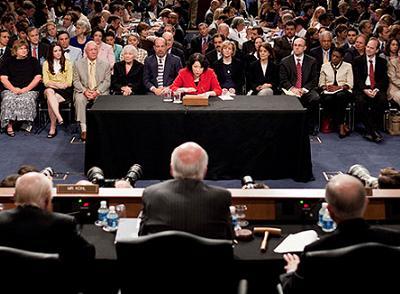
Sotomayor hearings

I sure wish I could listen to my college Postmodern Lit professor talk about these Sotomayor hearings.

Please excuse this diversion into shoddy undergrad English-major analysis, but has anyone else noticed the weird refusal to acknowledge that a justice's gender or ethnicity could play a role on the Supreme Court, unless that justice is not male or not white? The kerfuffle over Sotomayor's "wise Latina" comment has gone further than subtly racist partisan pouncing on whatever makes her nomination questionable, and has moved into a strange realm where we all pretend that subjectivity doesn't exist.

When you're a judge, your job is to interpret the law with impartiality and not let your personal viewpoints color your judgment. The law is the law and we as individuals are supposed to fade into an undifferentiated mass of equality and non-discriminatory humanoids before it.

But come on. Even if we all agree that the law should strive for perfect objectivity based on a higher, absolute justice, we all know that's not ever going to be possible. Don't members of Congress know any basic postmodern critical theory?

I'm only half kidding, here. The pomo critics taught us that all the basic tenets that our society is built on--science, religion, the nuclear family, political parties, gender roles, law--are all human constructions that we made up. They don't possess any kind of innate righteousness. The only reason we have the law is that we made it up, if by "we" you mean "white men".

(The postmodernists also say that just like there's no real objective truth, there's also no subjective truth either because the idea of "selfhood" is just another construction, but then you're getting into sophomore-level cultural studies, and I didn't take that class. Here's a pretty good summary of all this stuff.)

I don't expect that we would find much Derrida on Jeff Session's nightstand, but it would be so great if someone in these hearings spoke up and pointed out that if Sotomayor has personal beliefs based on her life experiences that could have some kind of influence on her work as an interpreter of the law, then John Roberts and Clarence Thomas and Scalia and Ginsberg all do too. As justices their job is to strive to see beyond their personal beliefs, though they are still there. Sotomayor spoke about her life experiences as being positive contributions to her legal career, but every judge's experiences somehow influence the way they do their work. How could they not?

We only seem to notice or be suspicious of this when a person other than a white man talks about it, because we have a legal system that was created by white men, and has therefore historically directed more benefits to them than to anyone else. During his congressional hearing, Justice Roberts didn't have to talk about how a wise white guy might add value to a court of law because our courts are already pretty much of, by, and for white guys. Those biases are already there.

At least Sotomayor has admitted this, though now she seems to be backpedaling, playing the objectivity game with Congress. Still, I love that she said this: "Life experiences have to influence you. We’re not robots who listen to evidence and don't have feelings. We have to recognize those feelings, and put them aside. That’s what my speech was saying."

Today, John Cornyn went back to the wise Latina thing again, "asking whether she would regret if her audience of students understood her to be saying that the quality of a judge depended on race, gender or ethnicity." "I would regret that," she said.

I would love to hear John Roberts laboriously explain over and over again how he has explored his own feelings and biases as a white man, then put them aside for the fair application of the law.

July 13, 2009

Not the business you'd expect to be booming

Redbox video

You know those video rental kiosk box things you see every so often inside a Circle K or a ShopRite? And you probably think: Huh? Now that Kim's Video is gone, your local video store has started offering two-for-one Monday through Thursday out of sheer desperation, and even your parents do Netflix, someone had the bright idea of opening a line of DVD vending machines?

But Redbox, the company that runs those machines, is doing pretty well and is actually growing--15,000 locations, and 7.5 million rentals every week. Not too bad compared to Netflix's 10 million per week.

The Times did a feature on Redbox that suggests some advantages the company has going for it, which also tell you a thing or two about the kind of customer they likely have. Rentals go for only $1 a day, you don't have to use a computer or create an account to rent, and when you're already at a McDonald's and see Taken or Meatballs through the kiosk window (they've got 'em) that's an impulse rental that a lot of people are very ready to make.

The main reason that I still use my local video store (other than the fact that its collection is exceptionally good) is that when I want to watch The Bourne Identity or Rock 'n' Roll High School, I usually want to watch them right now. Sure, if I decide I need to catch up on all the French new wave stuff I didn't see in college or make my way through everything Barbara Stanwyck ever did, I'm happy to wait for a Netflix delivery. But on those rare occasions when you need to watch Almost Famous and it's not airing on VH1 or streaming on Netflix, you need a fail-safe option for immediate viewing.

The Redbox selection is, of course, not remotely comparable to the Netflix selection, with each kiosk only stocking about 200 titles, but even this could be pitched as a selling point. The president of the company, who worked at Netflix for 6 years before defecting, says the typical Redbox customer "doesn't want to wade through titles they won't be interested in." Their top rental title ever is Paul Blart: Mall Cop. Netflix's top title is Crash.

In other words, for the Redbox customer, you can keep your precious non-linear social commentary on race and class that you add to your schmancy online queue. I'll pick up Step Brothers and Starship Troopers along with some Crunch 'n Munch at Walgreens.

There are more and more ways to get access to movies, and increasingly they don't involve leaving your home. So it's interesting that people are still willing to go out into the world to pick up a physical disc, as long as it's easy, really cheap, and they can do it while they're somewhere they have to go anyway.

So good for you, Redbox and your $1 rentals. I looked up my closest kiosk location on the website (on the "Find a Redbox" page that uses, of course!, Mapquest) so I'm heading there tomorrow to get a hyper-affordable mainstream DVD and wage some movie rental class warfare.

UPDATE: So I went to my local Redbox machine in a Walgreen's, scrolled around the movies they had, and ended up abandoning my mainstream vision by renting I've Loved You So Long, that French movie from last year with Kristen Scott Thomas. This movie might not be in the highest demand for Redbox customers, but it was great. And $1.08, including tax!

I may not go out of my way to rent from Redbox, but the interface is super easy and intuitive and the whole rental process took less than 3 minutes (in part because they don't have all that many movies to scroll through.) For times when you want to see a particular movie and want to be watching the opening credits in less than 15 minutes, it's a good option.

July 8, 2009

Public Enemies: maybe I expected too much?

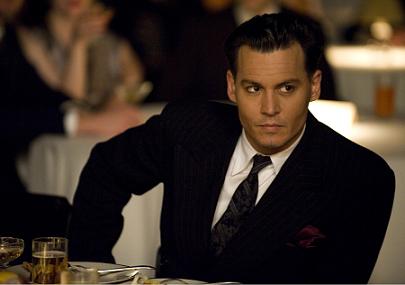
Johnny Depp in Public Enemies

The movie I've been most looking forward to all summer is Michael Mann's Public Enemies. I love some of Mann's movies (especially The Insider, Manhunter and most of Collateral), I love Johnny Depp, and I'm a sucker for period gangster movies that involve slick suits, big guns, and smoky nightclubs.

Maybe my expectations were too high. I was completely prepared to love Public Enemies, but I didn't.

The good things about it:

  • If the movie had any overarching theme, it's how our society constructs crime. John Dillinger knew how to turn on the charm and use the media to make the public love him, even though he was a thief and a murderer. J. Edgar Hoover also uses pop culture to launch his War on Crime, showing "America's Most Wanted"-style reels at movie theaters about "public enemy number one" like a sort of 1930's reality show. Hoover's methods may have backfired, since spotlighting Dillinger made him even more of a celebrity and a folk hero, but it's interesting to see the moment when law enforcement turned real-life crime into entertainment.

  • The contrast between Dillinger the man and Dillinger the pop icon. I love the scene of John Dillinger in a movie theater, watching the reel about himself. He watches, sort of detached and bemused, with only a moment of anxiety as the audience is instructed to "look to your right; look to your left", but of course, nobody notices him. John Dillinger is just an unsophisticated farm boy who's good with a machine gun; Dillinger the public enemy is practically a movie star.

  • The overlap between Johnny Depp and John Dillinger. In one of the only moments of exposition in the whole movie, Dillinger declares that he likes "baseball, movies, good clothes, fast cars, whiskey, and you", speaking to a pretty girl he just met. He's a man of action who isn't interested in image, even though his image is what makes him who he is. You could say the same things about Johnny Depp, judging from the recent Vanity Fair feature where he carouses around with his buds, drinking and enjoying being Johnny Depp, yet has no interest in watching his own movies.

  • The scene where a mob middle-manager (played by John Ortiz, who was in "The Job") tells Dillinger that they will no longer associate with him, launder his money, give him guns, or let him use their safe houses, because he's "bad for business." The mob was pulling down a lot more cash through their gambling ring than Dillinger was stealing from banks, but the feds were only interested in Dillinger, because he made a better celebrity-criminal. This one scene says more about perceptions about what kind of crime matters in this country than anything else in the movie, and I wish they did more with it.

  • Marion Cotillard telling an abusive cop, "When my Johnny finds out how you slapped around his girl, you know what's going to happen to you, fat boy?"

But overall, the movie felt surfacy and meaningless. It's fine to drop in on the action with no exposition: we can figure out who these characters are as we go along. But it's like there was nothing to figure out. I never felt like I understood what John Dillinger was all about, except that he was good at robbing banks, and I have no clue what the members of his gang were like. Wouldn't it have been interesting to see some stuff about the relationships between Dillinger and his gang, the people at the safe houses, and the madam he was friends with? It would have been, but we hardly got any of it.

The gritty look of the HD video was fine and made sense, but using hammy dialogue straight out of a 40's gangster movie totally didn't fit with the look. The acting was cold and flat, which is fine for a movie that doesn't glamorize its characters, but then it's almost impossible to care when those characters get arrested or killed. There are no cheesy biopic cliches, but there also isn't any character development, emotion, or suspense. As Roger Ebert says in his (positive) review: "His name was John Dillinger, and he robbed banks. But there had to be more to it than that, right? No, apparently not."

I'm surprised that I these characters were so uninteresting, because Michael Mann knows how to get you to care about his characters. Think about The Insider: Russell Crowe is brave, but he's thorny and unfriendly, not especially likable. But we really care about what happens to him and want to see where the movie goes. We already know what happens to Dillinger, so we need something else besides the plot to feel invested in him, and I don't think we got it.

My favorite review is David Edelstein's in NY Magazine. He suggests that the best rejoinder for Public Enemies is the Michael Jackson video for "Smooth Criminal":

It's a tommy-gun gangster fantasia with a touch of Guys and Dolls, and it's everything Public Enemies isn't: madly inventive, genre-bending, a passionate tribute to the artist as outlaw-loner. The video reminds you why the gangster has become an existential hero in pop culture: It’s how he seizes the space. On some level Michael Mann knows that, but he's paralyzed by his pretentions and specious morality. And he can't dance.

Here's the long version and the short version of the MJ video. Not really a fair comparison, but the video is a lot more fun than the movie.

June 18, 2009

TV theme songs

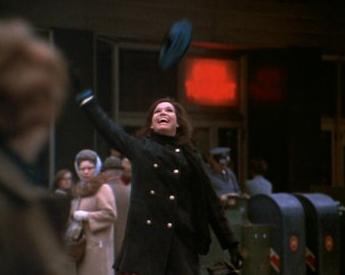
Mary Tyler Moore opening sequence hat throw

Today's Daily News has a long analysis of the evolution of TV show theme songs. It doesn't seem to be related to anything, but it's pretty good anyway. It starts out with the idea that you can identify someone's generation by which theme songs they know all the words to: "Gilligan's Island" represents one generation, "Brady Bunch" is another, and "Greatest American Hero" is another. Of course, anyone who's in my generation knows all three because of the Golden Age of Afternoon Reruns in the early to mid-80's.

Anyway, the point of the article is that with so many shows on all the network and cable channels, audiences don't have the time or the brain capacity to get to know and love theme songs they way they used to, and many shows have almost completely gotten rid of theme music all together. Think of those 3 seconds of abstract whooshing that seems to be the theme music for "Lost".

There's a long tradition of theme songs that set up the premise of a show and characterized the storyline that extends into recent years. The theme song for "The Mary Tyler Moore Show" [video] about how Mary's gonna make it after all sets the stage for the show in much the same way that They Might Be Giants' "Boss of Me" did for "Malcolm in the Middle" [audio], and that ran until 2006.

Today's producers seem to be less secure about holding viewers, so they cut the long theme song to get straight to the action: "Now that most of us have dozens or hundreds of channels to surf through, and a remote to do it with, the networks are terrified that the minute one show ends, we will start looking around ... The idea is that we shouldn't have time to even think about picking up the remote before we're seeing action from the next show."

Maybe that's why cable networks are comfortable with longer opening sequences with theme songs than networks are, so we get "The Sopranos" [video] and "Weeds" [video] with one and a half minute intros, and on the networks we have a few quick bleeps to introduce "24".

So I'll share a few of my favorite theme songs and TV theme music. Please add any other stellar examples or personal favorites in the comments. (Click on the show names to hear the theme music.)

Miami Vice: My entire family used to be whipped into a frenzy of excitement every Friday night when that Jan Hammer music came on.
Mad Men: That moody, jazzy theme song with the hesitant descending strings somehow captures everything you need to know about the show.
The Jeffersons: I know. It's obvious, it's predictable, it's fantastic. It's by Ja'net Dubois.
Fame: Maybe I'm being influenced by the trailer for the new movie, but the original was really great.
Law & Order: Both the succinct "Dick Wolf Cash Register Sound" and the funky shuffle of the original show's theme music.
The X-Files: Abstract and spooky, maybe most popular ambient TV theme song ever?

The site Television Tunes seems to have every theme song ever--over 11,000.

May 20, 2009

Vampire lady smackdown

Charlaine Harris in her officeStephenie Meyer

The Times has a great feature today on Charlaine Harris, the middle-aged southern lady who writes the Sookie Stackhouse series of novels that has become the basis for HBO's True Blood series, the show about dirty, sexy, campy vampires that stars Anna Paquin. This lady has got it going on.

I'm coming in really late in the game, here. I've never read any of her books, and I haven't seen True Blood. I also haven't read any of Stephenie Meyer's Twilight books, or seen the movie that came out a few months ago. My opinion is based solely on this one article and the press about the books and tv/movie adaptations. But next time I'm taking a really long flight or recovering from dental surgery and need a vampire soap opera potboiler, I'm picking up Sookie Stackhouse.

Both Sookie and the Twilight series have been wildly popular. The latest Sookie novel, Dead and Gone, came out last week and debuted at number one. Twilight has sold one hundred billion copies (actually 42 million) and preteens everywhere went completely mental for the movie.

But from what I can tell, Sookie has it all over Bella Swan and the Twilight crew. She's a waitress in a rural Louisiana bar, she's kind of trashy, she can read minds, and she likes to have freaky swamp sex with vampires. The TV show itself sounds like it unfortunately abandoned its pulpy roots to devolve into a misguided metaphor for identity politics. I love this quote from Slate's review: "its ideas (about race, gender, sexual orientation, what have you) simmer on the artsy-fartsy backburner while blood and lust boil away in the low-culture pot up front." The opening credits are good and nasty.

Meanwhile, Twilight's main character, Bella Swan, looks wan and ineffectual, and her relationship with her vampire boyfriend involves a lot of pained chastity. I like Kristen Stewart in Panic Room and Adventureland, so I hope she doesn't get trapped playing bad gothy damsel in distress roles in this series for too long. A few months ago Stephen King said in an interview that Stephenie Meyer "can't write worth a damn."

Here are a few good bits from the Times article on Charlaine Harris. In addition to the latest one, she's also written 25 other books, including an earlier series about a librarian-turned-sleuth, and another "more violent and sexually explicit storyline" about a cleaning lady who investigates murders.

"It was just a huge relief that I finally hit on the right character and the right publisher," said Ms. Harris. Or, as she put it more succinctly, with a cackle that evoked a paranormal creature: "I had this real neener-neener-neener moment."

She had always wanted to write about vampires. From the outset, she wanted to set the story in the prosaic trailer-park and strip-mall landscape of northern Louisiana, to distinguish it from the gothic opulence of Anne Rice’s New Orleans.

Driving last week along a tree-lined country road dotted by an occasional horse farm or a row of abandoned chicken coops, Ms. Harris said it was how she imagined the road to Sookie’s house. Ideas for characters come from all over the place. "Every trip to Wal-Mart is an inspiration," she said.

I already love her.

April 23, 2009

Dieting for dudes

Skinny Bastards

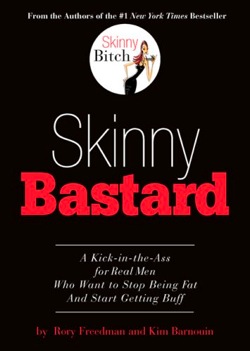
The ladies who brought us Skinny Bitch are coming out with a version for the fellas, which is titled Skinny Bastard.

The original book for women was marketed as a dieting book, but turned out to be a well-reasoned argument for becoming vegan. Some angry would-be skinny bitches did not want to hear about animal cruelty in their dieting books, but it still sold 1.1 million copies.

The publishing company admits that they expect mostly women to buy Skinny Bastard on behalf of their menfolk. An article in the Times quotes the new, guy-oriented introduction: "Chances are, you haven't done so badly, despite the few extra lbs you're carting around ... But don't kid yourself, pal: A hot-bodied man is a head-turner."

But come on, what kind of man is going to buy a book called Skinny Bastard? The subtitle is pretty good: "A Kick-In-The-Ass For Real Men Who Want to Stop Being Fat and Start Getting Buff", but the title is terrible. There are loads of women out there who would love it if people called them "skinny bitch" behind their backs. And there's definitely a segment of men who would be into the "bitch" part, but how many men aspire to be called "skinny"?

So let's think of some better titles that might interest that special population of men who buy dieting books. A few thoughts:

Fit Jerk
Stud Asshole
Tight-Ab Prick
Sculpted Moron
Pumped Dick
Ripped Fuckface
Beefy Jackass

Wouldn't you rather buy those titles? Browse the Men's Health site for a few minutes, I swear this is totally what guys want.

April 16, 2009

Auditions

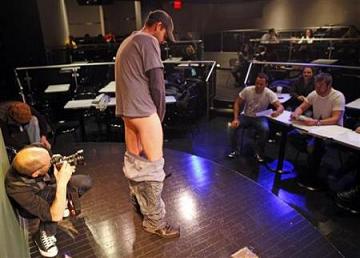
Puppetry of the Penis auditions

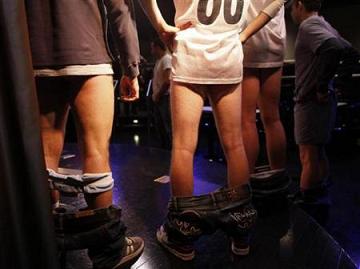
Reuters gets into some pantless photojournalism today at the auditions for a show called Puppetry of the Penis, which they generously describe as "performance art" in the captions.

Here's the slideshow. None of these shots would necessarily get you fired from work for looking at them, but they might encourage you to test out genital elasticity in ways you're not comfortable exploring.

My favorite:

Puppetry of the Penis auditions

Puppetry of the Penis is a show that originated in Australia (surprise!) as guy performing a collection of dick stunts (or "genital origami") on stage. It ran in New York for a while back in 2002, and was either very hilarious or very horrifying, depending on how you feel about a penis contortion trick called "weed-snipper". It's going to be at Comix on 14th Street next Wednesday, and the producers auditioned some new members for the show earlier this week.

A lone woman showed up thinking it was an audition for an actual puppet show for puppeteers who work with puppets that aren't their dicks.

April 10, 2009

Recession roundup

Abolish Money photo

[from NY Times Picturing the Recession series]

Here's a brief list of things people are doing right now as a result of the recession, besides the usual cutting back on expenses and getting canned:

March 17, 2009

Another holiday for non-New Yorkers

Leprechauns in Times Square

I experienced St. Patrick's Day a little more intimately than usual this year because my office is now located right in the eye of the parade storm. While walking around on 48th St and watching crowds of people celebrating the aspects of Irish culture that involve drinking in public before 10am, I realized that some of the most popular and well-known events that happen in New York City are attended almost exclusively by people who do not live in New York City.

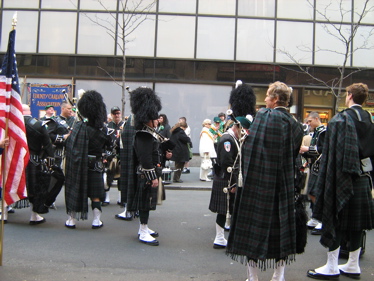
There's New Year's Eve in Times Square, the tree lighting in Rockefeller Center, and the St. Patrick's Day parade down 5th Avenue. Today's parade is probably the least disruptive of the three--at least I can more or less continue my regular life while it's going on, and it has its charms, like the clusters of old guys standing around in kilts drinking beer and smoking cigars while sets of bagpipes are strapped to their torsos.

But mostly it's a bunch of drunk kids in "Who's Your Paddy?" t-shirts. Here are a few photos:

Girls on 5th Ave wearing said t-shirts

Girls at St Patrick's Day parade

Marching band in headdresses

Men in a marching band at St Patrick's Day parade

Dudes ignoring the parade to hang out near the port-a-potties instead

drinking on the street at St Patrick's Day parade

Hasidic man doing his best to ignore everything

Hasidic guy at St Patrick's Day parade

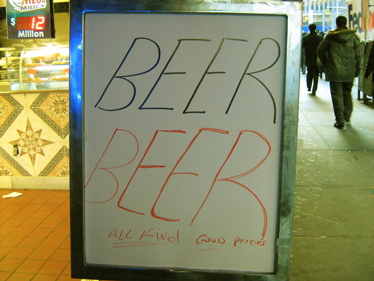
Deli that put a more direct message on its sidewalk sign than its usual list of breakfast specials

Beer sign at St Patrick's Day parade

After the parade was over, the crowds around Rockefeller Center thinned out. Because everyone had moved to the other part of New York that out-of-towners love, Times Square!

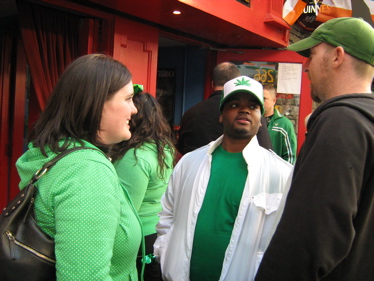
Irish pot leaf hat on 47th St

Green hat at St Patrick's Day parade

All 7 or 8 of the Irish bars I passed in Hell's Kitchen were packed, especially those with signs out front declaring they were "St. Patrick's Day Party Headquarters", sponsored by Heineken.

Which says everything you need to know about St. Patrick's Day in New York. Heineken: Yeah, it's Dutch, but it's close enough because the bottle is green.

February 23, 2009

Oscar hates America

Sean and Hugo

While we await an on-the-spot report, it's worth pointing out that the US did not fare well in the Oscars. There was an Australian host, almost all of the major categories were dominated by Europeans and Asians, and the only American winners in big categories were a gay screenwriter and notorious Anti-American Sean Penn. I guess Hollywood liberals really do hate America.

Update: As far as I'm concerned Sean Penn and Dustin Lance Black are as American as apple pie and Mickey Rourke, but they are somewhat more marginalized than say, Meryl Streep.

February 19, 2009

No Tonya Hardings in competitive yoga

International Yoga Asana Championship

I bet you thought about Neal Pollack a lot more 5 years ago than you do these days. But he's still out there: he had an article on Slate a few days ago about the International Yoga Asana Championship that happened in LA earlier this month. (He's also writing a book about the "weird and circuslike" world of yoga culture.)

In the article, a lot of competitive yogis talk about how strange people think it is to practice yoga like a sport, and the charismatic leader of the competitive yoga circuit, Bikram Choudhury, says wonderful things like, "I have balls like atom bombs, two of them, 100 megatons each. Nobody fucks with me."

Anyway, to counter the impression that competitive yogis are a bunch of aggressive cutthroats who stomp each other's chakras on their way to the top, the U.S. women's champion says, "The competition gets a lot of flak from a lot of people, but it's not like anyone's trying to crack anyone else's kneecaps."

This Slate article came out the same day that Tonya Harding, the original kneecapper, appeared on HBO's monthly sports show "Real Sports", and said that she's paid her debts for her involvement with the 1994 attack on Nancy Kerrigan and thinks she's suffered enough. She mentions Barack Obama's derisive namecheck during his campaign [video]. Girl, if people as good-natured and benevolent as Barack Obama and the world's greatest yogi are still bad-mouthing you in public, it's probably not ever going to stop.

Tonya Harding does admit that as long as people like Barack Obama keep dropping her name, she'll keep getting more paid gigs, I guess in her new career as a pro boxer. Just give in already and do a season of "The Surreal Life", you'll be fine.

Here's a video of her catching a big catfish, and asking the HBO interviewer, "How much responsibility do you think I need to take?"

November 26, 2008

Happy Thanksgiving!

spaghetti carbonara

In honor of our national celebration of face-stuffing, we bring you an excerpt from Calvin Trillin's groundbreaking 1981 essay about his overthrow of the traditional Thanksgiving menu, "Spaghetti Carbonara Day".

I have been campaigning to have the national Thanksgiving dish changed from turkey to spaghetti carbonara.

It does not take much historical research to uncover the fact that nobody knows if the Pilgrims really ate turkey at the first Thanksgiving dinner. The only thing we know for sure about what the Pilgrims ate is that it couldn't have tasted very good. Even today, well brought-up English girls are taught by their mothers to boil all veggies for at least a month and a half, just in case one of the dinner guests turns up without his teeth. (It is certainly unfair to say that the English lack both a cuisine and a sense of humor: their cooking is a joke in itself.)

It would also not require much digging to discover that Christopher Columbus, the man who may have brought linguine with clam sauce to this continent, was from Genoa, and obviously would have sooner acknowledged that the world was shaped like an isosceles triangle than to have eaten the sort of things that the English Puritans ate. Righting an ancient wrong against Columbus, a great man who certainly did not come all this way only to have a city in Ohio named after him, would be a serious historical contribution. Also, I happen to love spaghetti carbonara.

[At the first Thanksgiving,] The Indians, having had some experience with Pilgrim cuisine during the year, took the precaution of taking along one dish of their own. They brought a dish that their ancestors had learned from none other than Christopher Columbus, who was known to the Indians as "the big Italian fellow." The dish was spaghetti carbonara--made with pancetta bacon and fontina and the best imported prosciutto. The Pilgrims hated it. They said it was "heretically tasty" and "the work of the devil" and "the sort of thing foreigners eat."

The entire essay is available in The Tummy Trilogy.

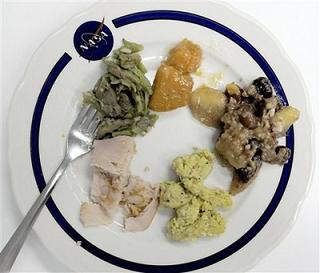
Spaghetti carbonara doesn't exactly solve the problem that vegetarians face at Thanksgiving, but it's a step in the right direction. Even if your Thanksgiving hosts fail to offer you a tasty plate of spaghetti carbonara, you can feel lucky that you're not a NASA astronaut at the international space station. Here's their dinner:

NASA Thanksgiving dinner

November 19, 2008

Obama baby names, other than Obama

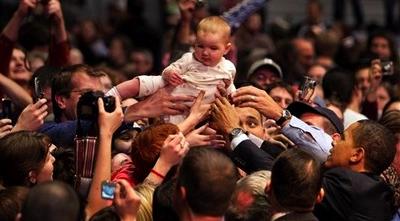
Barack Obama and crowdsurfing baby

[photo of the guy who crowdsurfed his baby over to Obama at a Montana rally]

I've spent some time in upper Manhattan first grade classrooms lately, and noticed more than one little kid with a "NEVAEH" nametag on their bookbag or cubbyhole. The Times reported on the heaven-backwards trend in baby names in 2006, when it was the 70th most popular name for girls, and the Social Security Administration says it's up to 31 as of last year. As a girl's name, that is. Makes me feel bad for the one little boy Nevaeh I met yesterday who ended up on the losing gender of that particular trend.

Right after the election, Chief Baby Name Correspondent Jennifer 8. Lee told us about parents naming their babies after Obama, though DC's little Obama Alhaji Kabineh Kabba seems to be leading the trend--he's already 6 months old.

Obama-loving expectant parents out there don't have to follow the crowd. And there might be a bunch of them soon--Newsweek reports lots of people got busy on election-night (HuffPost describes the phenomenon as "Yes We Did It".)

Those looking to commemorate that special night with a special baby name might follow the lead of P.O.D. singer Sonny Sandoval with his inexplicable backwards baby name and go for Amabo. It means "I will love" in Latin, which sounds sort of hokey and weirdly Biblical, and captures some of the messianic expectations people have for the real Obama these days.

Or how about Kcarab? The K is silent. Unfortunately that sounds like those carob-covered raisins and peanuts my mom used to buy as some cruddy supposedly healthy alternative to chocolate. Gross.

October 29, 2008

Guess what kind of alcoholic beverage this is

USB port wine

Just like French champagne and Neapolitan pizza, the EU protects Portuguese port by requiring that all wines labeled as "port" be from Portugal. Two years ago, the US signed a "wine accord" with the EU, stating that American wineries couldn't label any new wines with geographic names like port, champagne, or chablis.

So one clever winery from California decided to target the segment of the geek market that also likes deliciously heavy fortified wines by naming their new non-Portuguese port USB.

The Treasury Department's Alcohol and Tobacco Tax and Trade Bureau approved the label, after much deliberation. Note the binary code forming the tree, and the USB-symbol roots.

We should make sure no European wineries are marketing their lighter, sweeter, screw-cap wines with American geographical names. Like Boone's Farm.

October 27, 2008

Mad Men gets feminist

Betty at the hairdresser on Mad Men

The last two episodes of Mad Men were great. The second to last one was some of the best TV I've ever seen-- there are some scenes I never want to watch again, but it was still good television. Even though the season finale last night wasn't quite as ambitious or as creatively structured, it was still pretty amazing.

The show's creator Matthew Weiner, has been clear about his feminist aspirations for the show, but in these last two episodes he shows us what he means: the show seems to have become a kind of morality play where the female characters who stand up for themselves are rewarded, and the ones who don't get raped on the floor of their boss's office.

Let's look at the main characters:

Peggy. The show is as much about her as it is about Don Draper, and it's been structured around her experience from the very first episode. She's now the new superstar of the ad agency, and when she asks for her own office, she gets it (and graciously accepts Roger Sterling's comment about how aggressive women are "cute".) In the finale, she tells Pete Campbell the painful truth about giving away his baby, and in doing so appears to get some kind of spiritual absolution, while Pete is left bewildered and destroyed.

Joan. The scene in the second to last episode where Peggy and Joan talk about Peggy's new office and Joan's upcoming marriage was just awesome. For a moment, the all-powerful Joan looks small and weak as she realizes that she has to rely on the accomplishments of her doctor fiance/rapist to give her status, while Peggy has her own accomplishments to be proud of. For once, Joan is respectful of Peggy and not snotty and dismissive.

But the overall feel of the scene was sad. It was as heartbreaking as watching Joan get passed over for the script reading job without putting up a fight. The show seems to have established an especially unforgiving moral structure for women, just like in teen slasher movies, except in Mad Men it's not the slutty girl who gets punished. It's women like Joan who miss opportunities to stand up for themselves.

Betty. Last night's episode belonged to her. It's been frustrating watching her spiral into the depressive funk she's been in for the last few weeks, but finally last night, her refusal to let her philandering husband come home paid off. Don initially goes off to California to screw around, but instead he ends up spiritually cleansed, and remembers how to be respectful to women through his old friend Anna. He comes home to apologize for being such a dick and does some groveling. Betty lets him back in.

Betty's end of the deal with Don isn't exactly a feminist utopia, but she does get to have a night of freedom, be assured by everybody that she can get an abortion if she needs one, fuck a hot stranger in a men's room, and still get her repentant and now fabulously rich husband back. A lot better than moping around and crying on the shoulder of the 8 year-old boy next door.

The Men. Meanwhile, life is not so great for the menfolk. The last few episodes show them grasping desperately, sometimes pathetically, at their slowly dwindling power over the women in their lives. Don is the only one who seems able to readjust himself and come out, maybe, a sort of decent person. The owners of the agency, meanwhile, had to literally sell themselves out in order to accommodate women's demands--Mona, Jane, and Cooper's hilariously bitchy sister.

Next season: Peggy gets a personal assistant/boy toy, and the secretary pool starts a series of consciousness-raising brown-bag lunches about overly restrictive undergarments.

August 19, 2008

NYC: Not like back home

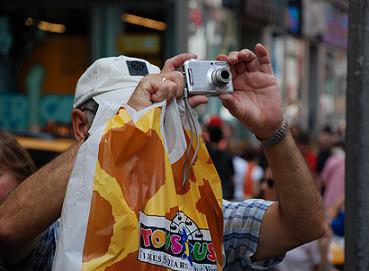
Tourist taking a photo in Times Square

photo by Joe Shlabotnik

Today's Times asks tourists visiting New York from the US and around the world what aspects of the city surprise them the most. I don't know if it's because of how the question was asked, but most tourists took the opportunity to make little subtly bitchy comments about how day to day life in New York seems different from how things are where they're from. Because for many people, especially when they're far from home, "different" means "I hate it".

Actually, there are a few positive comments about the city from visitors, such as Michael McIsaac from London who loves our outstanding unlimited coffee refills, and Rhona Ciolek from California who marveled at our impressively gigantic piles of trashbags on curbs. An enthusiastic Spanish women notes, "There are a lot of men here that are really muscular!" And I completely agree with some valid complaints, like a Swede who points out that our waterfronts are in shambles.

But most things that surprise tourists seem to be things they don't much like. And some of their comments say more about their home countries than anything else.

So here you go: Helpful clues about what life is like in tourists' home countries, as revealed by their complaints:

Comment from a Spanish tourist: "In Spain we drink coffee in little cups."
Translation: Spanish cafes may be stingy.

Comment from a London tourist: "[New Yorkers] will not tolerate bad service."
Translation: British people suffer in silence.

Comment from a German tourist: "In the ladies' toilets you can see people's feet. Where I'm from we have full doors on the bathrooms."
Translation: It may be harder to solicit anonymous sex in public bathrooms in Germany, a la Larry Craig, but it's probably easier to actually have anonymous sex or engage in any other illicit activities.

Comment from a French tourist: "You are always served very quickly here, even in a nice restaurant. Here it's quicker, you don’t have time. In Paris you get a lot of time before your food comes."
Translation: French service is slow. Also, wow: this guy actually found a way to be snotty about New York restaurants having good service.

Comment from a Saudi tourist, looking at the lights of Times Square: "I thought it would be more realistic."
Translation: Saudis have interesting, sort of postmodern ideas about what reality is and what it should look like when it's actually in front of you in three-dimensional space.

August 12, 2008

Little Chinese girls in Olympic lip-sync cuteness scandal

Chinese girls lip syncing Olympic opening ceremony

It turns out that the little pig-tailed Chinese girl who sang "Ode to the Motherland" at the Beijing Olympics Opening Ceremony on Friday was actually lip-syncing [news report with video]. The real singer, Yang Peiyi (on the left), has a better voice, but was deemed "not as cute" as the lip-syncing girl by the Communist Party, which thinks nothing of driving talented but insufficiently cute little girls into bitterness and self-doubt by the age of 7.

"The child on camera should be flawless in image, internal feeling and expression," explained the music director.

Well, Yang Peiyi, join the club. I'm sure this girl with killer pipes and crooked teeth would get a lot of sympathy from American singers who have been through the same thing. Legendary vocalist Martha Wash actually sued C+C Music Factory in 1990 after a skinnier woman, Zelma Davis, lip synced to Martha belting out "Everybody dance now!" in the video for "Gonna Make You Sweat" and during live (or "live") performances. [UPDATE: Zelma says she didn't lip sync live. See below] [you have definitely already seen this video, but here it is]

And here's another one: LeShaun, the rapper who did the sexy female vocals for LL Cool J's "Doin' It" in 1996 [video]. She got upset that she was not asked to appear in that video--a few skinny girls were cast instead, which LL claimed was due to LeShaun's pregnancy at the time, "rather than any other of her physical features", according to her Wikipedia entry. Here's a 1993 video of LeShaun talking about her own videos being censored because of a double standard applied to women perpetrating violence in rap videos.

But both Martha and LeShaun got over it, and both went on to record more songs with the groups that cut them out of videos.

Little Yang Peiyi has a pretty mature attitude about her own experience with getting screwed out of a live performance that was rightfully hers because of her looks. "I’m OK with it," she said in an interview on the state TV network. "My voice was used in the performance. I think that’s enough."

"I love my country and am eternally loyal to the Communist Party," she continued, eyes wide with terror. "Please don't hurt my family."

UPDATE: Zelma Davis herself wrote in with a clarification about her vocals in "Gonna Make You Sweat". She writes:

"For the record, I have never lip-synched to Martha Wash's vocals during live performances.

I've performed "Gonna Make You Sweat (Everbody Dance Now)" on Saturday Night Live, Oprah, Live with Regis & Kathie Lee, hundreds of concerts around the world, and I have never lip-synched to Martha's vocals."

Thanks for setting the record straight, Zelma!

August 11, 2008

Isaac Hayes, soul icon

Isaac Hayes at Wattstax

Isaac Hayes was unexpectedly killed by a treadmill yesterday, after having some recent health problems. The NY Times obituary says his music "defined the glories and excesses of soul" through his early years as a songwriter and musician at Stax Records in Memphis.

Cushie and I happened to visit the Stax Museum of American Soul Music in Memphis a few months ago, and it was one of the best music history experiences of my life. Before he did "Theme from Shaft" and became a celebrity in his own right, Isaac Hayes wrote around 200 songs from the Stax catalog with his partner David Porter, including Sam and Dave's "Hold on, I'm Comin'" and "Soul Man", and played keyboards with Otis Redding , Booker T and the MG's, and pretty much everybody else on Stax as a session musician.

Also in the Stax Museum is Isaac Hayes' car, a blue 1972 Cadillac Eldorado, which was lined with fur, had a bar that popped out of the dashboard, and because he was a man undaunted by the technological limitations of his time, he had a small black and white TV sort of wedged awkwardly into the area below the radio between the two front seats. The car was taken by the IRS in 1977 when Hayes had some financial problems.

In a good VH1 interview from a few years ago he talked about his fearless and distinctive sense of style, which sounds more like a celebrity from this decade with an army of personal stylists on staff than a southern black man starting out in the early 60's:

"I used to go to a place called Lansky Brothers on the corner of Beale and Second and have them make all my clothes. I wore everything, man. I wore orange suits, pink suits, purple suits, chartreuse suits, green suits - it didn't matter. After I saw The Pink Panther with those Nehru collars and stuff, I was the only one wearing those in Memphis.

"A guy sold me a chain necklace and a chain belt to match. I started wearing that onstage, then I switched to wearing tights. I thought if a belly dancer can wear them, then I can wear them too. Eventually a guy named Charles Rubin said, "I'm going to make you a chain vest." I realized, Wait a minute, I'm wearing chains! Chains once represented slavery to a black man in this country. I said, I'm going to turn it around -- these chains are a symbol of strength and power. So I kept wearing them."

Here's a video clip of Isaac Hayes making his dramatic entrance at the Wattstax concert in LA in 1972. Pink tights, black and white fur boots, and gold chains. He is so awesome:

Isaac Hayes at Wattstax

Hayes seemed to move effortlessly from one important moment in pop culture to another for his entire life. After helping to create soul music in the 60's and defining himself as a symbol of black pride during the 70's, he moved onto TV and movies in the 80's. He was in Escape From New York, I'm Gonna Git You Sucka, and showed up on "The A-Team" and "Miami Vice". In the 90's came "South Park" and, of course, Scientology. It would have been only a matter of time before he did a song with Kanye.

Incredibly, Hayes had just finished making a movie called Soul Men with Samuel L. Jackson and good old Bernie Mac, who also died this weekend. Hang in there, Samuel L.

LA Times
also has a very lengthy and in-depth obituary. Reports of the number of kids he has varies from "several" in the LA Times to 6 on IMDb to 12 in the NY Times. There's a good, if not very well organized bio on his website.

July 28, 2008

Can rock change the world?

Muhajababe

If you watched MTV in August 1989, you probably remember all the news reports about the Moscow Music Peace Festival, or in the words of Sebastian Bach, "Rocknost". The concert, which happened just a few months before the Berlin Wall came down, was the first huge western rock concert in the Soviet Union and represented its unstoppable shift toward democracy and cultural freedom.

Of course, it was a metal concert. The bands included Motley Crue, Cinderella, Ozzy Osbourne, Bon Jovi, and Skid Row, and showed that the great unifier that spanned the Iron Curtain was big hair and guitar solos. Ironically, the supposed message of the concert was the war on drugs, which wasn't exactly reflected in the bands' behavior. Ozzy says that it was after this concert that he got so drunk that he famously tried to kill his wife, Sharon.

But the legacy of cultural and political change through music remains. A few years ago, Lionel Ritchie did a concert in the newly pro-Western Libya. In an interview, he shared his belief that music can be a more powerful force than diplomacy in mending political differences:

"I have seen it where in many many populations of the world, politics they couldn't agree on, religion they couldn't agree on. You bring a musical artist in, it translates totally into another realm, and I think that what's going to happen now, that by this being the door to open, you're going to see a change in this country, I can almost guarantee it."

Lionel Ritchie is apparently also huge in Iraq: "Iraqis who do not understand a word of English can sing an entire Lionel Richie song."

So now Iran, a country in which all Western pop music with lyrics is banned and the government censors Iranian albums before they're released, has agreed to host a concert with Western artists. Who is going to represent freedom and democracy at this pivotal cultural event, our decade's Rocknost?

Chris de Burgh. The man who gave wretched life to a leading contender for the Worst Song Ever, "Lady in Red", will perform later this year at a stadium in Tehran, with an Iranian band. Apparently he's very popular.

Despite this devastating blow to the prospect of mutual understanding between the East and the West, I think the concept still holds promise. While Chris de Burgh is obviously a terrible choice for this Iranian concert, other artists could make some real progress in bridging our differences. Metal is universally and timelessly loved by teens around the world, especially kids who live in an oppressive political environment that's on the verge of a huge cultural shift. Basically, if the US considers a country our enemy, then that nation's kids are the world's biggest metal fans.

Slate has an article today ("Rock the Mullahs") about metal in the Islamic world, featuring videos by hard rock and metal bands from Morocco to Israel to Iran. A new book by political historian and metalhead Mark LeVine, called Heavy Metal Islam, demonstrates that just like Soviet teens in the '80's, the pissed-off kids in Muslim countries who want their world to change are the ones in Mastodon t-shirts:

A member of Iran's most popular metal band, Tarantist, tells LeVine, "Metal is in our blood. It's not entertainment, it's our pain, and also an antidote to the hypocrisy of religion that is injected into all of us from the moment we're born."

One of the patriarchs of Morocco's heavy metal scene, Reda Zine, puts it this way: "We play heavy metal because our lives are heavy metal."

The photo above of a so-called "Muhajababe" is from a good NPR story about LeVine's book and the Middle Eastern metal scene.

Ahmadinejad may welcome Chris de Burgh with open arms, but it sounds like he'd have better ticket sales with Ozzfest. Or go local-- Acrassicauda, Iraq's biggest metal band, is the subject of a new documentary Heavy Metal in Baghdad.

July 22, 2008

American food trends: desserts vs. vegetables

Bite-size desserts vs. vegetable garden

dessert photo by pam3la

Local food, it's all the rage. It tastes better and it's better for the environment, so the thinking goes. The Times has an article today on growing demand for locally grown food, which has become so important to overworked rich people that they are having vegetable gardens installed in their urban backyards so that someone else can come over to grow and harvest food for them. Sort of like being a gentleman farmer in San Francisco. Those of more modest means are ordering locally-grown food online to have it delivered to their cubicles.

But even as grocery stores are putting big LOCAL stickers on the milk that has always been locally sourced, the local trend might not have that radical an impact on what regular people buy and eat. Organic food has been widely available for years, but still represents only 3% of total food sales.

Also, the Times reports that a recent survey of chain restaurant and big food company chefs found that locally grown produce is now the second biggest food trend in America.

Number one is bite-size desserts.

Hm. As food trends go, it looks like the Treats Truck is going to crush community supported agriculture every time.

June 26, 2008

Times Square, dirty and Dursty again

Kathleen Durst's missing person poster

Today the Times examines the recreation of 70's era Times Square on W. 38th St, for a movie called All Good Things. The movie is about (or at least "inspired by") the story of Robert Durst (crazy oldest son of the prominent real estate family) and his first wife Kathleen who, along with just about everybody else in Mr. Durst's life, is presumed to have died under very mysterious circumstances.

The movie is directed by Andrew Jarecki, who did the excellent documentary Capturing the Friedmans, another story about a cryptically messed-up family. Kirsten Dunst plays the long-lost and similarly-named Kathleen Durst, who vanished in 1982 after 10 years of marriage to Robert. Ryan Gosling also stars, and I'm guessing/hoping that he plays Durst. If you thought his delusional, tic-y loner in Lars and the Real Girl was a little unnerving, wait till you see him shaving his eyebrows and doing primal scream therapy.

You can read lots more about Robert Durst's epically strange and dangerous life in a very thorough bio. Highlights include Asperger's syndrome, witnessing his mother's suicide, almost certainly killing 3 people and dismembering 1, living as a not-very-convincing woman, and stealing a chicken salad sandwich.

The Times post goes into detail about how much Times Square has changed, and the regret that many New Yorkers feel for the transformation of the gross but thrilling area into a mall.

Earlier: Robert Durst is a free man, getting back into real estate

June 24, 2008

You know you're a '00's kid if...

2000's

VH1 started its newest installment of the "I Love The..." series last night with "I Love the New Millennium", a show that looks back fondly on the decade that we're still in.

Message boards on VH1 and IMDb are full of "Are you kidding me?" and "What's next? 'I Love 45 minutes Ago'?" comments, but personally, I have no problem with a nostalgia show about just a few years ago. I don't feel especially nostalgic for when I was 9 or when I was 16. I feel nostalgic for when I was 27.

The 2000 and 2001 shows were on last night; 2002 and 2003 play back to back tonight. There were a few obvious segments in last night's episodes that didn't exactly capture the zeitgeist of years past because nothing has changed since then (remember the iPod? and when people downloaded music off the internet?) But there were a few bits that really did feel like a return to a not-so-distant long-lost era:

  • Failed football experiments: XFL, Dennis Miller hosting Monday Night Football
  • Dude, Where's My Car?
  • Kelly Ripa's debut
  • Sisqo

Many of the hosts of the old shows are back, with the deadpan Michael Ian Black delivering a solid half of the commentary. Dee Snyder is back, squeezing this new show in between episodes of "Rock the Cradle" and "100 Most Metal Moments", as is the most inexplicable of the regular VH1 commentators, Luis Guzman. The guy does 4-6 movies a year and still has time for this crap? He does a good job though. Also back are two members of The Donnas.

New commentators include Toofer and Josh from "30 Rock". Maybe they did this show during the writers' strike?

A few things from our current decade that I already feel nostalgic about:

  • Canceled TV: "The Job" and "The Lone Gunmen"
  • Low Culture (a highlight or two)
  • Fametracker
  • Common and Kanye on "Chappelle's Show" doing "The Food" live [video] (to be honest, the first time I saw this clip from the show was just a few days ago, but the pre-Jamie Foxx Kanye wearing a Kanye West t-shirt and blazer, with Dave Chappelle raising his fist in the studio/kitchen was instant wistfulness.)

June 13, 2008

The mental world of children's merchandising

Here's what Strawberry Shortcake looked like in olden times of the 1980's:

Strawberry Shortcake, 1980's

Here's what she's looked like in recent years:

Strawberry Shortcake, 2000's

And here's her new look, unveiled earlier this week:

Strawberry Shortcake, 2008

The changing look of Strawberry makes me wonder--how do companies market toys and merchandise to small children who can't always verbalize their preferences as consumers? Do 6 year-old girls really want to own more Strawberry Shortcake stickers and sleeping bags if she looks like a skinny-armed anime character with swishy white-girl hair?

It seems like the dessert-themed Strawberry Shortcake series of dolls, which all had candy-scented plastic heads, would be an easy sell to any generation of kids, as long as they love candy. But in the interest of relaunching the brand with a whole new line of toys, clothes, and movies, the Times describes how American Greetings updated Strawberry Shortcake, which demonstrates that marketers don't even try to understand young minds. Here's how to rebrand a popular line of toys:

First, make up a nonsensical marketing concept phrase to describe the desired new image, which in this case downplays the candy-fixation of the old toys: "fruit-forward". (The Times writer manages to work the magnificently absurd "fruit-forward" into the article twice without a single smirky aside.)

Then, get together a group of product licensees and ask them to pick the new design they like best.

That's it.

Most of the old Strawberry Shortcake characters are still around for the relaunch, though Huckleberry Pie, the only boy in the group of friends, has been transformed from a goofy overall-wearing hayseed to a cool skater.

The head designer of the new line of toys notes that some characters "who didn’t immediately shout out fruit" have been phased out. One casualty of the fruit-forward revolution is Mint "rhymes with julep" Tulip, whose scented plastic doll head smelled like Jim Beam.

A few other attempts at rebranding children's toys that didn't work out: Loonatics, which were Bugs Bunny and crew restyled for the 21st century to be menacing and scary, and Earring Magic Ken, who wore a mesh T-shirt, purple leather vest, and one earring. The Times recalls, "The character drew howls from consumers, who did not see him as a realistic boyfriend for Barbie."

[tx T-Rock]

June 12, 2008

Straight people: Start being more like non-straight people

I love my Moms

Lisa "Opt out revolution" Belkin has a piece in the upcoming NYT magazine about parents who, radically, share the work. The Times is clearly prepared for this to be the most-emailed article of the week, having already given Belkin a blog entitled "Equal Parenting". As usual with Belkin, the article is really about middle class problems. Although she claims that the maldistribution of domestic work persists across economic classes, this 'solution' is apparently only appropriate for middle class couples.

Many of the couples in Belkin's article used an organization called Third Path, to help them figure out how to organize work and family time. Third Path will give couples "one-on-one coaching to develop their unique work-family solution" for the low, low price of about $125 per hour. Third Path helpfully suggests that you could give (or request) this coaching as a wedding or baby shower gift. Ew.

This week the Times also published a piece on what straight folks can learn from same-sex couples,(something Belkin also discusses):

"In heterosexual couples, women did far more of the housework; men were more likely to have the financial responsibility; and men were more likely to initiate sex, while women were more likely to refuse it or to start a conversation about problems in the relationship. With same-sex couples, of course, none of these dichotomies were possible, and the partners tended to share the burdens far more equally."

So the take home message seems to be: Be fairly wealthy, be more like gay people, pay for expensive life coaching.

Image by arimoore.

May 30, 2008

Times readers are very interested in tripping

NYT most popular stories

Yesterday's Times story about "flavor tripping", a newly popular recreational activity involving a magical berry that makes everything you eat taste sweet, is still at the top of the paper's most emailed list.

While the fruit, called a miracle berry, produces an effect that isn't really psychotropic or mood altering, it has a sensory effect that the article describes like it's Ecstasy for people with oral fixations--"tasting under the influence". Clearly, Times readers want that disco berry-biscuit:

[Tripping party host Franz Aliquo] believes that the best way to encounter the fruit is in a group. "You need other people to benchmark the experience," he said. At his first party, a small gathering at his apartment in January, guests murmured with delight as they tasted citrus wedges and goat cheese. Then things got trippy.

"You kept hearing 'oh, oh, oh,' " he said, and then the guests became "literally like wild animals, tearing apart everything on the table."

"It was like no holds barred in terms of what people would try to eat, so they opened my fridge and started downing Tabasco and maple syrup," he said.

Sure, they're natural, safe, legal, non-narcotic berries, but the Times sure makes them sound like really fun drugs! Expect to see a lot of these berries at Bushwick loft parties all summer, in between rounds of fire-spinning. Added bonus for party hosts: you can buy super cheap booze and it will all taste like heaven to your berry-eating guests.

May 19, 2008

NY Times on purity balls

Today's Times features a piece on purity balls, evangelical father-daughter dances in Colorado Springs that encourage abstinence in girls and interest in their kids' lives in fathers.

Considering the hokey and overtly sexist subject matter, the article is impressively open-minded and even has some positive things to say about these events. But the accompanying slide show of freaky ceremonial hooey suggests a different attitude, more like "Hey, check out these creepy lunatics!"

Case in point:

purity ball

Also:

purity ball with swords

Nice sword, dad.

The part of these events that focuses on fathers having good relationships with their daughters sounds great. But there's also the part illustrated above with the sword-arch stuff and the white roses at the foot of the cross. The fathers make the following pledge: "to cover my daughter as her authority and protection in the area of purity," like their main function as a parent is to act as a spiritual pair of granny panties.

One of the girls at the dance creepily confirms that slutty girls are just working out their daddy issues. She says, "Something I need from dad is affirmation, being told I’m beautiful. If we don’t get it from home, we will go out to the culture and get it from them."

I can just see "the culture" waiting right outside the event hall in the form of horny pantless 17 year-old boys who don't get to attend a ball, make any pledges, or have their pure genitals covered by their authoritarian moms.

April 11, 2008

Cultured meat becoming a reality, still grossing people out

fake meat

Today the Times' environmental blog Dot Earth has a piece about manufactured meat, which is grown in a lab through animal cell cultures instead of as actual animals.

The idea of lab meat has been freaking people out for a few years now as scientists have been figuring out how to culture meat using stem cells. Advocates point out that cultured meat doesn't require killing animals, doesn't cause the environmental damage of raising livestock, produces no waste bone, fat, or other tissue, and is essentially no different from making yogurt or wine by processing natural raw ingredients. And sausages and chicken nuggets are already heavily processed and not really visually recognizable as meat the way a steak or a chicken wing is.

But people still think eating meat grown in a lab is creepy, even if they're cool with eating actual animal meat that's been processed into a sausage or chicken nugget. You also can't grow a pork chop or a wing in a lab.

The Times has been covering this technology for a while, and featured it in the 2005 Year In Ideas issue. The best part of that article is a photo of mouse stem cells, labeled with the caption, "Tube steak?" Dick joke in the Times!

I'm probably going to stick with Boca's delicious Chick'n Nuggets and breakfast links, which are pretty much indistinguishable from genuine processed meat already.

April 3, 2008

Glory Glory Hallelujah

girl with a machine gun

As far as I'm concerned, this is the whole point of user-generated content: Wikipedia's exhaustive entry on the popular generation-spanning parody children's song, "The Burning of the School".

Kids have been singing versions of this song about destroying their schools and torturing/killing their teachers and administrators since 1950's England. I heard a lot of variations between grades 2 and 5, but, of course, the song has been continuously developing in different regions and populations, and today the list of variations of the verses and chorus is vast.

Every version of the song seems to start with "Mine eyes have seen the glory of the burning of the school", and the chorus always starts with "Glory glory hallelujah, teacher hit me with a ruler", which is like a tribute to the olden days of public school corporal punishment that, even if it isn't practiced anymore, still serves as the justification for fantasizing about killing your teacher. A few variations of lines I hadn't heard before:

  • We have sliced the English teachers and have drowned them in their blood
  • We have wandered down the halls writing cuss words on the walls
  • We have bound and gagged the principal and tossed him in the pool
  • We have barbecued the principal, destroyed the PTA
  • and one funny, grisly variation that completely abandons the rhythmic structure of the song:

  • We have forgotten our multiplication tables, eaten our teachers and their families
  • The chorus variations are simpler, and are mostly based on different models of guns:

  • Met her at the gate with a loaded .38
  • Met her at the door with a loaded .44
  • Shot her in the bean with an M-16
  • Shot her up to heaven with an AK-47
  • And a few dated ones that seem insufficiently gruesome by today's standards, or just don't make sense anymore:

  • I hit her in the bean with a rotten tangerine
  • Met her at the bank with a loaded German tank
  • Now that cops are arresting 3rd graders and charging them with conspiracy to attack their teacher with a paperweight, it's going to be hard for today's elementary schoolers to keep developing the song with new and innovative violent imagery. Keep the underground parody song movement alive, kids!

    April 1, 2008

    Crinkly music fans rejoice

    Paul Simon rocks out

    Tonight at BAM begin a month-long residency by Paul Simon. This seems a little surprising, since BAM usually goes for less mainstream performers (Fiona Shaw in Happy Days buried up to her shoulders in a mound of dirt, for example) and I tend to think of Paul Simon as an eggheady musical tourist that my parents enjoy listening to. A month-long BAM residency by someone like David Byrne, that I could see.

    But Paul Simon? Paul Simon means swarms of aging Upper West Siders in batik kaftans and fake-exotic jewelry, getting down to "You Can Call Me Al".

    Those people will be there, sure, but there will probably be a cool element there too--Pitchfork just reviewed a collection of live Simon and Garfunkel performances that was released by Starbucks. And they gave it a 7.9!

    Also Jon Pareles at the NY Times (not exactly the most forward-thinking music critic, but still) wrote a long piece about Paul Simon with a sort of convincing argument that, for all his success and popularity among people like my parents, he's still an outsider in the music world.

    I'm not sure that one of the world's most recognizable folksy singer-songwriters is still an outsider just because he keeps writing about being alienated and sullen, and Pareles does admit that his style is "smart, bourgeois, fussy wimp." But I'll admit I listened to that Concert in Central Park cassette a million times in high school, and for at least one of the BAM shows, Paul Simon will be joined by David Byrne, as well as actual African people. Remaining tickets start at $100! (Oh well.)

    In other old rock star news, REM's new album "Accelerate" comes out today and they played a good set this morning at Rockefeller Center [video].

    March 12, 2008

    Hollywood heralds the death of yet another street art form

    Breakin' 2: Electric Boogaloo

    Here's something Hollywood has a long history of doing: latching on to an informal variety of art or performance that was originated by poor people living in big cities, then sucking all the life out of it through a series of big, commercial movies that feature a sanitized version of the original performance/art form.

    In 1980: Can't Stop the Music (disco) and Xanadu (disco roller skating).

    In 1984: Breakin' and Breakin' 2: Electric Boogaloo (breakdancing). These two movies came out only 7 months apart, which says a lot about their production values, and shows how well the producers predicted that the first movie would swiftly obliterate whatever coolness breakdancing still had.

    Now it seems like young star Channing Tatum is making a career out of these kinds of movies. The guy is the star of Step Up and appears in Step Up 2 The Streets.

    (I am guessing that at one time there were young city kids who actually engaged in some form of street dancing, which is different from step dancing, right? Kids in my hometown were metal fans, so I'm out of my element.)

    Channing Tatum is also the star of Dito Montiel's upcoming Fighting, about underground street fighting. And now he's going to star in Parkour, about an undercover cop who enters the shadowy world of underground street gymnastics. [tx T-Rock for developing this theory.]

    By the time Parkour gets released in 2009, it will be 5 years after the French District 13 came out. Parkour probably stopped being cool around 2006, sometime after that one scene in Casino Royale and the Madonna video. Even the Times did their characteristically late trend-watch piece last June. If those weren't enough to make parkour uncool, this should do it.

    Channing Tatum is the perfect prefab famous actor name. If I start acting, I think I'm going to use Hepburn Dakota.

    February 14, 2008

    Attention child therapists: future business alert!

    Kids and posh decor don't go together

    If you're a mental health professional who works with disturbed children, the NY Times published a helpful list of leads today to help you build your client base. It's in the form of an article about the pain parents suffer when having children forces them to alter their home design concepts, titled "Parent Shock: Children Are Not Décor".

    Take down these names, find their contact information, wait a year or two, then contact the families when the kids stop eating, begin cutting themselves, or start sleeping with James Woods. These kids are going to need a LOT of therapy:

    • Debra Cherney and Hartley Bernstein, and kids Cole and Brooke:
      When the twins became mobile, the couple realized that they would need to create a designated play space in their prewar Park Avenue apartment. The room they sacrificed — the formal dining room — was tough.

      She felt the full impact when they put their 18th-century mahogany dining table and chair set in storage. "When I bought the table I was envisioning these beautiful, lovely dinners with fine china. Once you have kids and once you give up those things, it was like, 'Who was I kidding?' I remember thinking this room will look nice again — in about 18 years."

    • Kipp Cheng and Mark Jarecke, and son Beckett:
      "We spent years collecting meaningful, quality pieces. Basically each room was finally done, and then it all got blown apart."

      Among the most troubling matters was the fate of the Barcelona chairs... After much deliberation, they put three in the garage and wrapped the corners of the fourth in foam so it could stay in the living room. "It was just sad," he said.

    • Bob Stratton and Sandra McLean, and kids Vin and Fia:
      "They can play with a toy in the main living area, but it has to go away when they’re done. I’m very concerned with what’s in my visual space. When people come into the house, I very much do not want them being bombarded with toys."

      Ms. McLean instructed Fia and Vin not to eat on the couch, and told them half-jokingly not to "sit on it, stand near it or even look at it."

    • Jacqueline Brown and Gavin Friedman, and son Harrison:
      They were determined not to let Harrison "take control of the house," Ms. Brown said. They went ahead with putting in flat-front lacquered maple cabinets in the kitchen, even though they soon had to watch a professional babyproofer drill 300 holes in them for safety latches. (Ms. Brown still cringes.) And they held onto the molded-wood chairs, which were not an easy transition from the highchair. "They have a very sleek bottom," Ms. Brown explained. "He slides off it."

    I bet children of wealthy interior design enthusiasts who grew up with furniture they weren't allowed to touch sometimes wonder if their parents really love them. Now they know!

    Lots of sputtering indignation in the readers' comments.

    February 4, 2008

    Sons of Italy vs. scratch tickets

    Bada Bling ad

    When The Sopranos was on the air, the Sons of Italy protested its unflattering negative stereotypes of the Italian-American community--specifically, they claimed Italian characters on the show were mostly mobsters, criminals, murderers and, in their words, "low-class, dim-witted hoodlums." David Chase said the show was "about America" and wasn't meant to generalize about Italian-Americans, but the Sons of Italy stayed mad.

    Now that the show's over, the Sons of Italy are protesting a cheap, unfunny rip-off of The Sopranos produced by the NY State Lottery for one of their scratch games, Ba-Da Bling. Here's the TV ad for Ba-Da Bling that caused the problem:

    Bada Bling Video

    You'll note that some of the four ganster-type guys in the ad look almost exactly like Sopranos characters, and that they have really schlocky fake Brooklyn accents. And that the name of the scratch game is obviously taken from the strip club where the guys all hung out on the show.

    Stella Grillo from the local Sons of Italy chapter says about the protest, "I know a lot of people are saying you are overly sensitive. But Americans have become more sensitive to most racial groups, and it should apply to Italian-Americans."

    I don't know where she's seeing all this sensitivity--if you look at this one cruddy state-sponsored lottery ad, you'll also notice young black men with lots of jewelry, big cars, and puffy jackets rapping about money. And a group of girls in tiny hideous outfits enthusiastically shaking their asses all over everything.

    If anything, I'm impressed that the lottery could reference gangsters, rappers, strippers, one of the best TV series of our time, and loud obnoxious jewelry all in one 30-second ad for a program that mostly exists to fund public education.

    Almost half of the $2.3 billion that the state generates for education through the lottery every year goes to NYC schools. So you can feel good about perpetuating a whole rainbow of stereotypes for a good cause.

    January 25, 2008

    Hey Palestine, let's go shopping!

    Palestinians shop!

    Life's been tough in Gaza lately. The people are ruled by a militant regime, there's at least 50% unemployment, and even if you have some money it's hard to buy food, medicine, gas, appliances, and pretty much everything else you would want.

    Which is why it's been nice to see the tens of thousands of Palestinians flooding across the breached border into Egypt yesterday and today in an unbridled frenzy of consumerism. An economic analyst quoted by AP estimates that Gazans have spent $130 million in Egypt since Wednesday.

    Egypt is moving toward controlling the shoppers eager to buy anything local vendors have to offer, but news reports suggest that until tonight, no one was doing much to stop them from coming in, and Hamas isn't taxing any goods they bring back. One Egyptian official estimates that 120,000 Palestinians are in Egypt, buying all the TVs, cigarettes, goats, generators, and potato chips (with special inflated prices) they can carry from the Egyptian border town they're temporarily being allowed into.

    But of course, some resourceful Palestinians are taking this opportunity to experience other aspects of urban life they don't usually have access to. The Times interviewed Muhammad al-Hirakly, 22, while he was in line to ride the bumper cars at an amusement park. He and his friends were going to try to get all the way to Cairo, "to see the big city and our family there, and also the girls," he said. "It's the most fun we've had in years."

    An older visitor took a more philosophical view of his moment of freedom:

    Adel al-Mighraky, 54, was returning to Rafah... "We were like birds in a cage," he said. Once the door is open, he said, "birds will fly away as fast as they can — this is what we did. But what kind of bird has to go back to its cage after it was freed?"

    Olmert and Abbas are meeting this weekend, and there are rumors that Israel might let the Palestinians take control of the Gaza borders, which have been pretty much totally closed since June. After seeing how happy a brief, overpriced shopping spree can make residents of Gaza, I hope the Israelis can recognize that despite our differences, we're all consumers at heart.

    December 4, 2007

    Led Zeppelin reunites, faces prospect of playing "Stairway to Heaven"

    Slow dancing to Stairway to Heaven

    [middle school slow dance photo from Asphalt Jungle]

    Every time there's the tiniest bit of news or rumor related to Led Zeppelin's upcoming reunion concert in London, the world goes nuts. Some news has been genuinely exciting, like the potential tour next year with the Cult, a rumor that was started by Cult singer Ian Astbury himself, who said they were going to tour with a band that begins with "L" and has a "Z" in it. (Though maybe he meant Limp Bizkit.) Some news has been more mundane, like the coverage about Jimmy Page's broken pinky finger, which postponed the show originally scheduled for November.

    I was glad to see that someone more knowledgeable than I am did some analysis of Jimmy Page's off-hand comment that they were planning to play a song that they had never played live before at the show, guessing that it might be "For Your Life" from their final album Presence. Which is not exactly the kind of song that compels music critics to call Led Zeppelin the greatest rock band of all time, but still, it's news like this that fans want to hear.

    But the best article I've read lately is one on Slate today, that focuses entirely on the question of whether Led Zeppelin will play "Stairway to Heaven" at their reunion concert or not.

    That is a great question. "Stairway to Heaven" is undoubtedly the Led Zep song that many people heard first, hear most often, and is the song that devoted classic rock radio listeners request the most and, consequently, that others least want to hear. It's the most radically overplayed of all overplayed songs. Anyone playing "Stairway to Heaven" runs the risk, as the Slate writer says, of "sounding like a lame cover band."

    It also doesn't help that a lot of people will forever associate it with middle school dances and all the humiliation that goes along with trying to slow dance for the first half, then deal with the awkward segue into the fast part at the end. Just the association with any aspect of middle school makes it a song that's difficult to appreciate on its own merits.

    Plus, it's a weird song. The author of the Slate article writes, "It was "Stairway" that branded Zeppelin as spaced-out mystics," with those hokey, pretend pagan, potentially-Satanic hedgerow-bustling faerie lyrics. It's not until the last third that it gets good and starts sounding like a song that nobody but Led Zeppelin could have made, and as hard as it is to listen to such a familiar song and really hear it, let's admit it: it rocks.

    The band has already played it a billion times, and Robert Plant has basically disowned it, though they still played it at their earlier reunion concerts, Live Aid and an Atlantic Records anniversary concert in 1988--concerts that Jimmy Page admits sucked. So yeah, I bet they'll do "Stairway to Heaven", but Robert Plant will be rolling his eyes the whole time.

    November 29, 2007

    NY's new unconvincing anti-domestic violence ad campaign

    NY's anti-domestic violence campaign ad

    OK, whatever, mom.

    Sure, not slugging your girlfriend is probably the right thing to do, but it's such a drag!

    Even teenage boys know that hitting girls is wrong and disrespectful, and illegal, but this approach makes domestic violence sound like something sort of fun and illicit, like filling up on Cheetos before dinner and blowing off Chemistry lab.

    The TV ad for New York State's new domestic violence prevention ad campaign looks better.

    NY domestic violence ad still

    [download ads or read scripts]

    The TV ad uses the same logic as those animated anti-pot smoking ads from earlier this year in which a stoner's girlfriend gets bored with him and goes off with a cute alien. Social scare tactics--that your friends and girls will think you're lame--are probably much more effective deterrents than moralistic scolding of "eat your vegetables" or "do your homework" or "dude, that weed is gonna blow your mind".

    November 14, 2007

    Kelly Ripa doesn't care what anyone says, ass is still the new tits

    Kelly Ripa in her ass-hugging jeans

    Here's how Kelly Ripa got her butt to produce that modest but discernible curve, in her own words in Fitness magazine:

    I buy jeans that are tight in the rear end. I'm not kidding. I treat my cheeks like breasts in a pushup bra. I just reach down in there, lift them up and push them together. And they'll stay put if the jeans are tight enough in the seat.

    That's right, girl! Demand support and definition for that teeny little butt!

    Last spring the Times priggishly claimed that the new erogenous zone was protruding collarbones, but with Kelly Ripa talking about mashing up her butt cleavage inside her jeans and Slate's recent "buttock innovation" slideshow, I think the ass still has this one nailed.

    November 12, 2007

    Georgia prays for rain

    Dog River Reservoir runs dry

    Georgia and much of the southeast have been in a serious drought for months now. One town in Tennessee ran out of water a couple of weeks ago, and the Dog River Reservoir in sububuran Atlanta (pictured above) is nearly dry. Bans have been instituted on "secretive late-night lawn watering" with violators getting their water supply shut off.

    So tomorrow, Georgia governor Sonny Perdue is going to pray for rain, along with state legislators and religious leaders. Some residents think this makes total sense. As Rocky Twyman, the organizer of a recent rain-dedicated gospel concert, said:

    We need to call on God, because what we're doing isn't working. We think that instead of all this fussing and fighting, Gov. Perdue and all these others would come together and pray.

    Uh huh. I guess by "fussing and fighting" he means "conserving water". Given that greater Atlanta has become synonymous with "urban sprawl hell", and the fact that there are no lakes that aren't man-made in the entire state of Georgia, then yes, it's true: what they're doing isn't working.

    Not everyone likes that the state government is turning to prayer to address the problem. The Atlanta Freethought Society is staging a protest. "The governor can pray when he wants to," said Ed Buckner, who is organizing the protest. "What he can't do is lead prayers in the name of the people of Georgia."

    But the last time the governor prayed for rain, it worked! Kind of. In 1986, then-governor Joe Frank Harris sent out a proclamation asking Georgians to pray for rain. A few days later began "several weeks of almost daily rains," he claims, though the Atlanta Journal-Constitution reports that they actually started getting some rain a few days before the magical state-wide prayer intervention.

    November 6, 2007

    America's decline: our public works are ugly, lethal

    NYC manhole cover

    Above is a picture of your basic, ugly NYC manhole cover.

    Now check out this array of beautifully-designed manhole covers from Japan that Wired linked to today:

    Japan manhole covers

    Each Japanese prefecture makes its own unique manhole covers, many of which are brightly colored and feature cute dancing crabs, frogs, and aliens.

    Meanwhile in our own country, the most interesting things our manhole covers do are burn or electrocute people.

    And in the larger world of American public works, if the city that you live in hasn't had a major road explode, a bridge collapse, a retaining wall crush rush-hour traffic, or run out of water, you should consider yourself lucky.

    November 1, 2007

    Parade!

    Halloween Parade crowd

    photo by dietrich

    Is any crowd as enthusiastic as the crowd at the Village Halloween Parade? This year's parade was incredibly popular and crowded, but as always, lots of fun.

    After years of self-delusion, I can finally admit that everybody in the entire world takes better pictures than I do. Here are some of the neatest, funniest, or freakiest costumes seen at the Village Halloween Parade last night:

    A few themes that ran through this year's parade:

    • Last year there were a lot of MySpace page costumes, this year I saw a Facebook page costume, and no MySpace. This is probably a good sign for youth culture and the world in general.
    • Larry Craig, everywhere [NSFW]
    • Bald guys who realized this was the one chance they had to dress as Britney Spears
    • A TON of robots. Think I saw more robots than any other costume.

    NY1's George Whipple was on the spot, in a military costume. Note to self: Optimize chances of meeting George Whipple by dressing as him for next year's parade.

    [tx Jess]

    October 31, 2007

    Happy Halloween!

    candy corn

    [photo by Ladybug1016]

    I've already peaked and crashed a few times today from eating tons of candy (my favorites this year have been Peeps Spooky Friends™ Halloween-themed candy. I usually don't like veering from the classic yellow peep design, but those little spiders are awesome.) And tonight is going to be costume construction, the parade (enter on the east side of 6th Ave only, according to the site), and femoral injections of high fructose corn syrup.

    So I'll just pick a few of the best quotes from the Times feature on foodie types and their favorite scores from childhood Halloweens, and what they plan to give out this year. Note that while some of the notable food folks are going to make special, homemade, arguably healthy snacks to hand out, every single one of them lists commercial, mass-produced, gut-rotting corporate candy as what they most desired as children. How quickly they forget!

    Anyway, some favorites:

    "Butterfingers, or anything with that foam candy center. I would try to trade with my brother, but you know how it is: we both wanted chocolate and no one wanted those circus peanuts." Elizabeth Falkner, chef, Citizen Cake, San Francisco

    "The emphasis was on quantity not quality, with only part of the actual take declared to the authorities. Candy bars were rare (this was before bite-size), and those houses were revisited an hour or so later." Steve DeVries, chocolatier, DeVries Chocolate, Denver

    "I well remember my disgust whenever someone offered me a homemade brownie or, worst of all, an apple. Halloween is the high holy day of high fructose corn syrup. And if we can keep it to one or two such days, why not?" Michael Pollan, journalist and author, "The Omnivore’s Dilemma"

    Personally I would love to get my hands on some gelatinous-bloody-tooth themed Kid's Brand Tooth Ache Candy. Delicious!

    October 22, 2007

    This week's teeth-gritting Style section

    Grammar Bytes

    A few articles from yesterday's Times Fashion & Style section that seem to provide some meta-commentary on the world we live in.

    First there's a piece on socialite Tinsley Mortimer's husband. His name is Topper, he's an investment advisor and a fan of Caddyshack, and he offered many spectacularly clumsy quotes that I am very grateful to the Times for choosing not to clean up at all:

    "It’s worked out well for Tinsley," Mr. Mortimer said. "She’s built a great business for herself, she’s heading in the direction that she’d like to see herself."

    But, he continued, "I don’t know that the route to how she got there is what I’d tell my 5-year-old girl to follow if I had one... I just never liked that whole thing with everybody trying to gain status from being involved in these charity events."

    As awkward as his criticism is, Topper is clearly unhappy about his wife's pointless fame. Sure, he could have married someone who wasn't such a calculating publicity-hog, but he didn't know he would end up connected to the empty, self-serving elite social scene. He later compares Tinsley unfavorably to LeAnn Rimes, who also attended an event, because at least LeAnn "didn’t make her bones going to charity parties. She did something else." Preach it, Topper!

    Next we've got a "What's Next for Lance Bass?" piece about his memoir, Out of Sync (a title I bet celebrity biographers have been dying to use for most of the last decade.) He says "it was very, I don’t know, like, therapeutic" to write the book, but as much as he hopes his former bandmates will read it (especially JT, who he slams for going solo) he's not sure they will. "It’ll take them a while because none of them like to read," he said.

    It must have been hard for the Times to publish so many gems in one section, but later they indulge their editorial superiority with "Your Modifier Is Dangling", a tribute to hopeless cause supporters who rage against grammatical abuse. These people have started Facebook clubs like I Judge You When You Use Poor Grammar and Grammar Freaks United in which they can vent their outrage at the world.

    OK, I hate it when shampoo ads say their product "structurizes" your hair as much as the next girl, but check out this advice from business writing consultant Lynne Agress about what to do when somebody you're talking to makes a grammatical error:

    Don’t point out the mistake. Instead, repeat what was just said, but with correct usage this time, and in your own sentence. Then keep talking.

    "So if someone tells me that everyone has their issues," she said, "I reply, 'Yes, everyone has his issues, but that doesn’t mean we have to worry about them.'"

    Yuck! Gee, I think they might pick up on your totally unsubtle correction, there. I know, "their" is wrong. But many people who have a robust appreciation of grammar use "their" as a replacement for the clunkier "his or her" when speaking, knowing it's incorrect, to avoid using sexist language. The fact is, there is no polite or non-prickish way to correct someone's grammar unless you are a teacher, or unless someone specifically asks you to edit their writing. You're just going to have to bitch to your grammar vigilante Facebook group.

    September 6, 2007

    Now you can be a patriot AND an elitist

    Made in USA

    Remember when campaigns trying to get people to Buy American were mostly Wal-Mart territory and made you think of eagle-emblazoned sweatshirts and visors with flags on them?

    Today, the NY Times tells us that the fashionable liberal elite has embraced Made in USA products. The local food movement, the high carbon footprint generated by buying European bottled water, and toxic Chinese toys have all inspired the urban cognoscenti to start supporting some domestic companies, particularly when their products are more expensive than foreign ones.

    Price seems to be the determining factor when wealthy people decide it's cool to buy American; as the Times says, "It is hard to imagine, say, that people who tote reusable cotton bags to Whole Foods will ditch their beloved Saabs for an American-made Chevrolet Cobalt." But $1,250 custom-made bikes, designer t-shirts with flags on the tags, or top of the line New Balance sneakers with big USA logos? Sold! Conspicuous consumers are suddenly turning into a bunch of flag-waving patriots.

    But this is still a pretty recent demographic shift for the Buy American market. Many products that proudly display their Americanness might be a little too patriotic for those who are really just "people wanting to have guilt-free affluence,” as Alex Steffen, editor of a sustainability website, calls them.

    Yes, the less prestigious side of "Made in USA" is still with us--it's not all hand-painted sustainably-harvested wooden toy trucks. You can still be outrageously tacky while spending an assload of money on showing the world that your purchases are not just more mass-market knockoffs from China:

    Hyper-patriotic car:

    Flag gown:

    Flag iPod case:

    Flag jewels:

    America, fuck yeah!

    August 31, 2007

    Niche dating

    Yesterday we noticed that the usual JDate billboard on the corner of Broadway and 47th had been replaced by a new ad for BlackSingles.com.

    Earlier:

    JDate billboard

    Now:

    Black Singles billboard

    Hm! Did JDate's lease on the space run out, and another dating service, eager to attract the attention of single tourists waiting in line at the Olive Garden who have some very culturally-specific dating preferences, snapped it up?

    Or could the same company operate both services?

    Yep, it's Spark Networks, a provider of online personals for, as they put it, "likeminded" singles to connect. Now that Match.com and Craig's List have been totally overrun by hookers and phone sex lines, this company covers the spectrum of identity politics in dating.

    They've got religiously oriented sites, like JDate, Catholic Mingle, Christian Mingle, Baptist Singles Connection, Adventist Singles Connection and both the Mormon MySpace-y LDS Mingle and the somewhat more cut-to-the-chase LDS Singles.

    You can screen your future sexual partners by race and ethnicity with sites for people of Asian, Greek, Italian, and Latino descent, and the all-American Interracial Singles. Some sites make some culture assumptions about the purpose of dating, like the Indian site called Indian Matrimonial Network which "facilitates Indian dating and marriage". There are sites for deaf people, college students, military personnel, old people, single parents, and people who want to get busy within the next 15 minutes. And of course, a site for people who admire big beautiful women (BBW Personals Plus).

    With one company representing all these different kinds of people, how culturally sensitive can each site really be? It seems like they've tried in most cases to use language on each site that will appeal to each niche, with the Catholic dating service sort of confusingly described as "clean, safe, and fun" but not surprisingly with nothing in there about God, while Christian Mingle offers the chance to meet "singles that share your values and love for God in Christ." And the College Luv site's tagline-- "Sign up, Look up, Hook up!"-- shows an intimate understanding of its target demographic.

    What about sites for gay people? This is interesting. There is no gay dating site on Spark Networks, and almost all the sites only include searches for heterosexual dating. The exceptions are College Luv (young people aren't as uptight maybe?), Hurry Date (because people who want to get laid ASAP are of all persuasions), American Singles (for people who are so bland they don't have any niche identity), and JDate! Good old non-homophobic JDate. The gay Christians out there can stick to the Minneapolis airport men's room, I guess.

    August 29, 2007

    A whole new way to destroy the world

    Humane Society environmental ad

    Last year, the UN came out with a report on climate change that said that the livestock industry generates more greenhouse gases than all forms of transportation all over the world. It sounds pretty unbelievable, but it's true: methane is 21 times worse, climate-wise, than carbon dioxide, so all those cow farts are screwing up the environment a lot worse than SUVs are.

    Thing is, a lot of environmental groups and figures like Al Gore aren't saying anything about the livestock industry, at least not the same way they're talking about cars and coal-burning power plants and fluorescent lightbulbs. But today, the NY Times speaks up about it: an article about meat as a cause of global warming is right there in the Business section. The big environmental groups aren't targeting meat in their campaigns, but, not surprisingly, animal rights groups are.

    PETA has this ad directed at Al Gore, who didn't include anything about the meat industry in An Inconvenient Truth:

    Al Gore PETA ad

    It's funny in that blunt, mean PETA way, and it's good to let people know that not eating a lot of meat will help the environment. But when groups like PETA or The Humane Society (who made the car key/fork ad above) talk about the environment only in terms of saving animals, it probably won't convince people to change their behavior. PETA is good at stopping KFC from chopping the beaks off chickens and sometimes getting attractive people to pose naked, but we need more mainstream environmental groups to start talking about the meat thing.

    And why shouldn't they? The head of the Sierra Club says "we do not find lecturing people about personal consumption choices to be effective." But they have no problem telling people to take public transportation more often and to buy different air conditioners and those damn ugly fluorescent bulbs.

    Is reducing meat consumption just too radical for environmentalists to mention? Even ELECTRIC COMPANIES are telling consumers to buy appliances that use less electricity to help reduce global warming.

    It reminds me of the dust-up over top selling diet book Skinny Bitch that women are buying like crazy, then becoming outraged by one of the central messages of the book: a good way to lose weight is to be a vegan. In another Times article, we learn about readers such as Laura McGlinchey, 41-year-old computer network manager:

    She bought the book on Amazon because she was attracted by the packaging and "irreverent tone."

    So she was surprised to encounter chapters on meat and poultry farming practices. "It seemed to be pushing more of a PETA agenda," she said, referring to People for the Ethical Treatment of Animals, an animal-rights advocacy group. Ms. McGlinchey said she was so fed up that she didn’t even finish the book.

    Aww, poor little offended baby. As Skinny Bitch author Rory Freedman said, "They’re mad that they spent $14 on a book that was not what they thought, but they’re not mad that chickens are having beaks chopped off their faces? How is that possible? I can’t even wrap my mind around that."

    It seems like the best way to get people to actually change their behavior is to create a product that they can buy to feel like they're helping to save the environment. Toyota and Honda have done a great job letting drivers know how their hybrid cars are good things to buy if you want to reduce emissions, and Panasonic will happily tell you all about their energy-saving flat screen TVs.

    The corporations that would benefit from more consumers adopting vegetarian diets need to get on the ball with marketing some celebrity-endorsed tofu. Forget those Sierra Club wimps--Vitasoy and Morningstar, you guys get on the phone with Pamela Anderson and Forest Whitaker and make some good ads, OK?

    August 14, 2007

    Miss America moves up the crumbling ladder of cable respectability

    Miss America billboard

    Two years ago, ABC dumped the rights to air the Miss America pageant. The ratings sucked, maybe because we live in a changing world where viewers no longer care about outdated feminine ideals, or maybe because now we see parades of blandly homogeneous beautiful people on every channel every single day, so who cares about 52 more? In one-piece bathing suits?

    In 2005, CMT bought the Miss America rights for two years, which seemed perfect. The big hair, big makeup, and devotion to God and working with children fit right in with CMT's audience--representatives of both groups talked a lot about the "traditions" and "values" and "heartland sensibilities" that they share, and it seemed that the gaudy dresses, taped breasts, and hokey sentimentality of Miss America had found its new spiritual home. The giant billboard that CMT put up in Times Square of decades of Miss Americas screeching and crying and pulling at their hair showed that they totally got the enduring appeal of their new show.

    But ratings fell from 3.1 million last year to 2.4 earlier this year, so CMT decided to go back to Coyote Ugly recruiting reality shows and Dukes of Hazzard reruns. Yesterday the winners of the bidding war/fire sale for broadcast rights was announced: The Learning Channel.

    I can see how TLC offers its viewers learning opportunities in its How To shows about the real estate market, home repair and improvement, and creating a flattering wardrobe. "Big Medicine" and "Diagnosis X" are pretty good real-life medical shows that are fun to watch and arguably educational. But "Miami Ink", and the new hyper-advertised "LA Ink", about tattoo artists and their tattoos and the tattoos they give their customers? Not exactly the cable version of PBS.

    It's nice for Miss America, sort of, to be adopted by a channel with a more respectable, sort of, image. But TLC isn't good at the glitz and pneumatic cleavage of Miss America. They're trying to make it more of a human interest documentary with a reality show about the contestants before the pageant. Boring! "This collaboration is a tremendous opportunity for us to present this scholarship pageant and great American tradition to our viewers with a contemporary production style unique to our channel," said the TLC president.

    That's right, scholarship pageant! Yee-ha, Learning Channel. The president also calls Miss America contestants "52 of the country's smartest and most beautiful women", which I don't think was a selling point that CMT ever used in its marketing. We'll see if America goes for the "smart" angle in January.

    August 3, 2007

    Small-town New England, the anti-LA

    Small town Maine, fisherman dolls

    In a world where celebrities' vacations, shopping trips, and visits to Starbucks are the sole content of hundreds of media outlets, it's refreshing to see parts of our country where famous people go about their lives among people who couldn't care less. A couple of small vacation destinations in northern New England have made the news this week, bringing national attention to parts of our country that are used to being out of the spotlight, and want to keep it that way, thank you very much.

    On Monday, Chief Justice John Roberts suffered an unexpected seizure while at his vacation home on the coast of Maine. A NY Times article on the reaction of the townspeople to the brief onslaught of media attention is a beautiful example of Maine culture, where people are so committed to being under the radar that they take offense when outsiders create a fuss over local VIPs. It must be a shock for media people, used to working in parts of America where people will gladly suffer any humiliation necessary to get on national TV, to try to operate in towns like Port Clyde where locals are totally unfazed by their celebrities and seem to have no interest in drawing attention to themselves.

    "I wish the media would go away and leave him alone," said Caroline Voile, owner of the Port Clyde General Store, where the chief justice buys his groceries. "There are a lot of people on the islands who have high notoriety. They’d just as soon live quietly by themselves."

    "It’s back to normal, business as usual — that was just a quick thing," said Ann Coffin, sitting outside the Port Clyde Baptist Church, whose sewing circle had made the fisherman dolls.

    The coast of Maine seems to be the world's best place for famous people to go if they don't want anybody to take their picture or mess with their business or even notice them. My favorite Maine understatements about Chief Justice Roberts came from a couple of local guys. Dennis Cushman: "Around here he puts his pants on the same way we all do," and his lobsterman brother Mike: "He’s a wicked nice guy."

    And today, French president Nicolas Sarkozy announced that he would spend two weeks vacationing in Wolfeboro, NH on the shores of Lake Winnipesaukee. The town manager's response in the press is somewhere on the border of a shrug and a whatever hand gesture: "We're going to have to get our French flags out, I guess."

    July 25, 2007

    Whiny teenage girls are driving even themselves nuts

    teenage girls talking

    A couple of surprising pieces of news today about the risks of friendship.

    First, researchers found that when teenage girls sit around and moan nonstop about how hard their lives are and how they're so depressed, it turns out that they really are making themselves depressed. A little sharing of your problems is OK, but when girls "co-ruminate" excessively (about how much they totally hate their moms and no boys will ever like them and omg their hair is so flat and hideous) it often leads to "persistent feelings of sadness, hopelessness or worry." Yeah, shocker.

    So this means long-suffering, sullen, complaining, self-obsessed girls really do need to shut the hell up--for their own and everybody else's mental health. Hopefully this study will lead to a public health campaign that also forces them to stop writing poetry.

    Interestingly, this phenomenon doesn't appear to happen to boys, who get positive emotional results from sharing their problems with friends. The scientists say they believe the same trends may apply to adults.

    And in the popular story that is sure to undermine relationships all over the nation, if you have a close friend of the same sex who gains weight, your chances of becoming obese go up by 71%! By comparison, the same study found that stopping smoking seemed to have no influence on risk of obesity. I know! Incredible.

    So I guess the lesson is, yeah, your friends might make you fat, but as long as you don't bitch about it too much, you should be fine.

    July 19, 2007

    It's the middle of July. Anyone seen a TUSH?

    Rihanna umbrella single

    Most summers, a pop song has emerged by now that so saturates our environment that you hardly go a day without hearing it somewhere. Car stereos, bars, the Gristedes PA system, radios at the beach--it's everywhere. It's the Totally Ubiquitous Summer Hit.

    I've been listening hard every time I go into a Rite Aid or a bodega to identify the song that will be the definitive hit of summer 2007, but I'm still waiting. What is this year's TUSH? Today, the NY Times' Kelefa Sanneh wonders the same thing. He comes down strongly supporting Rihanna's "Umbrella" [video], which was auspiciously released right before Memorial Day, and only got knocked off #1 on the charts this week. Of course, in his review back in June, he predicted that it would be this year's Song of the Summer, and whaddaya know, now he says he was right!

    I should also note that Kelefa Sanneh suggests that the 2005 TUSH was Mariah Carey's "We Belong Together", when everybody knows it was "Hollaback Girl", obviously.

    "Umbrella" is catchy, sure, and I like it OK, but it lacks the warmth and energy of your ideal summer hit. Plus it's not so great to dance to. Last year's TUSH, "Crazy", was unconventional too--a consideration of mental illness and death somehow lacks the buoyancy of "Macarena" or "Good gracious, ass bodacious", the opening of "Hot in Herre".

    There's still a lot of summer left, but so far I'm not quite hearing non-stop, unavoidable, ubiquitous "Umbrella" airwave saturation. Or maybe I just need to go to bars more. So what else would qualify? Sanneh offers "Beautiful Girls" by Sean Kingston [cute video], and earlier WNYC suggested a few other songs that seem off base now, such as Ne-Yo's "Do You", which I rarely hear and in my opinion is a pretty terrible song.

    Last year you could have picked one of at least 4 or 5 songs and declared it TUSH 2006. This year's a little trickier. It will all be clear in another month--what's it going to be?

    July 12, 2007

    NY Times reveals unbearable new office stress you probably didn't realize you were suffering

    Marilyn on two phones

    I'm beginning to think the NY Times' weekly "Life's Work" column by Lisa Belkin exists solely to drive me up the wall.

    Today's column is about how totally impossible it is to get anything done at work because of all the different newfangled ways there are to reach people nowadays. Instead of just having phone numbers, some people that you want to contact also have email addresses. And not only that, some people also have cell phones! And one or two sadistic monsters of the corporate world who want nothing more than to trample upon your human spirit even make use of text messaging!

    Seriously, this weekly column is supposed to be about navigating the complexities of the world of work, and this one is about the struggle to figure out whether you should email someone or call them.

    It's especially bizarre because in most cases she mentions where a person has more than one form of contact information, they actually come right out and tell her and everybody else how they prefer to be contacted. Some have voicemail messages that say "I don’t check messages here too often, so if you want to reach me in a timely fashion please e-mail me."

    Is that really so confusing?

    Apparently it is. Belkin writes, "Does he or she hate e-mail, letting it build up in the inbox, but quick to answer the cellphone on the first ring? Does the person refuse to carry a cellphone, but grab the office line through the Bluetooth that is literally attached to one ear?"

    Then she answers these frantic questions with an example of one of these she-demons of modern communications, Jeni Hatter who works at Rollins College in Florida: "I prefer to be contacted on my cellphone. It is immediate, and it is always with me." HOW DARE SHE?!

    Actually, like most of her examples, it seems like Belkin personally has no problem with just telling people the best way to contact her. She describes an anecdote in which her voicemail message encouraging callers to email her for a faster response prompted one man to leave a message saying "That is so rude. Who do you think you are?"

    Maybe Belkin is onto something, here. Maybe the world really is full of easily-offended, helpless people unable to cope with the labyrinthine world of office communications. John Corzine announced today that he will no longer be using email, at all, after realizing through an investigation that emails written from public office accounts are public record. He says he's going to shun not only email, but apparently also telephones, fax machines, dictaphones, and two aluminum cans with a piece of string tied between them: "We'll go back to the 1920s and have direct conversations with people," he huffed.

    June 27, 2007

    Hey kids! It's summer! Time to get drunk with the NY Times!

    underage drinking

    Today's Dining section of the Times features a selection of personal memoirs called "Reflections in an Ice Cube: The Drinks of Memory". The feature is intended to be a nostalgic look back at refreshing and delicious summertime cocktails that some writers enjoyed in their younger years, and some of the entries very nicely achieve just that.

    And some of the entries are about teenage girls getting wasted.

    Here's Monique Truong, whose very classy and respectable summer drink is white sangria, but the drink of memory that inspires her choice is, and this is just a guess here, Boone's Farm Strawberry Hill:

    White sangria reminds me of the bottles of convenience store wine coolers that my girlfriends and I consumed in alarming quantities in the back seat of cars while stuck in Texas in the prime of our teenage years. Sweet, cheap and perversely and resolutely not beer (long necks being the patriotic drink of the Republic of Texas), wine coolers were our fast ticket out of sobriety and the confines of our suburban youth.

    And Gabrielle Hamilton still loves her Long Island Iced Teas, which she first enjoyed as a 13 year-old, first helping herself to her parents' liquor cabinet, then hitchhiking into New York and going to a bar:

    We found ourselves — such is the power of the teenage sense of immortality — perched on bar stools at an Upper West Side restaurant saying, “Um, I think I’ll have a Long Island iced tea, please.” It was the only drink we knew to order. We’d been getting blitzed on them for some time by siphoning off our parents’ liquor and replacing it with tap water. I remember being curled up on the orange shag rug, feeling the whole planet spin.

    The bartender did not card us. The bartender did not roll his eyes to the heavens. He filled — freehand — two giant tulip-shape glasses that could have doubled as hurricane lamps with well liquors, prefab sour mix and cola from a sticky soda gun. And set them down in front of us.

    Then much later they get a ride home, drunk, with some random man they meet on the train and oh my god are teenage girls morons. These girls probably grew up watching Sarah T: Portrait of a Teenage Alcoholic in middle school health class, too.

    These stories are told with a rapturous tone that makes teenage drinking sound not just appealing but totally irresistibly fun and adventurous; if I was a 14 year-old reading these stories at home, I would wait until my parents had gone to bed and march right over to the hall closet and start pouring Seagram's 7 into my mouth with a funnel.

    I can't wait to see the dismayed letters from concerned parents who have been noticing their own bottles of whiskey have been getting a little bit... paler lately.

    There's also a tamer, but still technically illegal drinking anecdote about a journalist in Iraq who talks with an Army captain there about how much he misses beer, and then the journalist sneaks him a case of Carlsberg in a garbage bag.

    June 25, 2007

    "Vaya con dios, brah. 18% gratuity included."

    Johnny Utah's

    This full-page ad in Time Out turns out to not be a joke. Johnny Utah's is the new restaurant opening in July at the Rockefeller Center Hotel on West 51st St.

    Although Johnny Utah is the undercover FBI agent portrayed by Keanu Reeves in the landmark 1991 California-Buddhist-surfer-bank-robber heist-buddy movie Point Break, for the purposes of midtown fine dining, the name is meant to evoke the old American southwest. From the hotel website about their "urban cowboy experience": "It was a time in which food and drink dictated the mood and voracious appetite of outlaws, gunslingers, cattle barons, and muleskinners."

    I'm not sure how those voracious muleskinners would have felt about the Lone Ranger tofu salad or the Coyote Ugly burger at Johnny Utah's. Actually, the "food of the vaqueros" selections on the menu suggest that by "old west", the managers of Johnny Utah's seem to mean "any part of American culture that isn't the northeast." They've got southern pulled pork, Mexican tequila, a "Wyoming grilled" steak sandwich, and a breakfast item called the "Buffalo Bill Granola Bowl", which even makes this city slicker wince.

    Just a little background, in case you missed Point Break the last 35 times it was on TBS: Johnny Utah, non-cowboy, was a quarterback at Ohio State; an injury forced him out of football; he's an FBI agent who's a lot more bored with the straight and narrow life than he's willing to admit, and gets seduced by the free-spirited surfer lifestyle represented by the mystical and insane bank robber Patrick Swayze, aka Bodhi, with whom he develops a complex guru/father-figure-but-cooler relationship, and the two share many scenes of intense non-homosexual man-love and questionable acting.

    The movie also features the greatest skydiving action sequence of all time, in which Johnny Utah jumps out of the plane without a parachute, catches Bodhi mid-air, then has to decide between letting go of his gun and pulling the ripcord of the parachute strapped to Bodhi, or holding onto his gun and falling to a sure death, because he can't do both and Bodhi WILL NOT PULL THAT RIPCORD.

    But anyway, surfers aren't cowboys.

    Related: IMDb's extensive collection of memorable quotes from Point Break. Wikipedia's Point Break page includes references to the movie, such as this one from Hot Fuzz: "Have you ever pointed your gun up in the air, shooting wildly shouting 'Aaaarrrggghhh' because you were friends with who you had to shoot?"

    June 6, 2007

    Tyler Perry's media juggernaut keeps on rolling

    House of Payne

    Tonight is the TBS premiere of Tyler Perry's first TV show "House of Payne", which like his other productions is about a southern black family and their various troubles and successes. There aren't many other people working in entertainment today like Tyler Perry, who has become enormously popular and rich working outside mainstream media channels.

    "House of Payne" aired for 10 episodes last spring in New York, Philly, Chicago, Houston, DC, Atlanta, Dallas, Miami, Baltimore and Raleigh, and was popular enough to incite a bidding war among networks. TBS bought an unprecedented 100 episodes of the show, which start airing tonight, and Fox also got in on the deal to air episodes starting next fall.

    Not bad for a show totally created by one man (Tyler Perry is director, producer, executive producer and writer) who paid for the production of the first 10 episodes himself at his own studio, then sold those into syndication, then got a network to buy 100 episodes at once. As the New York Times points out in an article about the phenomenal success of every single thing Tyler Perry does, this is backwards from the usual process of getting a network show made, and has allowed him to continue making the kinds of productions that studios may not be quick to recognize as promising: "I went to LA and pitched to a room full of studio execs," Mr. Perry said. "They told me I couldn’t say 'Jesus' on television and nobody would watch it."

    Just like his 2005 movie Diary of a Mad Black Woman generated a lot of terrible reviews from critics, some angry statements from black cultural theorists and writers, and gigantic ticket sales (and even led to an exchange between us and Roger Ebert,) how you react to "House of Payne" seems to depend a lot on who you are and what you expect from a sitcom. If you're Jill Nelson, African-American cultural critic who wrote about Perry in Essence, you think it's insulting to women and not funny. If you're the kind of person who writes on the IMDb discussion boards, you either think it's a shameless exploitation of offensive black stereotypes, or you think it depicts important truths about black American families. Or you're just mad that it replaced "Girlfriends" in its time slot.

    Either way, enough people who watch TV and buy movie and theater tickets love Tyler Perry, and helped him move off the "chitlin' circuit" to reach a national audience. A lot of people (maybe especially a lot of white people) may not like or understand his style, but he's already shooting a second comedy series called "Meet the Browns", shooting a talk show, two new movies, and is making plans for his own TV network.

    Personally, I think the mainstream critical responses to Tyler Perry's productions really demonstrate how far removed those critics are from his core audience. The Times article refers to Niyi Coker Jr., a professor of theater and media studies at the University of Missouri-St. Louis:

    Perry’s work was filling a void in many mediums. "It’s not sophisticated or theatrical in the Western context," he said, but it strikes a deep chord with Mr. Perry’s audience, which does not see their stories in many places.

    It's also interesting to see the creative ways a TV network like TBS markets to an audience that they know is out there and that they want a piece of: they're running a contest on the "House of Payne" website where you can win $25,000 for your church and a trip on a Sheridan Gospel Network cruise. Mm-hmm. How often do you see mainstream secular TV networks offering a donation to a church as an incentive to viewers?

    May 30, 2007

    Immigrants in NYC

    NYC locksmiths

    The NYT has a great feature today on how the immigration legislation now in Congress, the first major new legislation in 40 years that might actually pass, will affect the social fabric of New York City.

    Among urban areas with high populations of immigrants, New York has an especially high ratio of legal to illegal immigrants, and a large majority (72%) of those immigrants come to the city to be reunited with family. Since the new legislation would value education and marketable skills over family members already in the country, it will have an especially big impact on cities like New York.

    A couple of the families interviewed for the article really show how much the city needs the highly motivated people who come here looking for a better life. Jamal Hussain, 26, is a Bangladesh-born owner of a deli at Delancey and Allen streets. He got loans from family members to open his business four years ago. He says, "'I’m a hard worker, motivated.' said Mr. Hussain, who has repaid the loans, married, had a baby, and bought a house in the Bronx. 'Kids are going to school, they’re being doctors, lawyers,' he added, citing a niece who is a graduate student in science at New York University. 'Bottom line, instead of bringing those people already educated from over there, we have the opportunity to be homegrown Ph.D.’s.'"

    The article says that Mexicans have entered the top three biggest immigrant groups in the city, along with Dominicans and Chinese. But of course, New York's growing Mexican population tends to be viewed differently than in other, less diverse parts of the country: "In dense and diverse city neighborhoods, they generally have been absorbed as just one more immigrant group."

    With so many different kinds of people coming to the city, New York even has its own, weirder, more high-brow version of coyotes, which the Times coincidentally also covered today. A guy named Ralph Cucciniello was charged with fraud for swindling illegal Irish immigrants out of $5,000 each for non-existent aid in getting legitimate papers through the Yale Immigration Law Clinic, which he made up.

    He operated the fake law clinic from a desk at the Yale Law library, but has never been affiliated with the school apart from doing some volunteer research for a professor. Over the last two years, he got over 200 immigrants who wanted to be legal to give him millions of dollars, giving them nothing in return. Many of his victims won't talk to prosecutors for fear of getting deported; as one said, "Now I feel like my head has a flashing light on it screaming ‘I’m illegal’."

    May 17, 2007

    NYT Styles section: if you're a woman, your life sucks

    Miserable women in the NYT

    Here are some articles featured in today's woman-hating Styles section in the New York Times:

    "Mr. Right, It Turns Out, Does Not Take Classes"
    This piece examines single women in New York who want to find a man, but are unable to, because no matter how many interests they develop or classes they take or in any other way try to "get out there", there aren't any men to meet. "Where are they?" asked Wendy Hill, who has taken architecture classes at the Metropolitan Museum of Art and has joined singles groups and getaways. "Where do they go?"

    "After Baby, Boss Comes Calling"
    In this article, professional, upper-middle class women who have quit their jobs when they have children struggle to find meaningful work when they decide to start working again. This is by Lisa Belkin, who wrote "The Opt-Out Revolution" a few years ago as part of the Times' trend in covering the plight of wealthy women who can actually decide whether they feel like having a job or not. Anyway, aside from the glaring class issues that articles like this persist in ignoring, the piece points out that more employers are making modest allowances for their workers to have flexible schedules or work part-time, which is good for working mothers and everybody else, too.

    The problem I have with this article is the Note to Readers: "Life’s Work, a column about workplace trends and office culture, which has run most recently in Sunday Business, today moves to Thursday Styles." Yes, workplace issues, as they relate to women, are better suited to the goddamn Styles section.

    "Secret Ingredient: Their Husbands"
    Here we find an article about women who actually are successful entrepreneurs (written about, again, in the Styles section) but the only reason they seem to be getting any ink about their businesses is that their husbands are celebrities. We learn about Mrs. Dustin Hoffman, Mrs. Ron Wood, Mrs. Patrick Dempsey, and Mrs. Prince, and their lines of beauty products and decorative candles that, with the help of inexhaustible personal capital investment and built-in publicity, have been remarkably successful. "The husband’s participation in the promotion is not expected, but if it happens, it’s very nice," says a SVP at Bergdorf Goodman, which stocks many of these wives' products. "There’s no denying the public’s appetite for association with celebrity."

    So let's see what today's Styles section tells women about the reality of their lives:

    1) if you're single in NYC, you'll sign up for Olympic-distance Triathlon training classes out of your desperation to get a man, but forget it, because you'll never get one;

    2) if you're lucky enough to get married and you stop working to have kids, it will be really hard for you to find good work again, and while you're trying to get a job, people will take the challenges you face about as seriously as they take everything else that gets written up in the Styles section;

    3) if you do actually establish a successful business for yourself, it's probably because you're married to someone who is rich and famous, and some significant portion of your success will be attributable to his name recognition.

    Yeah! You've come a long way, baby!

    May 7, 2007

    NYC: raiding Hell's Kitchen

    Poseidon Bakery pastry

    The 34th Annual Ninth Avenue International Food Festival is almost two weeks away, but today's the day that I'm starting to drool over salacious photos of pastries from Poseidon Bakery in anticipation. It's coming up on May 19-20. One million people show up every year to walk through Hell's Kitchen, from 37th St to 57th St, and stuff their faces with roasted pig flesh, apricot strudel, and gator on a stick. Food photographer Roboppy has many photos of flaky baked Poseidon butteriness on Flickr, and Pop Stand has loads more past festival documentation.

    Street fairs are traditionally a source of revenue for the neighborhood associations that sponsor them, and for the local nonprofits that the associations donate to. But the Post reveals today that the Ninth Avenue International Food Festival brought in almost $240,000 at last year's event, but only about $3,500 made it to local organizations. In 1989, $28,000 was donated.

    But last year's relatively small donation doesn't appear to be entirely the festival organizers' fault. The 11-day San Gennaro Festival, which in 2005 was able to donate $212,000 of revenue from its street fair to local charities, only broke even in 2006. Expenses have gone way up, and the Ninth Avenue Festival pays more for things like insurance than San Gennaro does, which hardly makes sense since San Gennaro is 9 days longer. Ninth Avenue Association President (and, I think, owner of Poseidon Bakery) Lillian Fable complained that the $48,000 permit fee collected by the city doesn't allow for any surplus revenue to be donated.

    Since the city probably isn't going to give up any of the $1.5 million it takes in every year from street festival permits, we can all try to do our part by eating at least 5 times as much gaucho-grilled meat than we did last year. Or if you're interested in donating more directly to local organizations, just write them a check. Hartley House, Fountain House, and Housing Conservation Coordinators are good ones.

    April 23, 2007

    What happens to couples who propose via Jumbotron?

    Real Wedding Crashers on NBC

    They decide to get a free honeymoon by sabotaging their own wedding and broadcasting it all on national television.

    NBC's new unfunny show "The Real Wedding Crashers" starts tonight, and follows the wedding preparations and ceremony of Jonnie and Derek, who got engaged on the scoreboard at a University of Las Vegas basketball game. These people apparently have such hatred for their families and friends that they not only make them go through all the hassle and expense of a conventional mass-produced wedding, but also sign on with a television production company and a group of actors who cause unsuspecting members of the wedding party to ruin dresses, drop cakes, and generally be mortified.

    Professional television loather Tom Shales at the Washington Post really goes to town on this one: "Right off, one wonders how the producers found enough couples willing to spoil their weddings for the sake of a cheap television show's even cheaper gags. The idea is that for years they'll sit back and laugh at all the carefully engineered mayhem and shocked looks on the faces of guests and members of the wedding party. More likely, if the marriage lasts longer than a few months, both parties will come to regret the fact that they turned what is supposed to be a romantic and momentous event into a vulgar farce."

    Alessandra Stanley points out that couples' attempts to liven up a cookie-cutter wedding by playing pranks on their friends only emphasizes how bland and impersonal most weddings actually are. She says, "For many guests a wedding is less a joy than an ordeal, something to get through, like PBS pledge drives or Lyme disease." Most of the people I know, when talking about the upcoming wedding season, talk about it as something to be suffered through, and in terms of how much vacation time and money all those weddings will eat up. The last thing you want to deal with is some damn actor-cop threatening to arrest you for smoking an illegal Cuban cigar at the bachelor party.

    By the way, shouldn't this show be on Fox or the CW or something? Tom Shales notes that NBC recently got its worst week of primetime ratings ever. Shows like this are not going to improve anything. If everybody would start watching "30 Rock", we'd all be better off.

    April 17, 2007

    The inevitable post-tragedy gun control debate

    Bush at VA Tech Convocation

    You might think that the days immediately after a horrible shooting spree seems like the most strategic time to raise the issue of gun control and try to make some real policy changes. Advocates for greater gun control have tried in the past, and generally failed (with the notable exception of Jim Brady.)

    At today's convocation at Virginia Tech, President Bush spoke mostly about the raw emotions everybody is feeling: "On this terrible day of mourning, it's hard to imagine a time will come when life at Virginia Tech will return to normal, but such a day will come. And when it does, you will always remember the friends and teachers who were lost yesterday, and the time you shared with them, and the lives that they hoped to lead."

    But his staff are already fending off suggestions that a different gun policy might prevent shootings like this from happening in the first place. White House spokeswoman Dana Perino says, "We understand that there's going to be and there has been an ongoing national discussion, conversation and debate about gun control policy. Of course we are going to be participants in that conversation. Today, however, is a day that is time to focus on the families, the school, the community."

    And you can bet that Second Amendment advocates are going to use this shooting as an example of why we'd all be more secure with greater access to guns, not less. After all, the reasoning goes, if some of the students in those classrooms had guns on them, they might have been able to take the shooter out before he killed so many people.

    Boing Boing has coverage of the predictable debate. And as they point out, "No matter which side of the gun debate you're on, one thing is obvious: anyone who is capable of and intent on killing 32 innocent fellow human beings will do so regardless of law. Homicidal maniacs can always be counted on to violate the boundaries set forth by others who want to promote a civil, peaceful society."

    April 3, 2007

    Baby names: when governments intervene

    Nevaeh graph

    Here in America, we proudly name our babies whatever the hell we want to. Case in point: the growing popularity of Nevaeh as a name for girls. Emily and Jacob may have been the most popular names for the last several years (2002 through 2005, at least) but if you want to name your kid Bacardi, you just go right ahead.

    Swedes do not share these freedoms. A couple has been trying to get the National Tax Board to allow them to name their baby daughter Metallica, with no success. Not only will they not permit a Swedish citizen to have such a hard-rocking name, they called it "ugly". The baby's mother says Metallica (which is actually quite a melodious and lovely name) suits her daughter: "She's decisive and she knows what she wants."

    Though at least one family in Idaho has named their child Metallica, the name doesn't show up on the cool multi-decade Baby Name Wizard application (since it's not in the top 1000 most popular U.S. names); Lars reached a high rank of 797 in the 1960's.

    The Social Security Administration hasn't yet revealed the top names for 2006, but Laura Wattenburg, author of The Baby Name Wizard, organized a baby name pool to see what the collective wisdom has to say:

    Top prediction for a name falling out of favor: Madison.
    Top prediction for a name soaring in popularity: Addison.

    Hm, maybe we need some government regulation after all.

    March 20, 2007

    Coors Light asks, why wait till 5:00 to start drinking?

    It's 4:53! Start drinking!

    In a brilliant advertising campaign combining interactive online media and a slack work ethic, Coors is planning to introduce its new Silver Bullet Express Beer Train to Happy Hour. Which now starts at 4:53.

    In creating these ads, Coors noticed that their target consumers, men ages 21-34, do almost all of their online reading at work, and between 3 and 6. Since these guys have already indicated their feelings on the relative importance of doing their jobs late in the workday and, say, reading Maxim.com, the strategy for selling beer to them pretty much designs itself. Regular ESPN.com readers are practically begging Coors Light to launch a speeding beer train across their screens at 4:53 PM local time, signalling that it really is OK for them to have completely given up on productivity for the day, because it's already happy hour!

    Avenue A/Razorfish, the agency that designed the 4:53 online beer train, says the ads will also include a Happy Hour Countdown clock. The train and clock will presumably trigger a Pavlovian response in industrious drinker-workers, and give them enough time to get out of the office, down to a bar, and actually be pouring a Coors Light down their gullets by 5:00.

    "It’s getting back to the roots, back to a brand promise of cold refreshment," says a VP at Draft FCB, the agency that designed the TV ads that will tie-in with the 4:53 train. Solid American roots of cold refreshment and a 7-minute shorter workday.

    March 19, 2007

    How to not get scammed

    In the aggressively unfunny "Funny Pages" section of yesterday's NY Times Magazine was a great True-Life Tale from Peter Sagal, the host of NPR's legitimately funny weekend quiz show, "Wait Wait Don't Tell Me".

    In the story, Sagal recounts a learning experience from his younger days, when an older respected writer friend gave him a crisp, new $100 bill to use for anything he needed to help his writing. Within seconds of dropping off the writer friend at the airport, he's already given 40% of it to a con artist.

    It's a charming and self-deprecating story about how stupid he felt to not only have been duped by a sort-of attractive woman with a fake story (her invisible car broke down, she didn't have enough cash for a tow truck and the cops were about to ticket her if she didn't move her car), but to have continued playing along even after he knew she was lying: "I probably knew she was lying as soon as she got into my car. But by that point, it had become far easier to continue playing along than to call the whole thing off. She had worked so hard on her scheme that it seemed cruel to disappoint her. And of course, by suddenly expressing doubt, I would be admitting that I had been stupid enough to believe her to that point."

    These kinds of scams seem to be incredibly common (other examples I've heard include "my car's brakes don't work and I need $19 to get a cab home" and the slightly more complex "I'm outside with two wardrobes and I lost my keys and need $20 to get a cab to my mother's apartment to get the extra set") and intelligent people sometimes fall for them. So if you are approached by someone asking for cash for some implausible emergency situation, you can do one of the following:

    1) Blow them off;

    2) Get some dark satisfaction out of playing along with their scam, but offering them the actual service they say they are in need of instead of money. Offer to call a cab or tow truck yourself and pay the driver directly, drive them to their mom's apartment, etc. This won't earn you any good karma, but will give the sick pleasure of watching the con artist's whole story disintegrate before your very eyes; or

    3) If you happen to have some meth or gin in your pocket, or if you are a civic-minded prostitute, just skip the extra transaction and give the con artist what you both know they're really after.

    If you want to get in on the other side, a good place to start is Simon Lovell's How to Cheat at Everything, a funny and practical guide to hustling.

    [tx adm]

    March 13, 2007

    Most irritating restaurant in NYC closed for health code violations

    Coffee Shop closed

    In what is surely the best unintended consequence of the KFC/Taco Bell rats video, Union Square restaurant Coffee Shop, that even the New York Times is savvy enough to call "once-hip", has been closed for scoring 120 points in Health Department violations.

    The restaurant, where you've probably seen the outside seating area infested with vermin incredibly snotty looking scenester-types every time the temperature rises above 45 degrees, got closed last Wednesday, failed a follow-up inspection on Friday, and as of yesterday, was still closed. Heh.

    And check out these quotes from the Times article. The writer obviously hates this restaurant as much as I do:

    "People are pretty shocked," said Nicole Watts, who stood outside the restaurant yesterday afternoon wearing large sunglasses, a wool shawl and cowboy boots. She had made plans to meet a makeup artist there at 3 p.m. "It’s a meeting about the video we’re shooting for my jewelry line," she said.

    "I’ve seen a lot of people walk up and read the signs in the window," Ms. Watts added. "People are pretty shocked."

    Sean Thomas, tall, blond and ruddy, and wearing a colorful scarf tied jauntily around his neck, said he had gone to the Coffee Shop each time he visited from London, where he owns a clothing company called White Stuff (slogan: "Lovely Clothes for Lovely People"). "To be honest, I’ve had some good food here and I’ve had some bad food," he said. "I’ve had great margaritas here. It’s just a fun, stylish, sort of buzzy place."

    [This next part is just genius] Mr. Thomas turned on his heel and left with his two female companions in search of another place to have lunch. Mike Bael, a squat man with frizzy hair in a ponytail, was standing nearby and said: "I’ve always found it to be an incredibly snobbish place. If you look like that guy, you get served fine. My wife and I always get stuck in the back near a bunch of loud families and have to wait forever to get our order taken. The food’s O.K. One time we looked around and all the people with scarves and British accents were in the front."

    The health violations were all for improper refrigeration of food; no sign of rodent infestation. Just far too many tall, blond people with scarves and British accents.


    March 2, 2007

    Documentation of future dead celebrity presence

    Anna Nicole Smith's future burial site

    This strange world we live in seems to have reached a new level of meta-weirdness. Fom earlier this week: tourists taking pictures of themselves at the cemetery plot where Anna Nicole Smith is going to be buried.

    February 28, 2007

    New York Times: The math club president in the cheerleaders' locker room +

    New York Times does Penthouse

    Frank Bruni's review of the steakhouse in the Penthouse Executive Club is surely rocketing its way up the Times' "Most Popular Articles" list. I hardly know what to say about this thing, except that it's totally bewildering, and very funny.

    When the Times runs an article about a somewhat distasteful, low-brow topic like strip clubs, they often assume a posture of the amused outsider, observing the unwashed masses and their unrefined pursuits (like the article about other papers' journalists, who often *gasp* go out drinking together after work!) When their restaurant reviewer goes to a strip club to eat their legendarily delicious steaks, he does so only while stressing how out of place he feels, how much he is really, honestly there for the steak, and intentionally comes off like a dork pushing his wire-frame glasses back up his nose. Even in the part when the strippers pour a buttery nipple cocktail and Reddi-Wip down his throat.

    My favorite part is his exchange with a woman who is I guess is his waitress or hostess, who sits down with him and his friends at their table.

    She introduced herself. I wasn’t sure I’d heard her name correctly.

    "Mahogany?" I said.

    "Yes," she purred.

    I was getting my bearings. "Mahogany," I asked, "do you know where you’re going to?"

    She didn’t miss a beat, noting the reference, summoning the singer, and moving on to another of the dreamgirl’s hits. "I’m ... coming ... out!" she sang, waving her arms, wiggling her hips. Mahogany and I would get along just fine.

    Haha! Funny, but maybe trying a little too hard to show how down with the strippers Frank Bruni can be, and how he totally doesn't objectify these women but actually views them as intelligent and very, very friendly human beings. He even chats with another stripper about her cellphone! Plus, did he mention he really loved the steak?

    Funny article, if painfully self-conscious, like the Times was trying to publish something "fun" that might be found in New York magazine, but ended up with something more like what you'd read in Stuff. There's also an interactive slideshow that features equal parts steak and tits. Even though Bruni swears that he and his friends weren't interested in the human flesh on display, somebody on the payroll clearly picked up on it.

    UPDATE: Of course, all this makes a lot more sense when you take into account that Frank Bruni is gay. Of course! A group of gay guys eating steak "ecstatically" at Penthouse Executive Club on Valentine's Day with the Times picking up the tab makes the whole story so much better. I can't believe I didn't pick up on this right away, but at least Mahogany seems like she did.

    February 16, 2007

    Lazy interjections

    Today's Slate has a piece on the rise of interjections as a substitution for actual words in speech, on blogs and other websites, and in actual respectable newspapers. The clip above shows a textbook use of the "awwa!", or in more linguistic notation, "aww/uh!", an interjection used to express delight in the adorableness of something that is popular among teenage girls and, in written form, LiveJournalers.

    The article provides a good overview of interjections of years past, such as "duh!", "not!", and "ka-ching!", which all seem to have outlived their socially acceptability in speech and writing. "Meh" and "feh" are more recent examples that maybe demonstrate the growing apathy and noncommital attitude of youth culture.

    Other more generic interjections that are used by all ages are the interesting ones, in my opinion. "Ha", "haha!", and "HAHAHAHAHAAAA!" are unoriginal, yet I never get tired of them or feel false when I write them. While "lol" or "rotfl" or "lmao" suggest a teenage MySpace user, a simple "haha" is universal and not attached to any particular age group or other demographic identifer. Like Ben Yagoda, the author of the Slate piece, I feel proud when I get a written "haha!" as a response to a joke.

    But the interjection that is probably most common in speech, and most grating in writing, is "um". Right now I formally apologize for any usage of the interjection "um" in anything I have ever written. As Ben Yagoda wrote, "um" has "been flagrantly overused by feature writers and columnists to signal an impending attempt at irony or humor; the maneuver is now well beyond cliché, somewhere in the neighborhood of desperation." Writers at newspapers like the Chicago Sun-Times and the Toronto Sun use "um" to indicate that they are saying something marginally off-color or making a lame joke ("Watch for Justin Timberlake pairing up with someone in a duet, which often can be quite, um, revealing").

    If you have written a joke that isn't funny enough for your readers to notice that it's a joke without preceding it with an "um", it probably isn't a good joke.

    If the best we can do these days to add some spice to our writing is "um" and "meh", then I think we have no choice but to revive some of the colorful interjections of yore that never find their way into published writing anymore. Such as "darn tootin'".

    February 12, 2007

    NYT headlines

    Yesterday's New York Times had an article on the popular recreational usage of Viagra among Spanish men, with a surprisingly Post-y headline:

    "Spain Says Adiós Siesta and Hola Viagra"

    Some old favorite Post headlines celebrating our Spanish-speaking brethren include a culturally sensitive piece on Bloomberg's efforts to learn Spanish:

    Latin Lover

    And the questionable announcement of Bill Richardson's plans to run for President:

    NM Governor Throws Sombrero Into Ring.

    Nothing wrong with using a few universally familiar Spanish words in a headline, but the subject matter of the Times article makes it sound sort of like an ad in the back of a magazine guaranteeing the erotic delights of spanish fly. The piece discusses how cultural shifts have affected the sexual habits of all those fiery, macho Spaniards, leading to increased popularity of... ok, I don't know if they made this up, but they claim that Spanish people call it "sexo azul":

    The quest for Viagra was apparent on a recent day at a packed disco in Chueca, a bohemian district of Madrid, where a group of young men said they took Viagra because it increased sexual confidence. "No one wants to admit it, but everyone is taking it," said Santiago, a 32-year-old travel agent.

    "We used to have a siesta, to sleep all afternoon, to eat well," said a spokeswoman for Pfizer. "But now we have become a fast-food nation where everyone is stressed out, and this is not good for male sexual performance."

    Pfizer says it sold nearly one million boxes of Viagra in Spain last year, the equivalent of one box for every 17 men 18 and older. Globally, Pfizer earned $1.66 billion from Viagra sales in 2006.

    And how about the señoritas? Turns out they're a bunch of insatiable hot tamales, too.

    One such woman is Carmen, a chic, twice-divorced 45-year-old information technology executive and Sophia Loren look-alike, who complains that her sexual ardor intimidates most Spanish men. Frustrated by her boyfriend’s sexual performance, Carmen insisted that he take Viagra, which he obtained by making a fake prescription on his home computer.

    The Viagra worked, she says, but she decided anyway to leave her boyfriend, an urbane 55-year-old psychologist, for a 32-year-old unemployed student athlete.

    "Viagra is not the solution many Spaniards think it is," said Carmen. "I came to realize that the problem wasn’t my boyfriend’s sexual prowess. The problem was him." Now, she added, "I have sex six times a day, but I do miss going to the opera."

    Whoa. Or, ¡Whoa!

    February 9, 2007

    Friday afternoon reading: Dogfighting championships

    Jack, Russian volkodav

    The best Times articles are often the non-news features about some weird practice going on out in the world somewhere that has no bearing whatsoever on life as we know it. Today we've got the illegal but popular sport Russian dog fighting; lots of crazy, bloody details that show what a bizarre place Russia is these days.

    The sport involves massive, thick-headed breeds, including Central Asian shepherd dogs and Caucasian ovcharka, bred by livestock herders across the continent to defend sheep and cattle in the mountains and on the steppe. Collectively the dogs are called volkodavs, the wolf-killers.

    While most of the day’s more than 10 matches drew little blood, this one was different. Jack and Sarbai tore each other’s mouths with the first bites. Blood flowed, staining the dogs’ faces and flanks.

    Between Sarbai and Jack’s rounds, other dogs fought. One was called Koba, the nickname used by Stalin. He won.

    Another was named Khattab, after a Jordanian-born terrorist who fought in Afghanistan, Tajikistan and Chechnya before Russia’s intelligence service killed him with a poison-soaked letter in 2002. (!!!) He won, too, in the junior middleweight class, extending his undefeated record to eight wins.

    Each fight lasts until one dog shows fear or pain — by dropping its tail, squeaking, whimpering, refusing to fight or snapping its jaws defensively, all grounds for instant disqualification. There is no scoring. There are only winners and losers or, in fights that continue for three rounds without an animal yielding, draws.

    Many dogfights in Russia are said to be tainted, with steroid-swelled dogs, or animals smeared with wolf fat to confuse or intimidate their foes, or dogs’ mouths injected with Novocain to make them fight without hesitation.

    And a wonderful quote that echoes Borat's "we say in Kazakhstan that horse is like man" speech:

    "The dogs teach us," he said. "You cannot look at a dog and tell who it is. The dog is on the inside, not on the outside. It is in his spirit."

    "It is the same with people," he added, and lifted his glass.

    February 6, 2007

    Gavin Newsom goes to rehab

    Gavin Newsom repents

    You knew this was coming.

    After Thursday's announcement that San Francisco mayor Gavin Newsom had an affair with his campaign manager (and close friend)'s wife, he has finally accepted that the best way to apologize for his indiscretion and do some soul-searching about his behavior is to go to rehab. For alcohol.

    "Upon reflection with friends and family this weekend, I have come to the conclusion that I will be a better person without alcohol in my life," he said in a statement. "I take full responsibility for my personal mistakes and my problems with alcohol are not an excuse for my personal lapses in judgment."

    Not an excuse, but a great distraction, right Gavin? Welcome to the club! Mark Foley will be contacting you soon with your Rehab Redemption membership card, which includes one (1) free public use of any relevant ethnic slur against Alex Tourk.

    Good call, Cushie! [tx ADM]

    February 4, 2007

    G.M.'s Very Bizarre Superbowl Ad

    This year's Super Bowl commercials had the usual winners and losers, but the strangest had to be G.M.'s spot highlighting the company's 100,000 mile warranty.

    You can watch the spot above, but in brief: a robot on the G.M. assembly line drops a bolt, to the horror of everyone, and is escorted out of the factory. With no direction, no prospects, and presumably no union representation, he engages in self-destructive behavior, works various minimum wage jobs, and finally throws himself off a bridge. But suddenly - he wakes up! It was all a dream, brought on by the fear of not meeting G.M.'s high quality standards. The commercial ends with a voiceover: "The G.M. 100,000 mile warranty - it's got everyone at G.M. obsessed with quality."

    No shit. Even putting aside the crappy quality of G.M.'s products, the company is in a lot of trouble. Like the rest of the domestic auto industry, G.M. has been hemorrhaging money and jobs for the past ten years. The company lost more than $10 billion in 2005 alone. In January, the trade publication Automotive News officially stopped using "The Big Three" as shorthand for G.M., Ford and Chrysler and is instead referring to them as "The Detroit Three." (Since Toyota is now the third largest company in domestic auto sales, the editors didn't want to cause confusion.) And last week, the company announced that it will be reducing production over the next two years on the heels of reports that January 2007 sales were down 17%.

    G.M. is the largest private purchaser of health care coverage in the country, and its benefits have always been considered the "Cadillac" of employer-sponsored plans. But in addition to lay-offs, last spring G.M. started offering buyouts to more than 100,000 of its workers - as long as they agreed to give up their right to the continued health benefits that they had earned. According to the New York Times, the response was similar in many ways to our robot friend's: "The prospect of losing General Motors health coverage can be terrifying for workers who went straight from high school into factory jobs and have few good prospects for employment beyond the assembly line."

    I'd say it's not just the robots at G.M. who are pretty worried right now.

    Update: Apparently, I'm not the only one who had this reaction. According to Reuters, a UCLA study of viewers' brain scans while watching Super Bowl ads showed:

    "Among the top anxiety-producing ads...was one for General Motors aimed at drawing attention to the automaker's 100,000 mile warranty. The ad features a robot working on the line at an assembly plant until he drops a screw forcing the line to shut down. Angry workers kick the robot off the line, rendering the robot jobless...'That one got people's attention. But they did not feel good about the message. It produced big spikes of anxiety and perhaps ... feelings of economic insecurity,' [researcher Dr. Josh] Freedman said."

    [tx ADM]

    January 31, 2007

    Celebrity rehab: one-stop redemption shopping

    Mark Foley, alcoholic

    The Guardian has an essay today chronicling our favorite trend of 2006: celebrities checking into rehab to try to redeem themselves when they get busted for doing something idiotic or illegal that doesn't actually have anything to do with addiction.

    So far we've got:

    Mel Gibson
    Screw-up: Anti-semitic tirade, resisting arrest, "sugar tits"
    Went to rehab for: Alcoholism

    Mark Foley
    Screw-up: Dirty IMing with teenage Congressional pages, probably illicit sex with same
    Went to rehab for: Alcoholism

    Isaiah Washington
    Screw-up: Fighting with co-stars, using homophobic slur
    Went to rehab for: some unidentified problem, possibly anger management?

    And let's not forget old favorite Jim McGreevey
    Screw-up: putting his secret boyfriend on the state payroll in a made-up job that he wasn't qualified for
    Went to a "treatment center" for: an "addiction to being adored by strangers", whatever that is.

    And this Guardian piece alerted me to two others.

    Jade Goody, from the UK's recently ended Big Brother season
    Screw-up: racist comments about another contestant, Shilpa Shetty--called her "Shilpa Poppadom" and "Shilpa Fuckawallah" and was generally an odious tv-famous moron
    Went to rehab for: "stress and depression", hopefully at the same made-up rehab clinic that Isaiah Washington is at

    The essay also claims an arguable trendsetting example, from way back in 2002:

    Winona Ryder
    Screw-up: shoplifting, denial of shoplifting despite being recorded shoplifting on store camera
    Went to rehab for: actually was sentenced to get counseling instead of getting jail time

    If only Robert Downey, Jr. had been so lucky.

    But, as the essayist says, "the question remains: how much of an atonement is it when you admit yourself and you're not even really addicted to anything?" Checking yourself into rehab as a self-created punishment for unrelated sins doesn't do anything to solve your real problem (racism, pedophilia, sticky fingers, etc.) and comes off as a pathetic attempt to make the public feel sorry for you. No one had any hard feelings toward Winona, whose crime probably only made more people feel like they could relate to her (especially teenage girls, who love to shoplift), but Mel and the rest of these guys don't seem to have anyone fooled.

    January 19, 2007

    The People's Paper

    Finally, a New York Times lifestyle story just for me!

    Did you know that there are literally tens of New Yorkers out there facing a heartbreaking ordeal? They can't get the high-end appliances in their weekend homes serviced, because all the bumpkins in upstate New York and Vermont shop at Sears!

    Oh, the tragedy of installing a "luxury Australian-made Regency VSA oven" and not being able to get the hinges fixed! The horror of "spending about $1,000 [to cajole] Sub-Zero into sending a repairman on the 40-minute drive from Albany!" And what if your vacation home is on Fire Island? Did you know they don't even have cars there?!

    Sadly, many of these folks are now turning to sub-par brands like KitchenAid and G.E. (which seem, curiously, to not break down as frequently). I mean, why even bother being an "executive vice president for luxury real estate sales" or a "vice president at the Corcoran Group real estate company" if you have to keep your Berkshire pork cold under a fucking block of ice in the backyard?

    Oh, boohoo. Relevance aside, this article isn't even interesting. Appliance repair? How did this pitch even make the first editorial cut?

    Congratulations, New York Times, for the most useless news article of 2007 so far! And to think I had my money on New York Magazine.

    January 18, 2007

    What you say about his company! Is what you say about society!

    knights of prosperity!

    Most TV shows that want to be successful try to pick soundtrack music that suggests a certain fashionable coolness that will appeal to today's young generation of trend-setters. You've got Neko Case getting played on Veronica Mars and some po-faced acoustic guy named Josh Kelley showing up on Smallville.

    Most shows decide not to include, for example, Rush on their soundtrack, because doing so would label your show as being hopelessly lame and out of touch with key marketing demographics.

    But for ABC's wonderful new Knights of Prosperity? No problem.

    You can see Eugene Gerkin, Rockefeller Butts, and Gary Subramaniam jamming to "Tom Sawyer" in the first minute and a half of last night's episode (the 1/17/07 one) on the ABC website. [You probably have to sit through an ad, but it's worth it.]

    January 16, 2007

    Is Fat The New Black?

    Jennifer Hudson

    There is a time-honored tradition at televised awards ceremonies of cutting to appropriate racial and gendered reaction shots during winner's speeches. For instance, when a lady of a certain age wins an award, we see a quick shot of Diane Keaton or Meryl Streep applauding. When a black person wins, we cut to Lou Gossett, Jr.

    As Hollywood gathered to celebrate the legacy of Dr. Martin Luther King Jr. last night - I'm sorry, the Golden Globes - the tradition continued. When Jennifer Hudson won her Best Supporting Actress Award, it was only natural that the cameras would immediately cut to - Ugly Betty's America Ferrera.

    hot America Ferrera

    Congratulations, Jennifer Hudson! You've moved beyond the world of racial typecasting! Just like in Dreamgirls, fat and plain cut across all barriers, even if you've got pipes.

    Sidenote: Since we have a deep love for America Ferrera - especially after her charming acceptance speech - I should mention that for "ugly fat girls", both she and Jennifer Hudson were smokin' last night.

    Whereas Beyonce -

    Vegas beyonce

    Well, she mostly looked like a Solid Gold dancer.

    January 9, 2007

    CES vs. Macworld

    The latest products from Apple were just announced at Macworld, and they're as sleek and gorgeous as you would expect. And functional! The iPhone combines phone, iPod, and PDA, and appears to automatically switch functions when you want it to by reading your mind.

    Take a look at the new hotly anticipated iPhone, which as ADM says, looks like something out of Minority Report.

    iPhone

    Lots more pictures.

    Meanwhile, at the Consumer Electronics Show in Vegas, the rest of the world is unveiling some nice new stuff, and also some clunky, unstylish pieces of crap. A photo of the VenMill Industries "Skip-Away", courtesy of Wired.

    Skip-Away, unbelievably hideous

    The "Skip-Away" is apparently supposed to fix your CDs so they don't skip, but the title also serves as a warning of what you should do to get away from this hideous thing "quickly, or the ugly may rub off on you," as one commenter puts it.

    Perhaps inspired by my favorite of the John Hodgman Get A Mac commercials ("I have some very cool apps. Yeah, calculator. Clock.") non-Apple electronics companies displayed bold new innovations such as a CD player and a clock radio at CES.

    Way to go, guys! How about getting a reel-to-reel tape deck into next year's show?

    December 22, 2006

    Rebranding Christmas

    Xmas logos

    As embedded in American tradition as Christmas is, it isn't exactly the hippest thing going in our cultural landscape. Saying Christmas is your favorite holiday if you're not 8 years old is obvious and white-bread, and nowhere near as cool as saying Halloween or Chinese New Year.

    Time for rebranding! Just because Christmas is inherently associated with small children and tacky commercialism and your extended family is no reason why its tired image can't be made into something sleek and modern by a multinational design firm, who are clearly kidding, but got the attention of the New York Times anyway.

    In conjunction with Studio 360*, the NPR show produced by WNYC and Public Radio International, a design firm came up with some ideas for Christmas 2.0. The group that formed for this project was “kind of like the Iraq Study Group,” according to Kurt Anderson, who hosts Studio 360. “It sounds shocking and overcommercial and ludicrous,” conceded Michael Bierut, a partner at design firm Pentagram (are they devil worshippers trying to kill Christmas with their diabolical trendiness?! Clearly they are) “but we actually see this as a way to take the commercialization, which is inevitable and irreversible, and turn it to good.”

    It's mostly a joke, and some of it isn't especially good, but they have a few funny ideas too. They want to create a new domain ".mas", as in "x.mas", and let stores buy new websites to promote holiday shopping for their crap. And my favorite: "In the place of red and green would be various almost-indistinguishable shades of x.mas white, like Yule Neutral, Shopping Frosted and Dawkins Blank (named for Richard Dawkins, the biologist and outspoken atheist)."

    As far as the marginal religious significance that Christmas still holds in our culture, or the affection that people have for the traditional red and green holly jolly Christmas images, the designers don't want to get involved. “We weren’t hired as theologians or social engineers,” Beirut said, before tilting his head and adding, “Actually, come to think of it, we weren’t hired at all.”

    * ADM notes that we now have an NPR show called Studio 360, Studio 60 on Sunset Strip, and Anderson Cooper 360. Enough already.

    December 14, 2006

    You are no longer responsible for getting speeding tickets: it's your sign's fault

    speeding ticket

    In a new study comparing drviers' records with their astrological sign, a Canadian (of course) insurance quote company InsuranceHotline.com has found, incredibly, that your star sign is a better predictor of how many tickets and accidents you will get than your age or what postal code you live in.

    "I was absolutely shocked by the results," said company president Lee Romanov. "I wasn't believing in it before, but I would think twice before getting into a car with an Aries."

    The report surveyed the records of 100,000 North American drivers over 6 years. It's called Car Carma, and identifies Pisces as the worst sign for tickets, and Libra the worst for accidents (Romanov says this is because they are too busy being "indecisive" and "seeking driver approval" to watch where they're going), with Geminis and Leos the best, respectively (Leos have to be the best, she says, because of their "huge egos").

    Now hold the phone, lady. Amy's Robot may be a very small sample size, but the incidence of tickets and accidents from this contributor (Libra) as compared to that of other contributors (both Leos)--well, there's just no contest. A certain Leo I know had to make a trip to the impound lot in Greenpoint not so long ago to pick up the car that was seized due to an abundance of unpaid tickets (see illustration above), while this Libra has gotten only one (1) speeding ticket in her entire life, and that was only because the New Hampshire highway system had sneakily changed speed limits while she was away at college. There's a similar gap in each sign's accident records, too.

    I urge my fellow Libras to follow my lead in combatting our astrological predisposition toward getting busted for speeding, or for getting into terrible, life-altering accidents, like Libras Mark Hamill and Montgomery Clift both did: don't own a car, and mooch rides off your Leo friends. You know, the ones with huge egos.

    October 23, 2006

    Weird Al still has it

    If you grew up in the '80's and listened to music, you knew all the popular artists and the couple of hit songs they released each year, and you probably liked a few of them. Then there were Weird Al Yankovic's parodies of those same songs, by all the different artists, and even if you didn't love the original, you pretty much had to admit that Weird Al's versions were at least as good or better. His best videos made parodies not only of the original songs, but the whole ridiculous MTV-generated celebrity culture.

    His first singles, "My Bologna" ("My Sharona") and "Another One Rides the Bus" ("Another One Bites the Dust") came out in 1980. His newest album, Straight Outta Lynwood, came out in September, and last week it was in the Top 10 (his highest chart position ever!) His latest single, "White & Nerdy" is hilarious [video]. How has Weird Al lasted all these years, never varying his basic formula, and never wearing out his welcome?

    Slate has a great article about the improbable 25+ year career of Weird Al Yankovic that says everything I have to say about him and his role in popular culture. Weird Al's unique and seemingly everlasting importance in music is best described by Chamillionaire, whose song "Ridin'" he parodies in "White & Nerdy": "It's one thing to go platinum. Where do you go from there? Then Weird Al calls."

    The Boston Globe also did an adoring piece on Weird Al over the weekend, describing him a "sort of cultural Geiger counter."

    Here's one of the most bizarre things on his MySpace page [sound on]: a photo of Weird Al done up as a thoughtful acoustic singer-songwriter:

    Weird Al

    Doesn't this freak you out?

    October 18, 2006

    KFC Knows What You Really Want

    Deliver Us From Evil priests

    Have you seen the ads for KFC's new Cheese and Chicken Mashed Potato Bowls?

    Here's one of them.

    In case you're wondering, the Cheese and Chicken Mashed Potato Bowl is like some unholy 7-layer dip - mashed potatoes, corn, fried chicken, gravy and cheese. In a bowl.

    Oh, KFC. At last you've realized that Americans are nothing but sad little piglets waiting to be slopped. My only regret is that the Cheese and Chicken Mashed Potato Bowl is not yet available in a styrofoam trough.

    October 17, 2006

    Mail order brides stalled by anti-commercial-romance legislation

    Russian mail order brides

    The NY Times today has a pretty standard piece on men who buy wives for themselves through internet "don't call it mail-order" dating/marriage sites. As if not being able to get anyone in your own country to marry you weren't bad enough, these guys are suffering through some added inconveniences at the hands of their own government.

    Congress created the International Marriage Broker Regulation Act, or Imbra, in March. The legislation "is intended to give foreign women and the American government more information about the men who seek so-called mail-order brides." In other words, Congress recognized an alarmingly fast rise in reports of abuse from women who came to the US to marry guys they met online. So they made a law that gives these women more information about the criminal record and marital history of their future husbands before they pack their bags and become legally bound to a man who has gone out of his way to find a wife who has no way of knowing any objective information about him. Men must now also provide this information to the government when applying for a fiancée visa. Sounds like a great idea, right?

    Not so, according to the buyers. The customer is always right, and that should extend to spousal transactions, say purchasers of foreign brides. “We should have the right to correspond with, date and marry the person of our choosing,” said David Root, who has been involved with many women from the former Soviet Union in the past decade but has not married any of them. “The government shouldn’t interfere in this.”

    He may have a point--Americans can indeed marry whomever they please. And it's not like they're forcing these women to leave their homes for a lifetime of marriage to a man who is often, let's face it, a total stranger. The man that the NY Times story follows, Adam Weaver, sounds like a nice enough person who was seeking an "old-fashioned girl", and now just wants to marry his Colombian fiancée (she's 17 years younger than he is, does that mean she qualifies as a "girl"?) without a lot of delays.

    But some men who get into foreign marriage services clearly are delusional: there's a hilarious example in Sam Smith, who owns a company called I Love Latins, based in Houston [site not really safe for work]. In explaining the appeal of his service, he says, “It all started with women’s lib. Guys are sick and tired of the North American me, me, me attitude.”

    "Me, me, me", huh? And what kind of attitude is it that compels a wealthy American man to search for another human being on a shopping site using criteria like age, weight, height, religion, and command of English, and then pay thousands of dollars for this probably low-income person from a poor country with few or zero opportunities for a stable life to leave their home and enter into a legally-binding contract with them that allows that person to live legally in the US only if they remain married? That's altruism! Right, Sam Smith?

    Studio 60, the Most Important Television Show Ever in the History of Television

    How important is Studio 60 on the Sunset Strip? How important? It is so important that this exchange actually happened last night between Matthew Perry's troubled genius sketch comedy writer and a Very Important Journalist, played by Christine Lahti, who is writing a fictional Vanity Fair piece about his barely-fictional show.

    Perry: You've covered presidential campaigns. You've covered wars. What are you writing about a tv show for?

    Lahti: I'm writing about it because what's happened here is important. I think what's happening here is important. I think popular culture in general and this show in particular are important.

    Oh my GOD, Aaron Sorkin, how much more important could this show get?! Tell me! Is it IMPORTANT ENOUGH TO GET STING TO COME OUT AND PLAY HIS LUTE?

    Fuck you, Sorkin. Only 4 episodes in and I'm already sick of you insulting my tv viewing habits and trying to make me feel bad for disliking your pompous show. It's JUST TELEVISION. I'm done with Studio 60, and if you want to talk about it, you can find me over at Wife Swap on Wednesday nights.

    September 28, 2006

    An Itsy-Bitsy Lie

    Earlier this week, a Danbury CT paper reported that Paul Van Valkenburgh, who wrote "Itsy Bitsy Teenie Weenie Yellow Polka Dot Bikini" under the name Paul Vance, had died at the age of 68. The A.P. picked up the story and it ran in yesterday's New York Times. You know who was most surprised to read it? Paul Vance, who wrote "Itsy Bitsy Teenie Weenie Yellow Polka Dot Bikini."

    What makes this story interesting is that it wasn't just some sort of mix-up on the part of the Obit. columnists. Paul Van Valkenburgh (the dead one) had apparently been telling his family for years that he wrote the song. It's one of those perfect lies that you tell at your high school reunion - like that you invented post-its. It's a great exercise in what I'm sure Van Valkenburgh thought was harmless fakery, and his wife and kids believed him.

    Unfortunately, Paul Vance's family also believed it, and understandably freaked out. While the media has withdrawn the original story, Vance is more concerned with the financial ramifications. Two racehorses that he owns were scratched from races yesterday because he was thought to be dead. And as for royalties: “Believe me," he says, "if they think you’re dead, they ain’t going to send the money.”

    P.S. - In this week's NYT "Talk to the Newsroom" feature, obituaries editor Bill McDonald answers reader questions including one that addresses this case. What he doesn't address is that in this instance, the Times apparently didn't do any independent fact-checking.

    September 21, 2006

    Photo op

    Thai fashion student in Bangkok

    The coup in Thailand: a politically confusing pro-democracy military ousting of a democratically-elected (though potentially corrupt) government, or fashion photo shoot opportunity? Both!

    This Bangkok fashion student takes her inspiration from the military's stylish uniforms as they guard the government buildings they raided just last night.

    September 9, 2006

    Japan vs. Brazil

    japanese shoe hat

    An item from Kazuo Takashima's collection, featured the other day Japan's Fashion Week.

    brazil shoe hat

    Katherine Hellmond in Terry Gilliam's Brazil.

    original shoe hat

    Both can be traced to Schiaparelli's shoe hat from the 1930s or so.

    September 5, 2006

    West Indian Day Carnival

    West Indian Day festival

    (photo by George K on Flickr)

    Yesterday's annual West Indian-American Day Carnival along Eastern Parkway in Brooklyn brought huge crowds, tons of curried goat, rice and peas, and ginger beer, and enough elaborate costumes to keep the lucrative sequin, feather, bead, and face paint industries in the black for another year.

    The parade is New York's biggest cultural event of the year (bigger than the Macy's Thanksgiving parade)--over 3 million people usually attend. It was my first time, and as a friend said, this parade puts all other city street festivals to shame. The costumes are amazing, but the sheer number of people is what really sets it apart. In between the endless formations of women in bikinis and headdresses were lots of tractor-trailers with scaffolding built up to hold several levels of hundreds of partiers and stacks of speakers with chest-cavity-rattling bass, and these trucks were surrounded by thousands of people waving flags and singing and dancing. The Jamaican and the Haitian trucks both looked like they were surrounded by the city's entire population from their respective countries. Great picture of an enthusiastic Jamaican crowd.

    See tons of photos on Flickr.

    The Daily News coverage focused on the positive, featuring quotes from excited people who came from all over to watch the parade. "I love it," said Michelle Stebila, a 28-year-old waitress from Raleigh, N.C., who was visiting the parade - and Big Apple - for the first time. "Now I want to move here. I love the vibe that is here."

    But the Post's article includes a disturbingly long rundown of everybody who got shot or stabbed before and during parade celebrations.

    Courtney Clementson, 23, was shot around 3 a.m. and Jordian Brooks, 11, was struck in the thigh by a stray bullet. Earlier, a 17-year-old boy was shot in the arm and another man was hit by a stray bullet.

    At 4 p.m., a man in his 20s was stabbed in the neck at Nostrand Avenue and Eastern Parkway. Five minutes later, a man was shot in the leg on Troy Avenue. At 6 p.m., a 15-year-old was stabbed after he intervened in a dispute between his brother and the suspect.

    There were cops absolutely everywhere at the parade, but I guess in all the excitement a lot of attacks happen anyway.

    August 24, 2006

    Christian Coalition's state affiliates split off, enraged at new liberal agenda

    The Christian Coalition, which at its height had an active presence in every state of the nation, has lost three state affiliates so far this year--Iowa, Ohio, and most recently Alabama. These departures were precipitated by some focus issues the Coalition has adopted in recent years, which the states perceive as a drift from their core values.

    The traditional, "good" Christian Coalition issues: keeping gay marriage illegal, making abortion illegal, keeping stem cell research from developing.

    The new, "bad" Christian Coalition issues: net neutrality, protecting the environment.

    Well! How dare they work on issues that might actually help people instead of just restricting rights and preventing innovation! Check out this great quote from Chris Long, the leader of the defected Ohio chapter, about the Coalition's recent lobbying for net neutrality: "We were surprised that the national office took such a lead role on such an obscure issue, at a time when marriage protection and stem cell research were being debated."

    Of course, the recent demise of Coalition founder and former leader Ralph Reed's political career might have something to do with their sliding popularity too.

    August 8, 2006

    Iraq, cellphones, and black humor

    Iraqis love their cellphones

    The New York Times explores new depths of dark humor in today's article about the popularity of cellphones in Iraq, and the new and inventive ways Iraqis use them to avoid being killed, or to try to cope with the horror of their daily lives. Giving different phone models nicknames like the Allawi, the Apache, or the Humvee, many kids and adults trade in their old phones for a newer model every few months. As the article says, "It is the relentless violence — which now claims dozens of Iraqis every day — that seems to have fertilized the industry’s growth."

    But the tone of the article is so dark it's hard to tell if it's meant to be funny, or just wry commentary on how precarious life in Iraq is today. This stuff is insane:

    Jabar Satar Salaum, 50, the owner of a cellphone store on a busy street in the middle-class Shiite area of Karada, said he used his phone mostly to tell his wife that he was safe. On the ride to and from work across Baghdad, he said he called every few minutes.

    His sons, Amjad, 17, and Muhammad, 15, said that cellphones were desirable not just because they were cool but also because they provided one of the country’s only safe forms of teenage self-expression. In May, a tennis coach and two of his players were shot to death in Baghdad because they were wearing shorts. Cellphones, in contrast, have attracted little religious outrage.

    That teenage self-expression often takes the form of death-oriented jokes:

    One of the most popular text messages making the rounds appears onscreen with the image of a skeleton. It says, “Your call cannot be completed because the subscriber has been bombed or kidnapped.”

    Iraqis also use their phones to record torture and attacks, or to make jokes about torture and attacks:

    Omar al-Jabouri, who heads the human rights office for the Sunni Iraqi Islamic Party, said he often received pictures of men tortured or killed by death squads, many of them taken with the cellphones of witnesses or the victims’ relatives. At bombings, Iraqis are often seen recording the carnage in pictures or short videos...

    ...A popular video captures young men trying to decapitate a victim with a fake, dull knife and failing.

    In case readers don't get these hilarious jokes, an Iraqi teenager helpfully explains the irony for us.

    Everyone seems to enjoy laughing at Mr. Hussein. His propaganda has literally become a joke: a 2003 broadcast from Iraq’s state-run station, just before the war, shows a gaggle of soldiers with machine guns dancing and singing along with Khasim al-Sultan, an Iraqi pop star. “If you want the stars, we will reach out for the stars,” the men sing. “We will wipe America from the map!”

    Firas al-Taie, 19, after showing the clip, laughed and tried to explain why Iraqis find the segment entertaining. “It’s not matching the reality,” he said, in halting English. “They said this thing and then something else happened.”

    Hahaha! They said they would wipe America from the map, and now they're the ones being wiped from the map!

    As a sociologist at Baghdad University says, “In Iraq, there is such an accumulation of frustration. If an Iraqi does not embrace humor in his life, he’s finished.”

    Sadly, a lot of Iraqis with great senses of humor are finished, too.

    July 26, 2006

    Tits for Peace!

    We Love Beirut, too

    Inspired by this woman's ingenious strategy at a recent demonstration in Prague protesting Israel's military activity in Lebanon, we've been thinking about how to best use some of the world's most impressive racks to bring peace to the Middle East. Let's embrace our common humanity here, people!

    So we have designed some politically provocative leaflets to be dropped across the warzones in both Israel and Lebanon, featuring one of our favorite half-Lebanese celebrities*, Salma Hayek.

    Salma Hayek leaflet

    Of course, this strategy could work in many troubled parts of the world. Does anyone know any busty Somalians?

    * the other one is Shakira

    July 18, 2006

    2006 TUSH

    It's mid-July, and you know what that means. Time to start paying attention to the songs playing in Old Navy, in delis, at the gym, and on Jeep stereos to identify that one song that has seeped into your unconscious to become our nation's Totally Ubiquitous Summer Hit!

    So what songs have we been hearing again and again this summer? In May, there was still a lot of treacly whine-rock floating around, and everybody in the world heard that damn "Bad Day" one million times. But one of the most important qualities of a true TUSH, apart from its total ubiquity, is that is has to be an upbeat, positive, fun song that you (or a teenage version of you) could conceivably dance to. The prime example of the TUSH is probably "La Macarena" from 1996, and also "Crazy in Love" from 2003.

    Many music fans were hoping that "Crazy" by Gnarls Barkley would achieve TUSH-level widespread popularity. During the 15 seconds that I hear KTU every morning when my alarm goes off I sometimes hear "Crazy", and many people have seen it performed on the MTV Movie Awards and Conan. And it's still at #2 on the Billboard charts. But ubiquitous? Sadly, I don't think so.

    I've been hearing a lot about this new Nelly Furtado "Promiscuous" song, which appears to be gaining some popularity. But here's the thing: I hated this song about one minute into the video with its unsuccessful attempts to look sexy by Ms. Furtado, who looks to me like she's trying too hard. And please, "Promiscuous"? Just keep your shirt on there, Nelly.

    I don't usually like to suggest a TUSH that was released during the mid-spring, but in this case, there's no denying it. Rihanna's "S.O.S.", which came out in April, is still absolutely everywhere. I hear this song several times every single week being played on car radios, in Duane Reade, at the video store--it's unavoidable. It's not the most captivating song, but that "Tainted Love" sample makes it instantly recognizable, and I like Rihanna's relaxed delivery and deep, sexy voice. It first hit #1 on the charts at the beginning of May, but this song has not faded away at all as the summer moves on. There are definitely newer and cooler summer hits out there, but have you heard any of them as many times as you've heard "S.O.S."?

    The Post weighed in on the TUSH issues a few weeks ago, and many of their "experts" support either "Hips Don't Lie" by Shakira (which came out in March) and this "Promiscuous" garbage. Some think Justin Timberlake's new single "Sexy Back" may yet emerge as a late-summer TUSH (but it won't, it sucks), and I'm also interested to see if Paris Hilton's surprisingly not-loathsome "Stars Are Blind" goes anywhere. We'll see what happens in the next few weeks. But for the moment, it looks like 18 year-old Rihanna has it. If I'm just wildly out of touch and have missed a more ubiquitous tune, please leave a comment.

    TUSH 2004, 2005

    July 5, 2006

    Gnarls Barkley: the drink

    Gnarls Barkley drinking Gnarls Barkleys

    I've been really impressed by the Gnarls Barkley album, "St. Elsewhere". Perhaps you've heard of it, as it's been in the press pretty much nonstop since the spring. I like them, I like their music, and of course I really like their promotional photos.

    So one night last week while on vacation at a sleepy little lake in Vermont, I realized that Gnarls Barkley deserve their own drink. Something with all-American ingredients that was sort of Southern, and sort of like what teenagers might want to drink the first time they get really drunk on their parents' liquor cabinet and whatever they find in the fridge. With some experimentation (first attempt turned out to be a modified Scarlett O'Hara), and some help from my drinking buddy and Joe the bartender, we hit upon Gnarls Barkley: the drink.

    In a highball glass:
    A good, long, healthy pour of Jim Beam (or Jack Daniels)
    Fill most of the glass with Dr. Pepper and ice (or Mr. Pibb if you want to be extra southern)
    Add a splash of cranberry (doesn't add any flavor, but makes the drink a nice deep red)
    Crush a mint leaf, add that in
    Garnish with lime

    It's delicious! Sort of a less classy mint julep. Drink up!

    July 3, 2006

    Which Summer Movie Should You See?

    Brandon Routh or Al GoreAl Gore or Brandon Routh

    There's nothing more delightful in the hot, muggy summer than a cool, air-conditioned movie theater. But what to choose when some summer releases are so similar as to be nearly indistinguishable? I'm speaking, of course, about the special effects extravaganzas An Inconvenient Truth, and Superman Returns.

    Below is a handy guide to help you decide where to spend your summer movie dollars. (Warning: Potential Superman Returns spoilers. If you're a Republican legislator, there may be a few Inconvenient Truth spoilers too.)

    How long will I be in air-conditioning?
    Superman: 2 hours, 37 minutes
    Inconvenient Truth: 1 hour, 40 minutes

    Hero
    Superman: Soap star Brandon Routh, who looks very similar to Christopher Reeve's Superman, but much younger.
    Inconvenient Truth: Presidential nominee Al Gore, who looks very similar to Christopher Reeve's Superman, but older and paunchier.

    Charm and Charisma Factor
    Superman: Routh is very pretty, but a little bland, and there's nowhere near enough of the Clark/Lois interaction that is always the most entertaining part of a Superman movie. He's also frequently computer-generated.
    Inconvenient Truth: Gore is suprisingly charismatic and exhibits much of the dry humor one wishes he showed more of as a presidential candidate.

    Villain
    Superman: Lex Luthor
    Inconvenient Truth: Carbon dioxide (and Congress)

    World Crisis
    Superman: Crystals from Krypton are used in real-estate plot to create a new continent, submerging North America and other land masses.
    Inconvenient Truth: Greenland melts, raising global sea level by 20 feet and submerging major world cities.

    Threat to New York City
    Superman: Major earthquakes, eventually total submersion under the Atlantic.
    Inconvenient Truth: Lower Manhattan destroyed, but Amy's Robot residences in Brooklyn, Midtown, and Upper Manhattan should be fine.

    9-11 References
    Superman: Indirect. Many shots of Twin Towerless lower Manhattan, references to terrible things happening in Superman's "5-year" absence.
    Inconvenient Truth: Comparison of destruction of Towers to potential destruction of all of lower Manhattan.

    Casualties if Crisis Is Not Averted
    Superman: "Billions"
    Inconvenient Truth: "Hundreds of Millions"

    Special Effects
    Superman: Non-stop, including planes, boats, crystal landmasses, and possibly Routh's muscles.
    Inconvenient Truth: Endearing attempt to make it seem like Gore knows PowerPoint, including many shots of him scrolling through the presentation on his laptop.

    Fun?
    Superman: Suprisingly, with the exception of an early plane rescue, no. Earnest, and kind of a drag.
    Inconvenient Truth: Surprisingly, for a movie based on a PowerPoint, yes. Earnest, but engaging.

    June 5, 2006

    World Cup: yes, Americans watch it too

    Fans at Novecento

    How about if this year, we forget about all those lazy sports journalists and commentators out there who every 4 years come out with the same old "why don't Americans care about soccer?" routine that is increasingly tedious and inaccurate.

    Thankfully, New York media isn't falling into that trap. The Post has a feature on where you can watch World Cup matches, which start this Friday, with a good list of names and addresses. Little Brazil (46th St between 5th and 7th Aves) is going to have a lot of options, including Ipanema and Brazil Brazil. Hallo Berlin, the friendly German beer and sausage hall on 10th Avenue in Hell's Kitchen is going to be serving sausage breakfast sandwiches, and has gotten 3 more TVs installed.

    And you've probably already seen groups of really hammered English guys smoking outside Nevada Smith's on Sunday afternoons year-round: they'll be there when the bar opens at 7:00 AM this weekend. The 11th Street bar (11th between A and B) and Baker Street Pub (First Avenue and 63rd) will also likely be popular with England fans. Novecento on Broadway in SoHo is for Argentina fans. Or go to pretty much any bar or restaurant in Astoria, and you'll probably find people watching.

    You should watch the games at the ESPN Zone in Times Square only if you want to be surrounded by the kind of people who constantly ask "why don't Americans care about soccer?"

    The Daily News has a great piece on the Trinidad and Tobago Soca Warriors, who are in the World Cup for the first time ever this year; much of the Caribbean population of Brooklyn is beside itself with excitement. Caribbean businesses around Crown Heights, Flatbush, and Fort Greene will definitely be showing the games, and probably hosting giant Carnival-like parties for the next month.

    And the NY Times offers a helpful rundown of the 10 teams that stand a decent chance of winning. It's a useful summary of how the teams have been doing lately, and offers updates on Wayne Rooney and Francesco Totti's broken limbs.

    Meanwhile, in Poland they're celebrating by putting miniature soccer pitches in their urinals.

    June 1, 2006

    Spell your hearts out, kids!

    National Spelling Bee

    Tune in to ABC tonight to watch the finals of the Scripps National Spelling Bee, the first time the competition has been broadcast on network primetime. But it's hardly the first time we've gotten to watch children look like they want to claw at their faces in spelling-bee agony.

    Spellbound was a hit back in 2003. Nobody saw that Bee Season crap, or Akeelah, which was a total bust for the bastards over at Starbucks who were convinced that what the world really needed was just one more spelling bee movie.

    Now that there have been all these fictional spelling bee stories around, watching the real-life event might just feel like a reality show. But I guess it's still not too late to get some mileage out of a cultural fad that takes pleasure in watching the future of America have anxiety attacks in front of an audience of millions.

    Update:
    Actually, most of these kids are very poised under pressure, and really seem to have their shit together. If we're lucky, maybe we'll be voting for former spelling bee champs to run the country in another 30 years or so.

    May 19, 2006

    Do Not Anger the Gods of The O.C.

    marissa cooper rip

    We haven't written here about The O.C. in some time, due to its increasing irrelevance to cultural life, but last night's season finale, "The Graduates," does require some comment.

    Luckily, we were able to sneak into a secret production meeting toward the end of this season to bring you this secret transcript:

    Mischa Barton: This show is so stupid. I'm a real actress. I want out of this contract.
    O.C. Producers: Oh, awesome. Can you have your trailer packed up in ten minutes?
    MB: Oh - well, I mean, maybe Marissa could just go work on a boat or something, and then I'd totally guest a couple of episodes if things don't work out.
    O.C. Producers: Yeah, whatever. Say hi to Neve Campbell and Jessica Biel.

    (exit MB)

    Producer 1: Car crash?
    Producer 2: Yeah. And let's give her a big fucking head wound too.

    (end)

    Interestingly, the AP piece on this was written by a Sandy Cohen.

    May 18, 2006

    I wonder which catchphrase demographic the Republicans are targeting this year?

    Nascar RNC

    Bush speaks at a Republican National Committee gala in Washington May 17, 2006.

    May 16, 2006

    Readers: dumber than you think they are

    Da Vinci Code maybe taken a little too seriously

    If you're like me, you probably think the Catholic church and Catholic-affiliated organizations are making way too big a deal out of The Da Vinci Code and the ways its story deviates from Biblical assumptions about Jesus. I mean, come on. Nobody really thinks that Jesus and Mary Magdalene had children together, or that Opus Dei are a bunch of power-hungry murderers, just because that stuff is part of the plot of some popular airport novel.

    But the chuch has gone so far as to appoint an archbishop to counter all the non-factual elements of the book, produce a documentary called The Da Vinci Code: A Masterful Deception, and Opus Dei wants a disclaimer about the fictional nature of the story to be shown at screenings everywhere. Which is ridiculous--doesn't the Vatican have bigger issues to worry about than a movie? Don't they know that people can tell the difference between a novel and a history book? How stupid do they think the general public is?

    Well, pretty stupid, as it turns out. A group of Catholic leaders in the UK recently sponsored a survey to compare the beliefs of people who have read The Da Vinci Code and those who haven't. It turns out that the book does appear to influence what people believe about Jesus and Catholic institutions.

    A Reuters piece on the survey says, "They interviewed more than 1,000 adults last weekend, finding that 60 percent believed Jesus had children by Mary Magdalene -- a possibility raised by the book -- compared with just 30 percent of those who had not read the book.

    "The novel, which has sold over 40 million copies, also depicts Opus Dei as a ruthless Machiavellian organization whose members resort to murder to keep the Church's secrets. In the survey, readers were asked if Opus Dei had ever carried out a murder. Seventeen percent of readers believe it had, compared with just four percent of non-readers."

    Considering that over 20% of the adult UK population has read The Da Vinci Code, maybe the Catholic church has some basis for concern. We all know that surveys can be biased and skew results in favor of a particular position. And I don't believe that writers and movie producers should be held responsible for some viewers' beliefs being overly influenced by their work. But if that many people out there don't understand that movies and novels aren't real, maybe Dan Brown is actually a frighteningly powerful figure in modern theology.

    May 8, 2006

    Smoking Ban? Not in Astoria

    Egyptian Cafe hookahs

    New York City's Department of Health claims that three years into the smoking ban in all workplaces, there is 99% compliance citywide. Sure, you probably know a couple of bars that wait until after the time of night when inspectors usually check them out, then put out a few ashtrays. Unless you live in Astoria, Queens, where the "smoking ban" is taken about as seriously as Guilani's campaign against ferrets.

    The Post reports today that "nine of the city's 12 worst violators were watering holes and eateries in Astoria that cater to smoke-happy Greek, Slavic and other European ethnics and Middle Easterners." Reporters from the Post went into Croatian bar Cafe Scorpio at Broadway and 36th Street, which with 11 violations of the smoking ban last year is the city's worst offender. They found pretty much everybody in the whole place smoking. The manager said, "My clientele are all smokers. It's a European crowd," during an interview in which a patron handed him a pack of cigarettes. At Cafe Valentino, also on Broadway, just about everybody was smoking, including the bartender, who offered the Post reporter an ashtray.

    OK, so Europeans like their cigarettes. But what about the part of Astoria around Steinway Street, where the businesses are more Middle Eastern than Central European? In the multicultural wonderland of New York, people from all over the world can come together around their shared love of illicit smoking. The hookah cafes along Steinway, like the popular Al Sukaria Egyptian Cafe, are full of men smoking water pipes and drinking coffee, and there are so many of them that I had always assumed it was legal to smoke in those places. The smoking ban doesn't apply to establishments that derive a certain portion of their revenue from tobacco sales, though this exemption originally only applied to businesses that also serve alcohol. This mostly meant pretentious, expensive "cigar bars" in Manhattan, like Circa Tabac.

    Since the clientele of Astoria's hookah cafes is mostly Muslim and therefore doesn't drink, the city later agreed to a cultural exemption from the alcohol rule. Even though Al Sukaria is supposed to fall under this exemption, the cafe still got hit with 10 smoking violations from the city last year. Like the Croatians and Greeks in other parts of Astoria, patrons at this cafe also claim a cultural right to smoke: "This is our culture. In America people meet in the home. In our culture we meet in a cafe."

    It remains to be seen if the city will actually shut a business down for repeated smoking violations. Fines range from $200 to $2,000, and clearly some bars would rather pay up than enforce the law. Back when the ban started, some people suggested that a better solution might be to have a designated class of bar that could buy a smoking license, so that customers (and presumably employees) could choose which kind of bar to go to. Bloomberg would never admit it, but maybe that's what we've ended up with. The city's goal of protecting the health of all workers is admirable, but they probably really don't want to get into a battle of cultural sensitivity with largely immigrant populations in Queens. As long as business owners keep supporting their smoking patrons by paying the city fines, looks like the Euro kids can keep lighting up their Dunhills.

    April 26, 2006

    What Does it Take to be a U.S. Citizen?

    Georgia Governor Sonny Perdue sure loves the Lord - last week, he signed a few bills allowing Georgia's schools to teach Bible classes, and their courthouses to display the Ten Commandments. But his love of God and man doesn't extend to those born outside our borders. While he had his pen out, he also took the opportunity to sign the harshest immigration law of any state, denying most state services to undocumented immigrants. And other states are looking to get in on the anti-immigrant action, too.

    Luckily, our President understands the plight of our lowest-paid workers, admitting on Monday that it's just not "realistic" to deport 11 million people back to their countries of origin - especially when we have crappy jobs that need doing right here. Instead, he's hoping Congress can find a way for these folks to work their way toward becoming proud U.S. citizens.

    Obviously, in these uncertain times™, we don't let just anyone become a citizen of our United States. So, what kind of people would we welcome as fellow citizens? A quick trip over to the Citizenship and Immigration website - now under the Department of Homeland Security - proved quite instructional. In order to apply for naturalization, you must be over 18 and have lived in the country for five years (or three, if married to a citizen). Fair enough. You must love the Constitution. Well, sure - who doesn't? Then we come to the sticky part....exhibiting " good moral character."

    And what constitutes "good moral character"? Obviously, you can't have been convicted of a crime recently - including gambling or drug related offenses, prostitution, or other "moral turpitude." (sorry, GOP!) You also can't be a polygamist (sorry, Bill Paxton!) or a habitual drunkard (sorry, Amy's Robot!).

    Good so far? You'll also need to demonstrate that you can comprehend and write English. At your interview, an immigration official will ask you to demonstrate this by writing a sample sentence of his or her choice. But don't worry - USCIS helpfully offers some samples to practice, such as:

    All people want to be free.

    America is the land of freedom.

    Many people come to America for freedom.

    People in America have the right to freedom.

    Many people have died for freedom.

    Prefer something more related to everyday life? How about writing 100 times:

    The man wanted to get a job.

    It is a good job to start with.

    I go to work everyday.

    The children wanted a television.

    She needs to buy some new clothes.

    They are very happy with their car.

    They buy many things at the store.

    Of course, why limit our future citizens? Amy and I came up with a few other suggestions, including:

    How will he pay for the doctor?

    Three dollars an hour is a fair wage.

    They enlist their sons in the Army.

    Any other suggestions to help our nation's undocumented workers become full participants in our great society?

    April 22, 2006

    Thank Heaven

    Since I consider myself something of a snack specialist, I thought that the best place to learn about cutting-edge snack innovations would be at the recent snack food manufacturers' trade show, SNAXPO™.

    I was wrong. Screw conferences. You want to study snacks? Wait until a 7-Eleven opens on your street.

    Now, I grew up with a choice between Store 24 and Cumberland Farms, in an area where convenience stores could only be successful by a) selling gasoline or b) supplying a parking lot for teenagers to hang out in and pay homeless men to buy wine coolers for them. So when the 7-Eleven opened on 42nd Street, I thought, how could a store that gives away free coffee with every breakfast sandwich possibly succeed in an enormous retail space in one of the highest-rent areas in Manhattan?

    After I returned from SNAXPO™, still unable to bend my fingers due to salt consumption, I decided to investigate for myself. And that is when I realized that 7-Eleven is SNACK NIRVANA. For one thing, not only does the store stock the most creative brand extensions around, it also employs some of New York's most knowledgeable and aggressive salespeople.

    Emily: What is this....some new kind of Tic-Tac? Tic-Tac BOLD™?
    Clerk: Yes! They're very good!
    Emily: Hm...they look neat - but I don't really like Tic-Tacs.
    Clerk: Oh, these are much better than regular Tic-Tac.
    Emily: Really?
    Clerk: Oh yes! Much better! But we still have the old kind, too.
    Emily: Ok, I'll take one of each. And those Chile Picante Corn Nuts.

    Besides Tic-Tac BOLD™, which comes in a pleasing squeezable container updated for the 21st century, my 7-Eleven is currently featuring:

    Seven flavors and shapes of Cheez-its™, including Fiesta Cheddar Nacho™ and Twisterz Cheddar and More Cheddar™ (don't bother; they're really just regular Cheez-its™ with a coating of Kraft Mac and Cheese powder)

    so many cheezits

    A wide assortment of my favorite candy ever, Laffy Taffy™, in bold flavors such as "Sparkle Jerry Cherry", which is not only approximately two feet long, but ALSO has a sparkly sugar coating

    so much laffy taffy

    and Heineken Mini-Kegs for $19.99.

    the bounty of 7-Eleven

    But 7-Eleven's boldest, most daring product - I dare say, even more creative than Burger King's Chicken Fries, which are designed to fit in your car's cupholder - is almost too much to comprehend.

    "Why waste all this space on our hot dog roller grill," 7-Eleven marketing executives must have said to themselves, "When we could appeal to people who want hot, cylindrical foods other than hot dogs? And what do Americans love more than hot dogs? Pizza!"

    And so, the 7-Eleven Twista™ was born. (Not, of course, to be confused with the Cheez-it Twisterz™ mentioned above)

    the greatest snack food in the universe

    While the Twista™ and its roller-grill companion snack the Taquito still appear to be in the pilot phase, I applaud 7-Eleven's ingenuity. I can only hope that these are but the first of many snack foods, like the Chicken Fry, that are tailored with our unique American cultural tastes* and habits** in mind.

    *By which I mean, salt and fat
    **By which I mean, laziness and gluttony

    April 17, 2006

    Why God hates America

    Easter Egg Roll

    Westboro Baptist Church protest

    Here's some photographic evidence of exactly what has prompted the legendary and energetic Westboro Baptist Church, of the famed godhatesfags.com / godlovesfags.com scuffle, to start picketing funerals of soldiers killed in Iraq with placards saying "Thank God for Dead Soldiers".

    From the NY Times article about state legislation banning them from funerals: "Embracing a literal translation of the Bible, the church members believe that God strikes down the wicked, chief among them gay men and lesbians and people who fail to strongly condemn homosexuality. God is killing soldiers, they say, because of America's unwillingness to condemn gay people and their lifestyles."

    Gee, and all this time I thought soldiers were being killed because our government deployed the military to fight a war in Iraq.

    Above, top: Same-sex couple Christina Burke and Victoria Burke, both from Salisbury, Maryland, pose with Mrs. Bunny and their daughter, Phobe (6 months old), on the South Lawn of the White House during the annual 2006 White House Easter Egg Roll in Washington, April 17, 2006.

    Above, bottom: Members of Westboro Baptist Church demonstrating in February in Anoka, Minn., near the funeral for Cpl. Andrew Kemple, who was killed in Iraq. People opposed to the church's views carried flags nearby.

    See also: God Hates Shrimp

    April 3, 2006

    The Axe Effect (on 11 year-olds)

    Axe Effect

    Some of the most pervasive and eye-catching ad campaigns in recent years have been those for Unilever's Axe body spray and related male grooming products. The fridge full of cans of whipped cream, the women humping their apartment building's water drainage pipe, the woman with the image of a coat hanger imprinted on her back (I have to admit, I still don't 100% get that one.) They're all sort of clever, and they all have an unmistakable message: this shit will get you so laid.

    Convincing American men to use body spray (a product I had always associated with "when a man you've never met suddenly gives you flowers, that's Impulse!") may have been an uphill battle, but somehow Axe has managed to associate itself in our minds, as a Slate reporter wrote a while back, with getting "crazy, spontaneous monkeysex."

    That same Slate writer predicted that, although Axe was the top-selling men's body spray on the market in 2004, it wouldn't be for long. The problem is, he wrote, "when you promise spontaneous monkeysex, you run into a couple of problems. 1) You won't deliver on that promise. This leaves the customer disappointed and sours him on the brand. 2) Your image gets linked with the guy who is desperate to get laid and who needs some sort of magic potion to help him. Which is not a great image."

    But apparently the middle schoolers of suburban Washington, DC don't have a problem with 1) or 2), probably because at age 11, they don't have much hope of getting any monkeysex anyway. The Washington Post has a piece today on the overwhelming popularity of Axe among pre-pubescent boys, who have whole-heartedly bought into the Axe marketing strategy.

    "I was watching the commercial, and there was this guy and he was mobbed by a bunch of girls, and I thought, 'Wow, that's tight! ' " said Asean Townsend, 12. "So I went to CVS and bought it."

    The article includes many other wonderful testimonials from middle-school boys about their allegiance to Axe, and some concerns from gym teachers that boys may be using it as a convenient replacement for showering. Some boys have already been using Axe for so long (the $5 retail price encourages brand loyalty) that they've moved onto other more grown-up fragrances offered by Axe:

    "Eighth-grader Klima Arrola started wearing Axe when he was 11 after seeing a TV commercial in a which a good-looking guy was mobbed by a bunch of even better-looking women. He found the ad appealing, he said. Now 14, he prefers Axe's Orion fragrance, described as an 'aromatic citrus/fruity fragrance with a transparent watery top note composed of minty accents, orange flower, geranium, citrus and musk.' But to Klima, who doesn't have a girlfriend, 'It just smells good.'"

    And what about the girls? Do they find their musky, Axey classmates appealing?

    "Someone by my locker uses it, but he uses so much that you can taste it in your mouth," said Allison Testamark, 14, scrunching up her nose in disgust.

    Remember, boys: girls do appreciate personal grooming, but in achieving the Axe Effect, less is more.

    April 1, 2006

    New Game Show Hosts: Survey Says...

    A while back, we were lamenting the sorry state of recent Family Feud hosts, and asked you to suggest a new one who could bring as much bleary, scotch-drinking, tongue-kissing charm to the show as the monumentally talented Richard Dawson.

    But strangely, none of you suggested this guy:

    The new host of family feud

    Yes, John O'Hurley, formerly J. Peterman, fresh from dazzling America with his footwork on Dancing with the Stars, has been tapped as the Feud's fifth host.

    While O'Hurley does have a certain insouciant charm, is he dangerous enough to make midwestern mothers giggle, and also be a little bit uncomfortable? We'll find out soon enough.

    March 1, 2006

    Show us your man-tits!

    It brought a smile to my face to see the hordes of elaborately costumed locals and beefy red-faced tourists all cavorting around the French Quarter and getting drunk together for Mardi Gras this year. And it brought a heave to my stomach to see all the celebrities who joined the parade, who all seem to look a little less beautiful and a lot more bloated than usual without their professional makeup artists, hairstylists, lighting designers, and photographers around.

    Some of the these photos are so unrecognizable they could almost be a Who'dat?™.

    There's Sean Astin, who appears to be morphing into Tyne Daly,

    Sean Astin

    Steven Seagal, with a hefty dollop of Tom Jones and John Goodman in there somewhere,

    Steven Seagal

    Josh Hartnett, miserable grease-ball,

    Josh Hartnett

    Dan Aykroyd, who is actually looking just as terrible as he always does,

    Dan Aykroyd

    Michael Keaton in a shiny white Elvis jumpsuit and Jack Nicholson mask,

    Michael Keaton

    Anderson Cooper, who somehow still looks as put-together and handsome as ever,

    Anderson Cooper

    and the always-debonair Sean Connery in a super-sexy Mardi Gras costume.

    some weirdo at Mardi Gras

    February 27, 2006

    New Orleans, then and now

    Six months after Hurricane Katrina hit New Orleans and we all watched one of the biggest fuck-ups in recent history play out, it's party time again in New Orleans. Mardi Gras!

    So we bring you a few interesting photos from September 2005 and from last Saturday's parade.

    New Orleans, September 2005 /

    Remember this scary old coot with his ugly woman and his claw hammer, letting potential looters know what was waiting for them if they tried to break into his house?

    Here's that same painted wall now, with parade watchers waiting for the Mardi Gras floats to come by.

    New Orleans, February 2006

    Those are some dark, witty updates on the deteriorating state of the man and his house--dog gumbo, ha!

    He also asks everyone to "come back for Carnival" on the center panel. Well, a lot of them did. Check out this picture of post-Katrina debris, and this weekend's picture of post-Mardi Gras Parade debris.

    New Orleans debris

    New Orleans debris

    If those beads weren't in one of them, it might be hard to tell the difference.

    February 6, 2006

    Fake news, real news

    Michael Jackson, the Pope's composer

    Remember in 2004 when Maureen Dowd referenced a joke in an Ali G interview with James Baker about the similarity of the words "Iraq" and "Iran" and the potential danger of attacking the wrong country ("Bomb Ira-")? She pointed out that this joke had sort of come true: "Well, as it turns out, we did bomb the wrong Ira-."

    In recent years there have also been some easy jokes made about the Catholic church and its child abuse scandals that went like this:

    You know who the Catholics could bring in to see them through these scandals and restore their public image? MICHAEL JACKSON! Or:

    You know who would be a good new Pope who could show the world that the church is in touch with recent events? MICHAEL JACKSON!

    So today there's another joke:

    You know who the Catholics should hire to set John Paul II's prayers and chants to music? MICHAEL JACKSON!

    And like "bomb Ira-", it's come true.

    January 19, 2006

    When Helpful Signs Raise More Questions Than They Answer

    On my way to purchase some two cent stamps at the neighborhood post office today, I encountered this puzzling sign on the front door:

    Federal Holidays New York style

    Since I am so easily confused, my first thoughts were:

    1) Damn, November 11th - that was months ago! Doesn't anyone check this stuff?

    2) Ve....ver.....Vertan's Day? Like.....Michael Vartan? Michael Vartan Day? Yeah, he's hot - I could get behind that.......

    3) But that seems kind of weird, to have a Federal holiday for a Canadian.

    4) And besides, how do you celebrate? Send a card to Jennifer Garner?

    5) I wonder if they have any two cent stamps left.

    January 18, 2006

    Who's Older?™: Trademark Infringement Edition

    Over the years, Amy's Robot has presented a wide variety of celebrities in our semi-regular Who's Older?™ feature -- everyone from presidential candidates to aging rock stars. But the current edition of Us Weekly, on newstands now, has opened us up to a whole new kind of game.

    Who's Older?™

    Beloved national pastime Who's Older?™ or...

    US Weekly Copyright Lawsuit

    Us Weekly's new occasional feature Who Do You Think Is Older?

    Thank you readers - you have all guessed correctly. Our Who's Older?™ (April 25, 2003) is older than Who Do You Think Is Older? (January 30, 2006)

    Janice, you can just go ahead and make that check out to: Amy's Robot.

    Bonus points if you also noted that the Amy's Robot feature has a catchier name. And that using stars who lie about their age is cheating. Please. If Catherine Zeta-Jones is 36, then I'm 19.

    January 16, 2006

    And how will New Yorkers be honoring the work of Dr. King this weekend?

    Celebrating Dr. King

    January 9, 2006

    Robot-on-the-Spot: Robots in Brooklyn!

    If you're walking down Atlantic Avenue in Brooklyn - look out! You may see some robots on the loose.

    Robots in brooklyn
    More robots in brooklyn

    The robots are part of a display by Bennett Robot Works (aka artist Gordon Bennett) called "40 Robots" - a collection crafted from found industrial materials like used car parts, cameras, radios, and fire alarms. It looks like they've been up there since October, but I just noticed them a few weeks ago.

    At first I was intrigued, then charmed. Now I stop and visit with my robot friends every time I walk past. My favorite is Detecto, but I am also partial to Captain.

    The best thing about these robots is that they are for sale, and I imagine they make excellent gifts! In fact, you probably wouldn't even have to wait until someone's birthday. You could probably get one for me them right now, and they would be totally happy, I bet.

    January 6, 2006

    Foreign Languages

    Bush is a Texan

    In an address he made at the U.S. University Presidents Summit on International Education yesterday, Bush may have identified the precise cause of his inability to connect with large sectors of the American public.

    He announced a new initiative to encourage more American students to learn foreign languages, which will help our citizens relate more effectively to our neighbors from countries around the world.

    Citing his own experience with meeting foreigners who speak his language, Bush said, "When somebody comes to me and speaks Texan, I know they appreciate the Texas culture."

    So that's why our President's words cause so much confusion and frustration for so many Americans! That's why we feel like he doesn't understand the interests of regular people! He's speaking Texan.

    The particular langauges that the initiative is intended to encourage in U.S. public schools are Arabic, Chinese, Russian, Hindi, and Farsi. Someone in Washington knows which countries and regions are rising in the world, and they sure aren't France and Spain.

    November 28, 2005

    Hollywood wants historical child molesters

    Fictitious Pocahontas macks with John Smith

    For decades, historians have been rolling their eyes at the many inaccuracies of the Pocahontas story as told again and again in Hollywood movies and pop songs. Pocahontas and John Smith never got married! They probably never had any romatic relationship at all! Pocahontas was not the curvaceous woman in a sexy one-strap dress from the Disney movie! She certainly never said to her Powhatan chief father, "I'm his misses, so Daddy, won't you treat him right"!

    So now there's this new Terrence Malick movie coming out, The New World. In a NY Times piece about the particular historical angle they chose for this movie, producer Sarah Green says, "First and foremost we've created a love story."

    However, this new movie does get at least a few key details right: the actress playing Pocahontas is only 14 (the real Pocahontas was probably 11 when she first met the explorers) and Colin Farrell, 29, plays John Smith. Certain aspects of Colin Farrell's personality may be especially useful in his characterization of Smith: a history professor at Colgate says, "Smith wrote often later in life about beautiful young girls in all parts of the world throwing themselves at him... I refer to it as the 'pornographic narrative.'"

    November 22, 2005

    When Holidays Collide: The Halloween/Thanksgiving Divide

    scary turkey

    Not to scale. Actually devil-turkey size is approximately 11 feet.

    October 25, 2005

    Fundamentalist Desert Sex Cult!

    A community of 8,000 people who live in the desert area on the Utah-Arizona border and call themselves members of the Fundamentalist Church of Jesus Christ of Latter Day Saints has inspired a sensational and implausible-sounding NY Times article. Religious frontier outlaws who rape children and force women to leave their husbands and take up with old men! Renegade zealots who run the Mayor's office, the school board, and the police department, despite the presence of outside law enforcement! A charismatic leader who is on the run from the law, but still controls everyone who lives in the township, has as many as 70 wives, and urges his followers to go on welfare to "bleed the beast"! Except of course it's all true.

    Full-time law enforcement was brought in from outside to try to bring some order to this community, but to no avail. The charismatic outlaw leader, Warren Jeffs, teaches that men cannot get to heaven unless they have at least three wives, so the town's women are constantly being reassigned. A resident who left the church when it made his daughter leave her husband to marry her husband's father says, "This just makes me want to cry. I've lost my daughter and her children to this church. I have to stand outside on the sidewalk and beg if I want to see my grandchildren."

    But the leaders of this church aren't just into forcing 16 year-olds into marriages with bigamists and controlling the lives of the its members, it's corrupt too. The church owns all the town's land, and recently used public education funds to buy a $200,000 plane, while teachers hadn't been paid in weeks.

    Any other reporters who venture into this town had better watch out to make sure they don't get kidnapped, tied to a bed, and forcibly infected with a really big parasitic slug that crawls up your spine and into your brain, like what happened to Scully in "Roadrunners" from season 8 of The X-Files. Residents of that town (north of Sugarville) said they were "just a few like-minded people trying to keep the modern world at bay." Then in one of the creepiest scenes in the history of the show, the big mob of cult-members approach Scully with the God-slug and tell her, "Your life is about to take a wonderful turn. You're going to become a part of something much, much greater than you are. You're going to be... so loved."

    Amen. Shudder.

    October 12, 2005

    Oh my god I totally hate my mom

    The Washington Post today analyzes the therapeutic nature, and occasional traumas, of posting your most personal thoughts on a website that is accessible to everybody in the entire universe. Yes, there are some people out there who do blogs chronicling their daily activities, the fights they get in with their boss, their intimate and gruesome medical procedures, their romantic developments, and, in the case of teenage girls, how much they totally cannot STAND their mothers. For some reason, cat wallpaper figures into many such blogs.

    In a nice meta-touch, the Post uses Technorati to link to a list of blogs that link to the article, many of which fall into the aforementioned personal diary category.

    Of course, the article also mentions a number of hospitals that have found that very sick people find comfort and community in sharing their experiences with other distant people who are going through similar treatments. There is certainly value in using the internet to find these other people.

    But people. This is the internet. The whole world is reading your diary. The WaPo article says, "Some bloggers are unprepared for the attention and don't realize that what seems to be a disposable medium is anything but." If you think back through your life, there are probably at least a few people out there you might not want to know about how you made out with your ex-girlfriend in her boyfriend's car, or that you've been really depressed about your future lately, or the raging party you're having next weekend.

    And: your parents can read your blog.

    So even if you might think you want to read about the predilections, favorite ice cream flavors, hypothetical baby names, drinking stories, freaky dreams, illegal fetishes, suicide attempts, and emoticons of Emily, ADM, and I, sorry. You're stuck with ugly celebrity pictures and posts about TV. - Amy

    And people, seriously, don't write about your job on your blog. The first 8 zillion people who got fired for bitching about their bosses might have gotten some sympathy, but that time is over. As hard as it is for Amy to not talk about her nights of undercover crimefighting and for me to never mention the long-running network soap opera that I write for, we realize that just like your parents: your boss can read your blog too. (ps - my favorite ice cream is butter pecan.) - Emily

    September 2, 2005

    New Orleans, Zombie City

    As the situation on the ground in New Orleans has crumbled into complete chaos, danger, violence, and a failure by the powerful to protect the vulnerable, people have turned on each other with increased viciousness, moving through the city looking for safe shelter and fighting over scarce supplies. "We're just a bunch of rats," said Earle Young, an evacuee waiting to be taken out of the destroyed city by bus.

    It seems not real. We normally only see people fighting for their lives in this way in movies about zombie attacks. Take a look at these pictures. One is from 2004's Dawn of the Dead. The other is from yesterday in New Orleans. Which is which? With these, and with others, it's too hard to tell.

    save us from the zombies!

    save us from the looters!

    In movies, zombies represent us turned against ourselves -- humanity is stripped away, social order breaks down in the face of fear and chaos, and nothing matters anymore except survival. Of course, when you have 100,000 people stranded in a city with dead bodies everywhere, with no food, water, electricity, or medical supplies for four days, I don't see how they could be expected to act any other way.

    Political leaders are encouraging the zombie attack metaphor by abandoning efforts to rescue people and threatening to kill anyone caught breaking the law -- treating citizens as if they were the living dead, things to be controlled and exterminated, rather than helped and saved. Governor Kathleen Blanco said that the National Guardsmen who are coming into the city are fresh from Iraq, ready for more: "They have M-16's and they are locked and loaded. These troops know how to shoot and kill, and they are more than willing to do so, and I expect they will."

    Just be sure they shoot the zombies in the head, Kathleen, it's the only way to kill them. Or have the National Guard drop 100,000 copies of The Zombie Survival Guide onto the city, which I'm sure would delight all the starving, sick, exhausted evacuees for whom we should have "zero tolerance."

    When Early Print Deadlines Make You Look Like An Asshole

    Us Weekly Video Music Award Coverage
    September 12 edition:

    "With the hurricane, I didn't want to do anything too extreme," [Gwen Stefani] told Us of her high, sleek ponytail."
    Best '60s Hair: Gwen Stefani

    "When a flash of rain threatened to soak the event, partiers dashed to the hotel lobby for cover. But five minutes later, everyone was back outside busting a move!"
    Jessica Alba Parties with Us!

    "6:30 PM: As Hurricane Katrina whips up 75 mph winds, Diddy gambles and drinks champagne in his dressing room. "Turn up the music!" he says. "No one's going anywhere." Meanwhile, Missy Elliott tells Us, "I spent the hurricane at my crib. Everybody was drinking Bacardi!"
    What You Didn't See

    August 29, 2005

    VMAs: Some Future Host Suggestions

    Puffy Diddy hosts VMAs

    I only made it through about 30 minutes of the VMAs last night, catching a couple of awards (The Killers, Kelly Clarkson) and Puffy Diddy standing around being wooden and almost completely uninteresting, before the Mariah Carey performance (which was inexplicably being broadcast from a different venue in Miami) came on and I turned that crap off.

    MTV has taken a few different approaches in selecting the host of the VMAs over the past few years: actor Jimmy Fallon mugging through the 2002 awards, comedian Chris Rock as perhaps the best host ever in 2003 (especially when he called Good Charlotte "mediocre Green Day" right after their performance,) and no host at all last year. Choosing Puffy for this year probably sounded like a good idea, but it seems the most notable thing he did all night was that he suggested there be a white carpet leading up to the theater instead of a red one. For such a huge celebrity, Puffy has very little charm, and these days carries himself more like the businessman he's become instead of the artist (or whatever) he once was.

    So I have a few suggestions for future VMA hosts. Unless you can get Chris Rock again, I think the host should be a big figure in music, someone with a lot of charisma, and someone who has a chance of doing something funny or unscripted. And it should be someone who has been very popular in their genre, which doesn't necessarily have to be be hip-hop.

    None of these suggestions would ever be remotely considered by MTV, but man, they would be a riot to watch hosting an awards show.

    • Willie Nelson
    • Shania Twain
    • Ice Cube
    • Daddy Yankee (next year, after he's taken over the world)
    • Tommy Lee
    • Missy Elliott
    • David Lee Roth
    • Eminem
    • Keith Richards
    • Queen Latifah

    OK, OK, I know these people are mostly too old and the youth of today don't want to see Willie Nelson twanging and shuffling all over the stage in his braids. But here's a more serious suggestion: Andre Benjamin. He's a major star, he's crossed over into movies, and he can probably make a few good jokes onstage instead of relying on numerous outfit changes (Puffy had three in the first half-hour) to carry the show.

    Or if you want a completely weird show, MTV could go with the craziest man in show business, R. Kelly, who walked the white carpet in an "I'm Rick James, Bitch" t-shirt.

    crazy R. Kelly

    This outfit choice involves so many confusing layers of mental instability and sexual criminality that it's hard to know if R. Kelly is cleverly/disturbingly parodying his own reputation as an insane child molester or if he just thinks he's showing his support for Chappelle's Show. Then he did an obviously lip-synched abridged version of his urban opera of freakishness, "Trapped in the Closet." Brilliant or crazy?

    You can add any suggestions about the future of the VMAs in the comments.

    August 22, 2005

    A Helpful Current Events Quiz from Ämy's Röböt

    In these uncertain times™ of rapidly shifting priorities, Amy's Robot is proud to introduce a new feature: a pop quiz to test your knowledge of important happenings around the globe.

    We present...

    World Event, or Mötley Crüe Concert?™

    Question 1: Iraqis rioting for improved public services, or "Shout at the Devil"?

    a)Iraqi riot

    b)Shout at the Devil

    Question 2: World Youth Day, or "Home Sweet Home"?

    a) Home Sweet Home

    b)candles at world youth day

    3) Metal detectors in Sudan, or New England?

    a) land mine detection

    b) Vermont metal detector

    Click below for the answers

    Continue reading "A Helpful Current Events Quiz from Ämy's Röböt" »

    August 16, 2005

    This Shit Is Bananas

    When every other word in your song is "shit" and they still ask you to open the Teen Choice Awards with it?

    Gwen at Teen Choice Awards

    It means "Hollaback Girl" is now indisputably the 2005 TUSH.

    August 12, 2005

    Smooch!

    Eisenstadt's photo

    In commemoration of V-J Day and the famous Eisenstadt photograph of the random sailor and nurse macking in Times Square, this Sunday there will be a kiss-in for anyone who wants to make out for America.

    There is also a sort of creepy-looking statue recreation of the photograph in Times Square until Sunday.

    So come out to Times Square and scare all the tourists who have yet to see any actual New Yorkers on their vacation to the big city. As Agent 0019 said, it's just too bad that this event isn't coinciding with Fleet Week (hello, sailor!)

    Fleet Week!

    Hopefully many men will choose to dress as sailors for the kiss-in, and maybe there will be a few sassy nurse's outfits too. Actually, this could easily turn into a very fetishy event.

    July 10, 2005

    People, we have a TUSH

    Last summer was a sad time in pop music. We got through the whole summer without a Totally Ubiquitous Summer Hit, or TUSH, surfacing and taking over. Every year, we wait for that irresistibly catchy number that we hear again and again on the street, playing from people's car stereos, in Rite Aid, on the radio, and in bars, and we find ourselves growing fond of it even if it's completely goofy and disposable. Hell, BECAUSE it's goofy and disposable.

    In past years, songs like "Hot in Herre" and "Crazy in Love" weren't songs you had to seek out; they were unavoidable, and everybody you know can sing the chorus, probably including your mother. Last year, we got nothing. So over the past few weeks, I've been wondering if the era of the TUSH had come to an end. But we've got some contenders.

    Through June, it was looking like that Black Eyed Peas song "Don't Phunk With My Heart" might be the 2005 TUSH. It got played like crazy, and was catchy enough to be instantly memorable. ADM heard it just about every day while traveling in Europe in May. Unfortunately, it was also an irritating little gnat of a song, and though it's still strong on the charts, it came out in May and peaked too early. This weekend, I heard it at breakfast in the West Village, but hadn't heard it for a week or two before that. And that stupid title drives me crazy.

    Now it's looking like our TUSH is going to be "Hollaback Girl" by Gwen Stefani. I personally find Gwen's nasal voice a little grating, but those booming beats are fantastic, and the video with its high school cheerleaders/ Japanese marching band style fits perfectly. (Norman K. also noticed that the video is weirdly reminiscent of Matthew Barney's Cremaster movies; you half expect Gwen to dance around with some blimps or be naked apart from a diaper.) "Hollaback Girl" came out in May as a single, but it still seems to be gaining momentum. I heard it playing in a Diesel store yesterday (where the DJ mixed it in to "Get Ur Freak On", the 2001 TUSH--clearly a sign,) then today in the video store, where a 10 year-old boy was singing along with it as it played on the radio.

    It's also a song that gets better with repeated listenings. I didn't like it the first time I heard it, but now when she gets to the "This shit is bananas! B-A-N-A-N-A-S!" part, I have to admit I like it. Unfortunately, just about every other word in the song is "shit", so the radio version is so heavily edited that it mostly sounds like complete nonsense, but then again, I can't understand the unedited parts either.

    We'll see if it continues to grow into total ubiquity over the next few weeks, but I think we've finally got our TUSH. Those Neptunes, who produced the song (as well as 2002's TUSH, "Hot in Herre" by Nelly,) understand how make a solid, juicy TUSH.

    The thing about the TUSH is, everybody knows the song. Everybody hears it a billion times. So if think there are other contenders for the 2005 TUSH, please add a comment.

    June 29, 2005

    To Do This Weekend

    Badlands booker with hot dogs

    If it's Fourth of July weekend, it must be time for the annual Nathan’s Famous Fourth of July International Hot Dog Eating Contest!

    Nothing brings New Yorkers together like competitive eating, and this week New York magazine has jumped on the Amy's Robot bandwagon with a rather touching feature on how our own local favorites are coaching each other to defeat the unstoppable world hot dog eating champion, Takeru Kobayashi. Kobayashi ate 50 hot dogs in 12 minutes in 2001, doubling the previous record. Since then, no other contestant has even come close to matching him. Last year, he downed an unprecedented 53 hot dogs. Allegedly, the rumor among the competitive eating community is that "the Japanese government had his stomach surgically altered to break the will of the U.S. eating community."

    But frankly, we don't really care about Kobayashi. What of Eric "Badlands" Booker, the Official Competitive Eater of Amy's Robot? Well, first of all, he has nothing but respect for the current world champion. “Watching him eat is seeing lightning in a bottle, poetry in motion,”* says Badlands. But he's determined not to disappoint his fans: “I get the tough love,” he says. “People come up on the train and are like, ‘Yo, how you let that little guy beat you? You can eat 40 hot dogs and him.’ ”

    All the eaters agree that hot dogs are the most challenging food to eat in bulk. "Hot dogs are the most difficult food for competition," says "Hungry Charles" Hardy. "You’re eating two things at once that are both extremely filling—that bread is harder than you think. And the meat is really salty. You get filled up immediately, but you have to keep going." (Kobayashi's signature trick is eating the hot dog and bun separately. Other competitors will sometimes soak the bun in water to make it go down more easily.)

    Will any of our New York eaters win the ultimate prize? Probably not. The East Village's "Crazy Legs" Conti is just hoping to achieve "the deuce", finishing 20 hot dogs. Badlands has come closer, eating 41 hot dogs in a trial run - but they were skinless. (“That makes it a lot easier,” he says.)

    In fact, the only American with a chance of beating Kabayashi is 110 pound Sonya Thomas from Virginia, currently the second-highest ranked eater in the IFOCE, who finished 32 hot dogs last year.

    But here at Amy's Robot, we are all Badlands, all the time. We'll be cheering him on during Monday's live ESPN broadcast, knowing that no matter where he places, no one can ever take that cannoli title away.

    * As someone who has personally seen Badlands down seven pounds of cheesecake, collect a trophy, and then head straight over to the sausage stand across the street - well, that's my definition of "poetry in motion."

    June 27, 2005

    Hollywood skews right

    Weird piece in the Times today about the growing efforts of the political right to get their movies made in Hollywood. These filmmakers, and the article that profiles them, continue to conflate "right-wing" and "Christian." A lot of stereotypes about liberals running the media get thrown around among these guys, who say being a Christian in Hollywood is a "political liability" and make it sound like they are an embattled people who have to lurk around in the shadows of L.A. and eat lunch in unfashionable restaurants because of their persecuted viewpoints.

    Since The Passion of The Christ made over $600 million worldwide, and since the actual political and legislative powers in this country are totally dominated by the right, I'm not so sympathetic of their perceived marginalization in Hollywood. Especially when you look at some of the names dropped in this article as those who form some loose coalition of the right: the producer of X-Men, Clint Eastwood, Ron Silver, Mel Gibson, Gary Oldman (who is described as a "conservative libertarian." ??!!) and people behind projects like the upcoming The Chronicles of Narnia and the ever-growing Left Behind series. It looks like the Christian right is already established in Hollywood, and its influence is growing.

    However, there is one obstacle facing right-wing filmmakers that no one has yet figured out how to solve: whether they will be able to make movies that appeal to typical American audiences, who tend to like a steady diet of movies featuring exploding planes, sexy naked people, savage murders, organized crime, poop jokes, and generally anything involving a whole lot of sex and death. The Passion of The Christ was a big hit, but how many people are going to pay $10.75 to see a Catholic-themed documentary on cloning, which one of The Passion's producers is now making?

    One conservative producer says, "We have the money, we have the ideas. What we don't have - and what the left has in spades - are great filmmakers."

    June 23, 2005

    Plovers: 1, Hamptonites: 0

    piping plover

    Swanky Fourth of July parties at the Hamptons this year will have to go without fireworks displays, due to the return of an endangered species of bird, the piping plover, to the area. The federal government will fine any town that disturbs the nests of the birds, and this year, they're all over East Hampton. Government guidelines about setting off fireworks in areas where plovers nest are here.

    Well! Though many of them may be environmentalists by the checkbook, socialites of East Hampton are not used to having their parties disrupted by no goddamn birds. The author of the article spoke with Jerry Della Femina, an advertising executive and restaurateur, and his wife, Judy Licht, a photographer and writer, who have played host to a Fourth of July celebration for at least 10 summers. She writes, "The gregarious Mr. Della Femina was first at an uncharacteristic loss for words when a reporter told him the display had been canceled this year. He quickly recovered.

    'I just sent out invitations to about 500 people,' said Mr. Della Femina, who is often an outspoken critic of village government. 'That's insane. They must be out of their minds. I'm flabbergasted.'"

    He says he still plans to have his traditional party. "We'll still have it," he said, "but we'll be serving barbecued piping plover. I hear it tastes like chicken."

    Just wait till next year, pal, when your swimming pool and croquet court are overrun with swarming pissed off piping plovers who crap all over your sun patio and build nests in your sculptured topiary.

    June 21, 2005

    Lists! Lists! Lists!

    Oh, hooray! What's better on a Tuesday than a new completely arbitrary list to battle over?

    Tonight, CBS broadcasts the AFI's Top 100 Movie Quotes of All Time. What will they be? Who can imagine? Will "wax on, wax off" top "E.T. phone home"? Will "I knew it was you, Fredo" destroy "Bond. James Bond"?

    AFI has already listed the 400 nominated quotes [pdf], which contain some delightful surprises ("I have come here to chew bubble gum and kick ass, and I'm all out of bubble gum") and some yawns (seriously, Meet the Parents?).

    Of course, we all have our own ideas about what constitutes the greatest movie quote ever. Sure, I'm pretty confident that "Frankly, my dear, I don't give a damn" is going to crush the competition. But in my heart of hearts?

    I know the #1 spot should be reserved for "I know you're in there - I can SMELL YOUR BRAINS!"

    So, Amy's Robot prognosticators, what do you think the top 5 quotes of all time will be? And what do you wish they were?

    [tx John for the heads-up]

    To get you started, MSNBC's staff has also predicted a Top 10, and identified some important missing quotes.

    Update: Well, that was a boring show, although Brando did take the second and third place spots ("Stella!" was shut out of the top 10). Here are the AFI's totally subjective Top 10 Movie Quotes:

    10. You talkin' to me? (Taxi Driver)
    9. Fasten your seatbelts. It's going to be a bumpy night. (All About Eve)
    8. May the Force be with you. (Star Wars)
    7. All right, Mr. DeMille, I'm ready for my closeup. (Sunset Boulevard)
    6. Go ahead, make my day. (Sudden Impact)
    5. Here's looking at you, kid. (Casablanca)
    4. Toto, I've got a feeling we're not in Kansas anymore. (The Wizard of Oz) [wrong, wrong, wrong - what happened to "There's no place like home?" #23?]
    3. You don't understand! I coulda had class. I coulda been a contender. I could've been somebody, instead of a bum, which is what I am. (On the Waterfront)
    2. I'm gonna make him an offer he can't refuse. (The Godfather)
    1. Frankly, my dear, I don't give a damn. (Gone with the Wind)

    Full list is here.

    June 16, 2005

    New trends in therapy

    It used to be that couples therapy was for married people whose relationship had run out of steam, but who were trying to hold it together. Lately, couples therapists have noticed an increase in clients who are still just dating each other, and the NYT Times did a piece on it. Yes, it used to be that if it wasn't working out with your boy/girlfriend, you would just break up. But now people hire someone else to help them figure out if they should break up or not.

    Erica is a screenwriter who has been in couples therapy with her boyfriend since last fall. In the NYT article, she "likens couples therapy to picking out paint colors for the living room. 'In our generation, we don't have to be experts at everything anymore. You don't have to be the decorator. You can get a fabulous decorator and still have a lovely home that's yours. And you can have someone help you with the communication problems in your relationship, and it's still your relationship.'"

    Couples who are just dating tend to have the same problems--money, sex, religion--as married couples. And going to therapy is surely a helpful process for many couples, regardless of the stage their relationship is in. But what I find strange is that they seem to enter into therapy as a preventive measure against difficulties in a hypothetical future marriage. Like, "well, my boyfriend is a porn addict [as one 35 year-old film producer in the article says her boyfriend is] but if we just go get some therapy, that will solve all our problems and our marriage will be smooth and trouble-free!"

    Anyone who has spent any time around married people, or watched any mid-80's sitcoms, knows it doesn't work that way. Does anyone really know what they're getting into when they decide to marry someone, regardless of the issues they've hashed out in front of a therapist? The article states, "Rather than enter into a marriage fraught with problems, young couples want to work through the angst before the stakes get too high, experts say. It is a form of preventive medicine."

    But ultimately, going to couples therapy doesn't work like getting a decorator to redo your kitchen, since the kitchen more or less stays redone after the decorator leaves. Getting a professional to help you sort through your relationship difficulties can certainly be helpful, but at some point you're going to have to figure this stuff out on your own.

    Since Mormons seem to have happy marriages figured out, we as ever endorse Hot Saints Latter Day Saints onling dating service.

    June 8, 2005

    OTB goes upscale

    OTB goes upscale

    The lowest rung on the ladder of gambling, at least in New York, is without a doubt the OTB. Anyone who has one in their neighborhood is familiar with the haggard old guys who hang out in there, the empty bottles of Wild Irish Rose on the sidewalk outside, and the sad traffic between the OTBs and the check cashing places that are often, conveniently, right next door (a great example of synergy in local business!)

    But now the OTB has decided its image needs some work. We need a new, glamorous, sexy OTB! An OTB for sophisticated, urbane New Yorkers! An OTB that can attract those paragons of reputability, women! Gambling is still gambling, no matter where you do it, but OTB wants to keep its traditional, toothless patrons and its newer, beautiful, wealthier patrons very much apart.

    The Daily News reports that last night the gaming agency held a fashion show in Chelsea, invited a lot of sleek pretty people, and tried to reinvent itself in anticipation of the Belmont Stakes and other high-profile gambling events. There are now 13 restaurants that are OTB locations, and presumably they will not smell like urine and whiskey.

    However, shaking the traditional image might be difficult for OTB, even with the new push. Sal Zaffarese, who played the ponies yesterday while enjoying a beer and a plate of fried calamari at a restaurant that offers betting services, was interviewed by the Daily News.

    "Women might not know that this is a nice place, a safe place," he said. "It's not like the parlors, with the $2 bums hanging out all day."

    So, I guess gambling is nice and safe as long as you bet high.

    June 7, 2005

    Like wearing a wedding dress isn't humiliating enough

    bridezillas

    New reality show Bridezillas, which starts on WE this weekend, examines the American phenomenon of nice, regular, unassuming people turning into self-obsessed, hyper-demanding, tantrum-throwing terrors in the days leading up to their weddings.

    To promote the show, WE held a wacky and mortifying publicity stunt this morning right smack in the middle of Times Square, in which a whole herd of ladies in wedding dresses all crowded around a giant wedding cake, then dove in, tearing into it with their hands and faces, looking for a check for $50,000 buried somewhere in the cake.

    Since we strongly support any stunt that adds further humiliation to the experience of appearing in public on a hot day wearing a big ugly poofy bridal gown, we took some pictures.

    It was pretty sick.

    [tx Cushie for notification]

    May 12, 2005

    Unintended Consequences of Body Modification

    An article in the Styles section of today's Times highlights an ironic trend in women's fashion that shows just how warped our culture's concept of a regular female body has become. Now women who buy designer clothing, which we all know is usually cut to fit more slender women, are having to get their clothes altered so that they can accomodate their gigantic fake boobs. Yes, wealthy women who can lead the lifestyle that allows them to maintain a size 2 or 4 are having to buy dresses in size 10 (gasp!) because of their breast enlargements.

    I think we can safely assume that the average dress size for women who shop at Neiman Marcus in Beverly Hills is likely well under a size 12, but it seems more and more women in this neighborhood now need to buy larger sizes, at least for some regions of their bodies. And it's not because they've gained weight: "With many plastic surgeons saying that Los Angeles is the country's implant capital, the Beverly Hills branch of Neiman Marcus sells more dresses in Size 12 than any other, while Sizes 8 and 10 are the most popular for designer evening wear at other Neiman branches, said a buyer for the chain, who linked the phenomenon to customers who had surgically increased their busts." From 1997 (when enlargement surgery rates were relatively low after silicone implants went off the market) to today, enlargement surgery rates have gone up by 257%.

    When you consider that there are likely a number of women who have this fashion problem who went through some other form of body modification, like liposuction or stomach stapling, in order to get the rest of their bodies down to a size 2, who are then surgically changing their bodies again to reach another non-proportional and unnatural dimension, well, the layers of crazy really start to pile up.

    Thin women are also starting to realize the limitations of some women's clothing for the bustier among us. A clothing merchandiser in New York who had breast enlargement surgery says, "I gave up my wardrobe to show off my breasts. Your options are so much better, but it's funny: I used to wear button-down shirts, and now they don't fit. I might have to go up a size on the top if it's too tight around the chest, but then it does not fit in the shoulders or the arms."

    Maybe that's because clothes are still, quaintly, being designed to fit actual human bodies that adhere to some concept of proportionality. Women have long complained that designers make their clothes to fit only women on the smaller end of the spectrum, but at least those clothes fit bodies that naturally exist. Now more and more women want clothes to fit fake bodies that pretty much never occur without surgery. As one designer says of his industry's rigid adherence to the laws of nature, "You can't design a collection around a customer with a large chest, because it throws the proportion off. It's not realistic. When someone is a size D cup and a 2 waist, it's really a challenge."

    Ladies of Southern California: maybe it would be a lot simpler, and cheaper, to just leave your tits alone and be able to shop off the rack without paying the cost of your clothes all over again for alterations. Unless you're a stripper, in which case you probably buy most of your clothes as separate tops and bottoms, anyway.

    May 11, 2005

    An insightful psychological test

    Some researchers at the University of Missouri recently investigated how alcohol would influence the sexual stimulation of a bunch of undergraduate boys. Because these are very clever researchers, they pretty much assumed that many college guys would tend to rate the attractiveness of college girls higher if they had a few drinks first. But what they decided to test in this study is if brief exposure to masked words that are related to alcohol would have a similar effect. Basically, could they get some guys to respond to women the way they do when they're drunk just by showing them words like "beer"? Even if what they were shown was actually "xdbeerilq"?

    They sure could! [abstract of the article here] The researchers found that if men had previously indicated that they get a little extra romantic feeling when they've been drinking, they rate women as being more attractive than do men who claim no such lusty effects when they drink, after both sets of men are flashed with words like "rwqdrunkmi".

    What does this mean? The researchers conclude only that "the effects of alcohol expectancies on behavior are remarkably subtle and far-reaching." Just thinking about alcohol, even subconsciously, seems to produce the aphrodisiac effects we expect to experience when we drink. What I wonder is if guys who self-report that they become more interested in women after they drink are just generally more girl-crazy than guys who don't, um... OK, I'm trying to avoid the term "beer-goggles" here, but it looks like I can't get around it.

    So now I'd like to conduct a little test.

    1) Please answer the following questions:

    Do you tend to get that rogueish spark in your eye after you've had a few drinks?

    Have you ever made out with someone in the bathroom of a bar that you would probably not even notice on the subway?

    2) Now look at this:

    rwhiskeyipl
    eqwalcoholfc
    rfgohmygodimsodrunkmkt
    azqwaithowdidigethomepnyy
    stgispringbreakwoooooooobngdr
    fghrdudeletsdosomekegstandspkh

    3) Now look at this picture and rate the attractiveness of the women you see.

    Yow! Pretty foxy right? No? Well, try doing a few shots of Wild Turkey, then repeat the test.

    May 3, 2005

    "Untitled Britney Spears Project"

    britney kevin head rags

    Word has come down from the creative minds at UPN that the Britney and Kevin Federline home videos - oh, sorry, "reality show" - finally has a name!

    Mark your calendar for the premiere of Britney and Kevin: Chaotic!

    uh - wha? Seriously, people, you have a month to come up with a catchy title, and you just randomly select something from Microsoft Word's thesaurus? Frankly, I'm insulted.

    Since I am just as familiar with MS Office functions as a UPN executive, I offer you these alternate show titles, suggested by Microsoft:

    Britney and Kevin: Disordered
    Britney and Kevin: Disorganized
    Britney and Kevin: Muddled
    Britney and Kevin: Confused
    Britney and Kevin: Messy
    Britney and Kevin: Untidy
    Britney and Kevin: Frenzied
    Britney and Kevin: Unruly
    Britney and Kevin: Anarchic

    Feel free to volunteer suggestions.

    April 21, 2005

    Important Alternative Soda

    This is not actually news, but is part of our ongoing effort to raise awareness of exciting and delicious snack items.

    Many Americans may have never tried Kola Champagne Soda, which seems to be a popular flavor in Jamaica, and possibly also Puerto Rico. I had never heard of it, but I've long been interested in regional sodas, and last night I bought a can of Good O Kola Champagne Soda at a bodega on the corner of 105th and 2nd, and it is an exceptionally fine drink.

    It tastes like cream soda mixed with Moxie. Also, the can design is simple and very pleasing. No production information on the can, but it is distrubuted through Good O Beverages in the Bronx.

    Good O Kola Champagne Soda

    [click on photo for larger image]

    You can order it from a store called Georgia Harvest--a 2 liter bottle of it for $1.09.

    In searching for more information about this soda, I came upon a very impressive online store in Texas that sells over a hundred interesting sodas. The Kentucky Nip Cherry Julep Soda sounds especially delightful, and does apparently taste like mint!

    Of course, my all-time favorite regional soda is produced by Squamscot Beverages in New Hampshire, and is called Yup, which I first purchased at Marelli's Fruit and Real Estate convenience store in Newmarket.

    April 18, 2005

    I guess I still don't get rhyming slang

    Maybe you've seen posters for the new movie It's All Gone Pete Tong in your local movie theater. And maybe, like me, you've become totally confused.

    This is the tagline on the posters:

    Pete Tong tagline

    So wait, I thought, Pete Tong is deaf? Why didn't I know anything about this? And who is that non-Pete Tong guy on the movie poster?

    Thankfully, Manohla Dargis has explained it all for me in her review. It turns out that Pete Tong is famous enough in England to have inspired his own bit of rhyming slang: "It's all gone Pete Tong" means "It's all gone wrong." The movie is a mockumentary about a fictitious DJ named Frankie Wilde who created the big Ibiza scene, got really rich, had it all, and then lost it when his hearing started to deteriorate.

    Through the course of the movie, we see many scenes of Frankie's wild hijinks and opulent DJ lifestyle (a culture rich with material for satire--why hasn't someone, besides DJ King Pigeon, done this before?) until he starts to lose his hearing, and his mixing and production skills go down the toilet, his friends start to abandon him, and finally, there's a scene in which he stands on a cliff overlooking the ocean, unable to hear the crashing waves, and clutches his head while screaming at the sky.

    Manohla Dargis pretty much likes it. A brief bio of Frankie Wilde on the movie's website suggests that the filmmakers understand the humor of their subject material. On Frankie Wilde's enormous influence on music production trends: "Frankie’s sets were wildly varied. He was the first club DJ to integrate rock elements into a chunk of house and techno. Frankie could easily segue from 4-on-the-floor style Chicago house, to an obscure Rolling Stones track, to the Sex Pistols, and then onto a ridiculously hard piece of Belgian techno. It was shambolic, but it was passionately felt, and the crowds went absolutely mental for it. Many critics and music pundits believe that it was Frankie’s devotion to eclectic mixes that gave rise to the current vogue for 'mash-ups,' in which two songs from disparate genres are blended together to make something totally new. Every hip-hop DJ nowadays who self-consciously squeezes a Steely Dan song into a set of rap owes his fee to Frankie. 'Cut me and I bleed vinyl,' he would scream to the throngs."

    Here's the official movie site, where you can watch the trailer (it's funny) featuring many cameos from real DJs. And here's a fake site about Frankie Wilde.

    April 15, 2005

    The Pharmaceutical Revolution - no, sorry, not that one.

    typical prescription bottles

    29-year old Deborah Adler is about to be a gajillionaire.

    According to this NY Magazine piece, Adler decided to update the standard prescription pill bottle after her grandmother accidentally took the wrong medication. Realizing that current drug packaging "is not just unattractive - it's actually dangerous," Adler created a revolutionary new pill bottle for her thesis project at the School of Visual Arts. A creative director for Target saw it, loved it, and now ClearRx is available in Target pharmacies across the land. Here are her updates: ClearRx solution

    • New "D" shaped container offers a flat surface to read the full label
    • Name of the drug is printed on the top of the bottle, so you can identify it if it's stored in a drawer
    • Separate color-coded rings identify which family member the medication is for
    • Usage info can be tucked behind the label, instead of stapled onto the paper bag you throw away when you get home
    • The word "daily" is used instead of "Once", which may be confused for the Spanish word for "eleven"

    This is exactly the kind of industrial design story I love. Like Sam Farber, who created Good Grips™ kitchen tools for his arthritic wife, Adler saw a simple need that hadn't occured to anyone else and addressed it.

    This is another example of Target's move towards cornering the market on speedy and efficient health care. The company is also opening "MinuteClinics" in many stores, which are staffed with physician's assistants and nurses who can dispense basic medications, kind of like a drive-through doctor's office.

    Anyway, read the whole article. It's neat. Now, if she can just find some way for us to afford prescription medications.

    April 13, 2005

    American Baby Names

    I don't have much in the way of analysis about this, but Slate is running a series of pieces on trends in baby names in America, excerpted from a new book called Freakonomics: A Rogue Economist Explores the Hidden Side of Everything by Steven D. Levitt and Stephen J. Dubner, which offers some alternative (read: brilliant, sometimes crackpot) explanations of social phenomena in this crazy world we live in. I've always found trends in names to be fascinating, especially as related to class, region, and race, so here are a few links.

    Monday's excerpt from the book examines baby names popular among different races (Em, you and I have total white girl names,) names that span multiple races, and how people's lives might be affected by having a typically black or white name. Tuesday's excerpt is about baby names popular among different classes, the growth of aspirational baby names, and how names once popular with the elite lose their value when poor people start adopting them. In response to this piece about certain names moving from one class to another: I don't care if it was popular among the wealthy educated classes at one point--Amber is still a stupid name.

    And finally, here is an interesting bit of programming that ADM sent me a while back that I've been hanging onto, hoping to share: a Baby Name Wizard (requires java) that graphs the popularity of any name, or group of similar names, over decades. Very cool.

    April 6, 2005

    Fat Actresses

    skinny delta and kirstie

    In today's NYT "At Lunch With" column, Frank Bruni shares a tasteful meal in Midtown with Delta Burke. Naturally, Delta is featured because she's currently starring in the Broadway revival of Steel Magnolias. Haha! No, I'm kidding. If you read the article twice, as I did, you might pick up on that. Actually Delta is featured because she's fat.

    In case you didn't know that Delta was fat, Bruni sets the scene by opening the article thusly: "She grabbed hold of a French fry. She dragged it through ketchup. And then, without apology or visible regret, she ate it."

    Just how fat is she? Well, Bruni helpfully mentions that Delta weighed 110 pounds as a beauty queen; 145 when she started on Designing Women, 200 when she left the show and 215 at her highest weight. Today she weighs 165 and is 5 foot 6 and appears "chubby". Surprisingly, her BMI and graphs of weight gain and loss were not included as sidebars.

    I find this particularly interesting because previous "At Lunch With" columns tend to focus on career achievements and interesting celebrity factoids - John Grisham's legal background for instance, or how circus members live on the off-seasons. In Delta's feature, we learn that she was thin and then fat; she was nominated for 2 Emmys for being fat*; she designed fat lady clothing; she's not quite so fat now; and she loves "Snickers bars, as well as coffee ice cream and macaroni and cheese." Why? Because Delta's career is Professional Fat Person.

    But what's this? Even though she's fat, Bruni notes with astonishment that Delta only eats a quarter of her cheeseburger and orders a low-calorie sorbet for dessert. Well, no fucking shit. Bruni clearly doesn't know the first rule about being overweight, which is that people who are self-conscious about their weight never eat around other people - particularly reporters for national newspapers. After being professionally fat for twenty years, Delta knows better than to eat a whole hamburger in front of someone. She clearly went into this interview knowing what it was about; she wasn't going to be asked about returning to theater, or what it's like being on Broadway. She wasn't going to talk about working with Frances Sternhagen or even asked to dish about Annie Potts. She was going to have her eating habits and appearance scrutinized and published in the New York Times.

    Frankly, I'm surprised she didn't order a garden salad.

    * And if you've ever seen the episode of Designing Women that she was nominated for (in which she goes back to her high-school reunion and wins the "Most Changed" award), you already know that she can act the harem pants off Kirstie Alley. And yes, I love Designing Women, and I will not apologize for it.

    April 4, 2005

    No one likes to do it

    Don't worry, it's not just you. No one is having sex.

    At a recent gathering of hot young women, ages 24-26, living the single life in Manhattan, the New York Times hosted a discussion of sex and dating. In the resulting article, the featured women are so averse to sex, serious relationships, dating, and pretty much anything other than maybe kissing acquaintances in a bar, that I can't imagine how anyone in this city is ever going to get any action ever again.

    "It's not that people aren't dating," explained Jessica Rozler, co-author of The Hookup Handbook: A Single Girl's Guide to Living It Up (if by "living it up" you mean "going on a date or two then running home to worry if people think you're a slut.") She continues, "It's that there's this weird gray area. People still want to be in relationships, but they don't want to be settling."

    OK, so single women in New York like to date lots of men and maybe aren't so into having serious boyfriends. Yet, these women also seem to shun having sex outside of relationships: "Most girls don't have one-night stands," one discussion participant said. "They might have one or two in their life."

    "A lot of girls are not having casual sex," explained Andrea Lavinthal, the book's other co-author and (not surprisingly) an editor at Cosmopolitan, a magazine mostly notable for its advice on trapping rich men into marrying you.

    So there's no casual sex, no serious relationships; the most these ladies seem to want is a few low-key dates here and there. Their alarming self-restraint is also well illustrated by their definition of the phrase "hooking up": "Most women at the club expounded happily on what a hookup meant for them. 'Late-night grinding on the dance floor, maybe a little groping' was one version, said Kate Kilgore, who is in public relations at Victoria's Secret Beauty. The few men who spoke up seemed to find the elastic nature of the term somewhat tiresome. 'There are so many definitions,' said Corey Zolcinski, a commercial real estate representative and disc jockey. 'Some people think that it means meeting for a drink.'"

    I don't know about you, but when I was 24, "hooking up" to me did not mean meeting for a drink.

    So what's the story with these people? Are those of us in the late-20's/early-30's generation just a bunch of licentious tramps in comparison to these Doris Days in their early 20's? And what about the recent trend among teenagers of having "friends with benefits", pretty much meaning random sex with casual acquaintances, often met online? ADM points out that the analog to teenagers' "friends with benefits" seems to be "boyfriends without benefits" among these early-20's people. It all sounds very bad.

    In a piece about the sexually messed-up country of Japan in today's Guardian, we learn that there is a growing problem among Japanese married couples in which they don't have sex, ever. Like, not even one time. The Japanese birthrate hit an all-time low of 1.29 in 2003, and there are more and more women who complain that they have never had sex with their husbands, or do it less than once per year. Marriage rates are also falling, and the government is understandbly worried about what this will mean for the country's population in a few years.

    [Note: I think we can all assume, as the article does, that Japanese men in these kinds of relationships are still having loads of sex with hookers. It's just the wives that get nothing.]

    Unsatisfied with this deal, these women are starting to patronize a new kind of clinic in the suburbs of Tokyo, which offers frustrated wives a catalog of men for them to fuck. The guy who runs the clinic (I guess I should say "clinic", because it's really some sort of dating service) says, "The women who come to see me love their husbands and aren't looking for a divorce. The problem is that their husbands lose interest in sex or don't want sex from the start." After a counseling session, the ladies browse through photographs of 45 men, mostly professionals in their 40s, and pick one to go on dates with and then make regular appointments in hotel rooms.

    "Mr Kim dismissed charges that his service was little more than a male prostitution ring. 'The men volunteer and pay half the hotel and restaurant bills, so legally there is absolutely nothing wrong with it,' he said."

    I'm glad these Japanese women are finally getting some action, but it's a scary prospect for the chaste young ladies in New York: even after they get married and actually decide to put out, they still might not be getting any.

    April 1, 2005

    Race to the Pearly Gates*

    In the excitement of this Sweeps Week of Death, one passing has slipped by without much notice - poet Robert Creeley died on Wednesday. I have a particular soft spot for Creeley, because "I Know a Man" is the first poem I ever learned by heart:

    As I sd to my
    friend, because I am
    always talking, - John, I
    sd, which was not his
    name, the darkness sur-
    rounds us, what
    can we do against
    it, or else, shall we &
    why not, buy a goddamn big car,
    drive, he sd, for
    christ's sake, look
    out where yr going.

    At my tender age, I didn't know what the hell this poem meant. I just knew that my dad, who studied with Creeley at SUNY Buffalo, liked it a lot. Also, it had a swear word in it. (For the record, these are the same reasons I liked "Taxi Driver" at an age where any responsible parent would never have let me watch it.)

    Not everyone enjoyed Robert Creeley as much as my father did; John Simon famously said about his poems: "They are short; they are not short enough." Which is how I feel about most Simon reviews, so I guess we're even.

    Creeley, Johnny Cochran, Frank Perdue, and probably by tomorrow, the Pope. I can't imagine a better card game than that.

    My father adds: I've been reading the obit in the Times as it has evolved from note to notice, the photo - that's as he looked when I was in his "Thematic Developments in American Poetry" course. His first day, he shrugged, "I don't know what that means."

    (* tx Kathleen)

    March 31, 2005

    Help Me Achieve Snack Nirvana+

    When The Phantom Menace came out, I was so totally beside myself about the prospect of a new Star Wars movie that I wanted the entire movie-going event to be entirely different from anything I had ever experienced before. That meant seeing the film in a new theatre, with a never-before assembled group of friends, and obviously, while consuming a completely untried snack food. Because of its total decadence (peanuts, peanut butter, caramel, nougat, and chocolate) and my unfamiliarity with the product, I selected the Reese's Nutrageous™ as the Official Candy of The Phantom Menace.

    Needless to say, I now have a very bad association with the Nutrageous™.

    But that doesn't mean I don't still love a ridiculous, over-the-top candy bar. Which is why, when I saw an ad for THIS:

    Hershey's Take 5

    I fucking flipped out.

    In case you're wondering, the "5" in question here are:
    Caramel
    Peanuts
    Chocolate
    Peanut Butter and
    PRETZELS!

    People, this is not only a new level of delicious extravagance - it's an ingenious combo. Is there anything better than the combination of sweet and salty in a single treat? I'm not the only one who thinks so: our favorite snack consumer advocates have given the Hershey's Take 5™ a Snack Satisfaction Index of 9.3 out of 10.

    Again, even though I've been searching for a week New York City seems to lag behind the rest of the whole goddamm country when it comes to innovative snack foods. Readers, have you seen this candy anywhere? If you can find me a retailer, there's a Take 5™ in it for you, too.

    Update:
    Hershey's Take 5

    Thanks to reader suggestions, the elusive Take 5™ was finally hunted down in the secondary candy aisle of a local Eckerd. The verdict? Frankly, I was disappointed. Like many Hershey's products, the Take 5™ is just too damn sweet. The combination of caramel, milk chocolate, AND sweetened peanut butter is way too much. My suggestion to the Hershey's product development team? Eliminate the caramel and introduce a Dark Chocolate Take 4™ - now, you'd really have something there. I'd take a case.

    March 28, 2005

    I'll decide what drugs you can take, missy +

    The latest group of control-freaks advocating for legislature that would allow them to tell lots of other people what to do appears to be pharmacists. The Washington Post today has a terrifying article on a topic I have been trying to avoid in the hope that it would all get sorted out before articles like this started getting written.

    The topic is this: some pharmacists decide that the drugs doctors prescribe for their patients are unethical, and therefore refuse to dispense them. So which drugs are these pharmacists so morally opposed to? Viagra? Xanax? OxyContin, or other addictive drugs that are often abused? Nope! The drugs they most commonly refuse to dispense are birth control pills and morning-after emergency contraception pills. Women's rights and reproductive rights organizations are freaking out, anti-birth-control Christian fundamentalist groups are desperate to protect pro-life pharmacists, many of whom get reprimanded or fired from their jobs, and the American Pharmacists Association and lawmakers aren't sure what to do.

    And women are terrified.

    Kathleen Pulz and her husband got a prescription for the morning-after pill when the condom they were using broke. Their local Walgreens pharmacy in Milwaukee refused to fill it. "I couldn't believe it," said Pulz, 44, who with her husband had long ago decided they could not afford a fifth child. "How can they make that decision for us? I was outraged. At the same time, I was sad that we had to do this. But I was scared. I didn't know what we were going to do."

    Suzanne Richards, 21, had a prescription for the morning-after pill that was rejected by a drive-through Brooks Pharmacy in Laconia, N.H., and by the time she found another pharmacy that would fill it, the 72 hours in which the pill had to be used had long passed. "When he told me he wouldn't fill it, I just pulled over in the parking lot and started crying," said Richards, a single mother of a 3-year-old who runs her own cleaning service. "I just couldn't believe it. I was just trying to be responsible."

    Responsibility is certainly not something these renegade pharmacists are thinking about, especially those that not only refuse to fill a perfectly legal prescription, but also refuse to pass it along to another pharmacy. The American Pharmacists Association's policy for their members is that pharmacists can conscientiously refuse to fill prescriptions as long as they support their customers' legal right to get their medications some other way.

    But that's not how pro-life advocates see it. The seriously misguided and delusional Karen L. Brauer, president of Pharmacists for Life, thinks it's fine for pharmacists to hold legal prescriptions hostage, refusing to transfer them to another pharmacy. She says, "That's like saying, 'I don't kill people myself but let me tell you about the guy down the street who does.' What's that saying? 'I will not off your husband, but I know a buddy who will?' It's the same thing." Yes, she is equating using birth control with assassination. Brauer was fired from a Kmart pharmacy in Delhi, Ohio, for refusing to fill birth control prescriptions.

    Now this one will really drive you crazy. Brauer goes on to say, "Our group was founded with the idea of returning pharmacy to a healing-only profession. What's been going on is the use of medication to stop human life. That violates the ideal of the Hippocratic oath that medical practitioners should do no harm." Who is she suggesting is being harmed when a pharmacist fills a prescription for some birth control pills? Some unfertilized eggs? People who are being responsible and avoiding a future of child-support payments for unwanted children? Durex stockholders? The Pope?

    The issue hasn't hit the courts hard yet, but here's what the article says about what's coming down the pipeline: "Pharmacists are regulated by state laws and can face disciplinary action from licensing boards. But the only case that has gotten that far involves Neil T. Noesen, who in 2002 refused to fill a University of Wisconsin student's birth control pill prescription at a Kmart in Menomonie, Wis., or transfer the prescription elsewhere. An administrative judge last month recommended Noesen be required to take ethics classes, alert future employers to his beliefs and pay what could be as much as $20,000 to cover the costs of the legal proceedings. The state pharmacy board will decide whether to impose that penalty next month.

    Wisconsin is one of at least 11 states considering 'conscience clause' laws that would protect pharmacists such as Noesen. Four states already have laws that specifically allow pharmacists to refuse to fill prescriptions that violate their beliefs. At the same time, at least four states are considering laws that would explicitly require pharmacists to fill all prescriptions."

    This could turn into a huge mess on the state level, and might precipitate yet another federal case on an issue that really has nothing to do with anybody besides patients and their doctors. - Amy

    Attempting to regulate healthcare issues like they are ethical issues is total bullshit. Due to the sad, broken state of our healthcare system these women are most likely paying for these medications out of their own pockets, not through any kind of federal program or even private insurance (which is a whole other issue). It's ludicrous for the government to attempt to limit access to FDA-approved medications for which they are not paying, and it's a pharmacist's job to safely and accurately dispense those medications, not to pass lifestyle judgements.

    To paraphrase Will Ferrell, these kinds of arguments make me feel like I'm taking crazy pills. How do people object to family planning, but allow children to live in poverty with no health coverage? How do people decide it's unethical to let a vegetative woman die, but also propose $15 billion in cuts to Medicaid with no regard for the family that will be bankrupted paying for her care? - Emily

    March 23, 2005

    The future of Europe today! Or in 2006, anyway

    .eu!

    Remember a couple of years ago when France decided that their language, culture, and unjustified superior attitude were being threatened by popular usage of the word "email"? They decided to ban it from official use, replacing it with the French "courriel", which might have been a reasonable move that had some marginal impact on the world if they had done it, like, 10 years earlier.

    Anyway, now all of Europe has made a similar bafflingly outdated gesture toward modernity by creating a new extension for internet addresses: .eu. Which will launch in 2006. It took the EU from 1997, when they first starting discussing the idea, until 2002 to apply to the Internet Corporation for Assigned Names and Numbers for the new extension. Oh EU, you silly Old World slow pokes, you!

    March 9, 2005

    Whole Foods reaches new level of posh indulgence+

    If one sign of a society in decline is outrageous and overbearing decadence, then the new Whole Foods grocery store in Austin, Texas is a bad sign for the future of America. Here are some of the features at the new 80,000 square foot store:

    • 14 pastry chefs making custom orders
    • a seafood counter with staff people throwing fish around, a la Pike Place Market in Seattle
    • an on-site playground
    • an on-site massage therapist
    • an all-organic clothing section with dressing rooms
    • a walk-in beer cooler with 800 varieties
    • and a flowing fountain of chocolate

    This new, manic apotheosis of yuppie excess might be all a little overwhelming for the shopper who maybe just wants to buy some milk and a newspaper. Whole Foods' all-organic policy for the products they sell also seems to serve as psychological forgiveness for customers who spend wads of money on overpriced luxury foods. "Whole Foods offers a psychological absolution of our excesses," says Jerald Jellison, psychology professor at University of Southern California. "After filling your cart with sinful wine, beer, cheese and breads, you rationalize it's healthy, so that cancels out the negatives."

    I find the defensiveness of Whole Foods' senior staff a little unnerving, too. "We're not Holy Foods," explains co-President Walter Robb, "We're Whole Foods." "We're not a religion. We're not a cult," company founder John Mackey says. I wish one of these guys had said, "We're not an emblem of overindulgence and hyper-consumerism whose large profits* are made by getting wannabe-yuppies to overspend on fashionable groceries that are not really that different from what you can get at Safeway," but I don't think they're that cavalier.

    Also, for all their self-righteous goody-goody posturing, Whole Foods are a bunch of union-busters. More on this shortly from Emily. - Amy

    Whole Foods has built a wildly successful business model by going in the exact opposite direction from Wal-Mart. While Wal-Mart essentially forced the supermarket workers' strike in California by undercutting those chains' prices, Whole Foods appeals to the bright-eyed liberals who would never dream of crossing a picket line - even if it means paying twice as much for a quart of milk. Whole Foods doesn't sell organic produce; they sell a lifestyle. In this terrific Fortune article about the manifest destiny of Whole Foods, founder Mackey is right on target when he defines his shoppers as people who "want to make a statement about who they are by where they shop."

    But the company does share some alarming similarities with Wal-Mart. They've branched out their product line to ensure that even if you're just coming in for organic asparagus, well, you might as well grab your coffee and cereal and some toilet bowl cleaner too. The average size of a Whole Foods store is now 35,000 square feet; they own many of their distributors (such as a fish supplier in Mass.); and they sure hate unions. In fact, Mackey not only calls unions "highly unethical and self-interested," he also compares them to herpes: "It doesn't kill you, but it's unpleasant and inconvenient and it stops a lot of people from becoming your lover." That sure is a good attitude to have if you're planning on yearly revenues over $10 billion by 2010!

    People - I'm sorry to tell you this, but even Ben & Jerry sold out to Unilever. No money-making corporations are really out there to serve the greater good. Businesses are businesses, and the community benefits, smiling employees, and free playgrounds are just pleasant side effects. Does that mean Whole Foods doesn't have delicious lime-marinated tofu? Of course not! But buying it doesn't make you a better person, and don't be fooled into thinking it does.

    I'm particularly interested to see how Whole Foods' New York City stores do in the next few years. So far, the company has only opened stores in areas relatively underserved by grocery chains. This spring, a store will open up across the street from the bustling Union Square farmers market. Will customers choose pricey packaged organic foods over buying the same goods cheaper, and straight from the source? Whole Foods is also planning to build a Brooklyn store in the next few years, in a community that has not only an active farmers market, but the nation's largest food co-op (and easily the most fanatical co-op member base.)

    I also might add, even though folks are lining up at the 14-man pastry station, it may not be the best time to invest in Whole Foods. New accounting regulations will require the company to deduct the stock options it loves to give "team members" as compensation from earnings. The answer? Start limiting employee stock options, which will also limit employee compensation. Mackey calls the rules "stupid" and claims that the company is growing so fast that investors won't even notice, but that remains to be seen. - Emily

    * a typical supermarket sells south of $400 per square foot; a Whole Foods store exceeds $800

    March 7, 2005

    Update: Diary of a Mad Black Woman and cultural bias +

    The other day, Amy wrote about the dust-up over various professional critics' reviews of the film Diary of a Mad Black Woman. I added a comment to her post, and someone claiming to be Roger Ebert replied to that comment. Whether it was really him or not [Update: It was really him], it seems the issue is complex enough to explore a little further. So, here's the context, followed by my response to Ebert's comment.

    My original comment:

    it seems to me that there is definitely an element of racism in evaluating a work that aims to be representative of another race against ONLY the standards of the culturally 'dominant' race or whatever. it's like saying brer rabbit sucks because it's hard to understand. i don't know but i'm guessing that's what pissed all those people off...the idea that ebert et al. didn't even bother trying to evaluate it against their standards, something he's actually usually pretty good about.

    n.b. i haven't seen the movie or even read the reviews discussed. i'm just reacting to what you [Amy] wrote. sorry if i'm way off base. -ADM

    The Ebert reply:

    "it seems to me that there is definitely an element of racism in evaluating a work that aims to be representative of another race against ONLY the standards of the culturally 'dominant' race or whatever."

    Are you suggesting that African-American films and filmmakers do not have the same standards as those of the dominant culture? That will come as a surprise to Spike Lee, John Singleton, Ernest Dickerson, Carl Franklin and the Hughes Brothers. The standards I applied in that review I would also apply to films from any other culture on earth. -Roger Ebert

    Me again:

    "Are you suggesting that African-American films and filmmakers do not have the same standards as those of the dominant culture?"

    Yes, that's what I'm suggesting, although I might say, "...need not have all the same standards." (By "standard," I mean a measure by which something is determined to be good or right.) I am also suggesting that many female directors do not have all the same standards as male directors and that American directors do not have the same standards as Japanese or French ones. Is this a radical position? Regardless, there are many ways to make this argument:

    • If standards for what constitutes "good" art are not in part culturally specific, then there is only one standard, and everyone should meet that standard, regardless of their culture. And this standard, of course, is created by the "dominant"* culture. Isn't this idea -- that something is bad because it is different -- at the heart of racism?
    • Relatedly, if a race/culture operating within another "dominant" culture did not have different standards, then such things as protest art based on racial/cultural/sexual inequalities would either not exist or be considered worthless, since those within the dominant (i.e., more pervasive) culture reviewing the work would be offended, rather than inspired, and would-be artists would be so content in the dominant culture that they would feel no need to make the art in the first place. This is one of the reasons that we have the "rediscovery" of artists like Zora Neale Hurston and others...at the time these artists were working, the dominant culture was not open to the notion that such stuff was "good." Now, with our different cultural backgrounds, we see that it is.
    • Being part of a different culture affects both the art you produce and your perception of and response to other art. Seinfeld is funny because we (Americans) are familiar with what comes after "Did you ever notice..." If Seinfeld were black and talked all about things that were similarly familiar only to black people, would white people think he was funny? If not, would that make him a bad comedian? Of course not. His jokes aren't funny because they are universally appealing; they are funny because they appeal to a subset of people who share a culture. I believe the same can be true of movies.
    • If you argue that many African-American filmmakers do not have have different standards for their work -- standards derived in part from their racial identity -- it seems to me you're also arguing that their cultural backgrounds do not inform their ideas about what makes a good movie. I think you can surmise from Spike Lee's work that one standard he had when making some of his films is that they should impart a political message (or at least communicate some aspects of an African-American experience). If he didn't believe these things contributed to making a good movie, why would he include them? If that belief didn't come from his experience as an African-American, then where did it come from and why aren't white directors who grew up in the suburbs making movies like Lee's? I don't think you can reasonably suggest that Spike Lee's experience as an African-American has not shaped his standards for what makes a good movie. Can you look at the more political Spike Lee films and say, "A white person from wealthy suburb would have made the same movie"?**

    The arguments above mainly deal with the political content of art, but I think you can extend the principles to suggest that "standards" influenced by cultural background involve not just the content of a film, but also its form. (People loved radio shows before there was TV.) I don't know for sure whether cultural differences make certain audiences more receptive to things like dramatic shifts in tone than others, but I do think that the possibility exists, and I certainly think that this receptiveness can be encouraged by favorable responses to the content of the film -- responses I have already said are likely to be influenced by one's background. In the case of Diary, I think Amy's orginal implication is probably correct: the audiences didn't evaluate the movie based on how closely it hewed to genre and narrative conventions; they just thought it was funny and, I guess, emotionally resonant.

    Before writing this, I finally read Roger Ebert's review and his follow-up piece. They focus on inconsistencies in tone and the lack of a single character's believability within the context of the other characters. I think Ebert could make a reasonable case that the standard of having consistency among characters is something that is (and should be) almost universally considered a 'standard' for good story-telling. But: plenty of people seemed to enjoy the film (i.e., thought it was "good") despite its violation of this standard. Now, I don't know if the people who feel this way about this particular film are largely black or white or male or female, but -- assuming that they do have something in common culturally/racially (as anecdotal evidence suggests) -- I think the reaction of these audience members, as contrasted with the critics' responses, is evidence that audiences can have different standards based on their cultural backgrounds.

    The comment above suggests Ebert would apply the same standards*** he mentioned in his pieces to any movie on Earth. I think that's fair, but I also think it's important to acknowledge that those standards are based in part on cultural background. In his follow-up, Ebert offers consistency of tone as a "standard," and seems to suggest that this is a universal standard of measure, not one based on his cultural background. But, that's what culture is. Your cultural background is made up of things that you often take for granted and assume to be universal, even when they really only apply to you and people like you.**** As such, these "standards" need not necessarily be shared by either filmmakers or audiences.

    It's not reasonable to assume that Ebert or any other critic should be able to review films from the perspective of all audiences, but I think the view that one standard should apply to the art of all cultures is not a valid one.

    *This word makes me a little uncomfortable. By "dominant," I just mean that the culture is the most pervasive, most supported by economic resources, and garners more attention (academic/critical/msm) than others.

    **Let's not forget that the year Do the Right Thing was eligible, Driving Miss Daisy won the Oscar for Best Picture. Was this decision universally acclaimed by African-Americans who must share the same standards as the Academy voters?

    ***e.g., "a movie should discover the correct tone for its material, and stick to it" [source]

    ****When I was growing up, I thought everybody had an air conditioner.

    ps. Apologies to any CompLit grad students who may be reading this. I only made it through Cultural Relativism 101.

    March 6, 2005

    Straphangers Weigh In on New Bravo Season

    Not since the great Osama/Kerry debate of fall 2004 have so many Sharpie™-owning citizens weighed in on a single topic. Is it the Iraqi elections that have Brooklynites so fired up? The privatization of Social Security? The new Ikea in Red Hook?

    No, it is something far more contentious: Bravo's joint advertising campaign for Queer Eye for the Straight Guy and new companion show, Queer Eye for the Straight Girl. Professional critics have also been divided on the issue: while Tom Shales calls Girl "moving", the New York Post dismisses it as "pathetically shallow." But the folks waiting for the Manhattan-bound F train have their own opinions:

    queer eye poster

    While some are concerned about religious issues,

    queer eye poster grafitti

    others are more upset about the shows' family values.

    your mother's balls

    Some offer inexplicable commentary:

    queer eye poster grafitti
    queer eye poster grafitti strange

    While some go for the obvious:

    loves the cock

    And some people just have a whole lot to say:

    queer eye poster grafitti

    While the nearby FreshDirect posters and movie ads remain untouched, every day brings a new addition in the Queer Eye culture wars. If this is how the good people of Brooklyn respond to a simple makeover show, I can't even imagine what a subway ad for legalized gay marriage would look like.

    February 25, 2005

    TiVo: the new monkey on your back +

    antennae or devil horns?

    New York may still be the city that never sleeps (thank you Bloomberg for rejecting that bullshit 1 am nightlife closing time proposal) but lately, New Yorkers who stay up all night are alone in their tiny little apartments, watching TV. Yes, TiVo and other DVRs have turned a city of energetic go-getters into drooling sloths. Or rather, they've been turned into guilt-ridden freaks who feel bad about not spending even more of their time watching TV. The Post profiles these once active New Yorkers who lately vacillate between catching up on their shows in 8-hour viewing marathons and stressing over all the TV they're still not able to watch.

    There has been a glut of articles written on the phenomenon of Too Much Media these days--there are more books, magazines, movies, TV shows, advertisements, cultural trends, websites, albums, news programs and celebrity scandals than anyone could possibly digest. And despite our best efforts to keep track of it all, say by buying a TiVo to record all those worthwhile shows you miss every week, we end up feeling even more behind when we still can't keep up with the onslaught with technological help.

    The Post article says, "People who thought [their DVR] would give them more free time are struggling to watch every show on their lists - so they can delete them and start piling up new ones." One stressed-out guy says of his huge list of recorded shows, "The list is like a set of tasks I have to complete, or I feel like a failure. I spend all day making lists, just to go home to another list!" Considering the TiVo taglines like "You've got a life. TiVo gets it" and "Do More. Miss Nothing", the increased sense of obligation and stress that its customers are experiencing results from a misjudgement of the product; in order to miss nothing, TiVo users have to basically do nothing but watch TV.

    In our desire to watch TV more efficiently, we end up watching so much we have time for little else. One sad DVR owner describes how he and his girlfriend spent their nights: "We used to come home from work, and she'd have her shows programmed, and I'd have mine, so we'd take turns watching each others' shows, and eventually one of us would get tired and go to bed." The couple has since split up. "It's crazy, because I don't watch much TV normally," he said.

    Since 2/3 of Amy's Robot uses DVRs (and would probably have written better posts about this issue than the 1/3 who doesn't own one,) and because a rep from Time Warner Cable says their DVRs are still "flying out the door," we can expect to see more and more New Yorkers engaging in the TV marathons that some of us have experienced first hand. TV stations' fondness for programming back-to-back reruns of shows like Law & Order, Melrose Place, and, oddly, The Munsters only enables TiVo owners to spend even more time plowing through the hours of shows lovingly recorded for them. We've known people to have over 90 episodes of Law & Order on their TiVo hard drive at once.

    Of course, even before the days of the DVR, some of us still engaged in guilt-driven accumulation of media that we knew we would probably never get to. I recently renewed my subscription to Harper's magazine for a foolishly optimistic two more years, even though I have a growing stack of unread issues already, and have yet to read more than one issue from 2004. I think we all collectively, as a culture, have to put some effort into letting some of this stuff go, and easing up on all this obsessive media collecting.

    It's OK. You can just delete those Malcolm in the Middle episodes. The new ones aren't as funny, anyway. -Amy

    In my experience, the feeling of failure that accompanies not watching all your shows goes away after a while, as does the desire to record stuff just for the sake of recording it. On the other hand, if you really like your shows -- be it Malcolm in the Middle (which is hilarious by the way...who knew?) or The Munsters -- then happiness is a full Tivo (or, nearly full, anyway). Tivo enables me to give shows a try without thinking about it or putting effort (heh) into it, shows that I would have never though to sit down and actually watch at a pre-determined time and so would never have seen without it.

    These "I feel like a failure b/c I can't keep up with Tivo" stories have been coming out for a while now, and there's always a fresh set of despair-filled consumers who are a couple of months into their new DVR-driven life, always with a ready-made quote. Eventually, though, these people will enter the second stage of their relationship with Tivo, the guilt-free one, and will forget the stresses of the early days. -ADM

    February 23, 2005

    Next target: AARP

    Cerative Response Concepts, who are the same consulting group who worked with Swift Vets for Truth during the presidential campaign, have gotten to work on another key item on the Bush agenda, and guess what? They're using unethical and confusing methods to degrade another opponent of the Administration. USA Next is a conservative lobby group who hired them to create an ad attacking AARP, who have (obviously) expressed criticism of the Bush plan (which, in the words of Billionaires for Bush, seeks to make Social Security neither.) They also attack AARP in a number of pieces on their website.

    This is the ad, with a graphic big red X on the solider, and big green Checkmark on the couple [see complete ad here]:

    USA Next ad

    Here's a letter from AARP about their stance on Social Security.

    February 9, 2005

    Slavery and America

    Another big PBS series: Slavery and the Making of America, which debuts tonight. Four different producers created each of the four parts of the series, which move chronologically from the first slaves brought to the early American colonies to Restoration and the Compromise of 1877. The philosophy of the series seems to be that not only is slavery a central element of our country's history and identity, but much of the wealth and power that America has today have their roots in slavery. The whole series is narrated by (one guess)--Morgan Freeman.

    Tonight's first segment about the early days of American slavery includes some interesting elements. The Daily News review says, "In the beginning, Slavery notes, slaves had some rights, leverage and voice. Then gradually they were separated from other workers, including white indentured servants, until they became virtual nonpersons, human farm animals, given none of the rights of 'Americans.'"

    The next two segments air next Wednesday.

    February 3, 2005

    Oh my god, the service industry is sooo hard!

    The Times profiles a disturbing trend in confessional-style web forums: bitching waiters. Another recent article in Time Out about all the horrible tortures that restaurant patrons inflict on the waitstaff also suggests that waiters are reaching a breaking point. I certainly agree that any job in the service industry involves special challenges and a lot of frustration with rude, impatient, and ungrateful customers, and I think that good waiters should be very well-paid.

    However. The tone of the Time Out piece was basically this: You people who come into our restaurants are so thoughtless and uncivilized that you should be thankful that we even deign to bring you your goddamned herb-crusted tilapia, so here are some things you should do to make our lives as waiters easier and less stressful. Then they include some suggestions like "Don't ask for substitutions on menu items" and my personal favorite, "Don't make a reservation and then not show up." Yeah, maybe if the time of one's reservation bore any relation to the time at which one actually gets seated at many Manhattan restaurants, patrons might take them more seriously.

    A chef who likes to complain about his job on one of these complaining waiter sites says, "I don't think civilians really have any idea how the staff really feels: namely, that they just can't wait to turn the table, get their tip and see the back of you. Let's be honest."

    OK look, bitching waitstaff: first of all, the only reason that waiter jobs and the restaurant industry exist in the first place is that people are willing to pay $15 for a plate of penne with pesto, as long as somebody else makes it and brings it to them and does the dishes afterwards. When people are paying you to serve them, then you more or less have to do what they want--it's the nature of the industry. Some customers are rude and surly, but if you're a waiter, you still have to serve them. Sorry. It's your job. (Though customers should think carefully about being rude to people who have access to their food. As one waiter says, customers generally forget how vulnerable they are to the good will of servers. "I can never understand why anyone would be even the slightest bit rude to someone who is about to touch your food.")

    One of the bitchy waiter sites that I do admire, however, is bitterwaitress.com, which features a list exposing really bad tippers. The waiter-patron social contract centers on waiters serving patrons, and patrons paying for service. Waiters don't have much of an excuse to complain about the nature of their jobs, but if you want to be a stingy jerk, make your own dinner.

    January 20, 2005

    Shout at the devil+

    Is Jenna Bush a secret metal fan?

    devil's horns

    Ronnie James Dio, I am so sorry. - Amy

    I believe Jenna is actually making the hand sign for dad's favorite team, the Texas Longhorns. Although some may consider this gesture, say, "inappropriate" at an inaugural event, it clearly outlines our administration's most vital priority: football. Condi Rice would allegedly drop the Secretary of State gig in a minute to be Commissioner of the NFL, and even Alberto Gonzales started out selling soft drinks at football games at the tender age of twelve. - Emily

    January 18, 2005

    Amy's Robot Policy Announcement

    To readers anxiously awaiting Amy's Robot Golden Globe coverage:

    The past few months have been a time of serious self-reflection for the editorial staff of Amy's Robot. In the wake of a disastrous presidential election, the rising death toll in Iraq, and the devastating tsunami in Southeast Asia, we can no longer in good conscience cover celebrity and entertainment news. Serious times call for serious debate of the substantial issues facing our world. These issues are larger than bogus awards ceremonies, star couplings, and idle speculation about celebrity plastic surgery.

    No, we're totally kidding. Unfortunately, we are unable to present our usual exhaustive analysis due to pressing bar and dinner party obligations. But we would never leave you totally in the lurch. Below are a few issues from a largely blah Golden Globe night that we felt worth mentioning:

    I'm Ready for My Montage, Mr. DeMille:
    Seriously, who puts together the Cecil B. DeMille award clips? I'm convinced it's someone who hates actors. Each ceremony's tribute reads like a celebrity roast. Last year's Michael Douglas montage focused on his vital work in films such as Black Rain and Basic Instinct. Similarly, Robin Williams' 2005 presentation immortalized his performance in the universally reviled Patch Adams without mentioning the movie that actually proved he could act, The World According to Garp.

    Grow up, Natalie Portman:
    Natalie, we understand that you're milking the whole breathless ingenue thing, but it is gross to refer to Mike Nichols as your "Daddy." Also, now that you've been an ingenue for 12 years, maybe it's time to stop dressing and speaking like you're in middle school.

    On the Other Hand....
    Hilary Swank, you are a classy lady and a great actress and we love you. That is all.

    Why are Rock Stars so Much Cooler than Actors?
    Prince, we totally don't know why you presented the clips for Ray, but we would like to thank the Hollywood Foreign Press, your manager, and your pert little behind.

    Mick Jagger, you may be 107 years old, but you are still the sexiest beast on the planet. Seeing Mick slink around the stage in his shiny pants after the parade of characterless presenters and tight-faced award winners makes you realize the difference between truly great rock stars and even the best of today's actors. His effortless charisma knocked everyone else off the stage, out of the building, and back into their Prius hybrids.

    And finally, I feel for you, Ellen, because this is totally how I'd look if Robin Williams kissed me:
    Ellen degeneres Robin Williams kissing

    Other Tidbits:
    USA Today blogs the Globes
    List of Winners [Hollywood Foreign Press Association]

    January 14, 2005

    Anti-Americanism in consumers

    Since we all know how much the whole world freaking hates the US these days, a clever market research firm recently polled 1,000 consumers in the UK, Canada, France, and Germany to find out how much this anti-Americanism spills over into their buying habits. A nice chart plots the selection of brands on two axes, one showing their perception of the "American-ness" of their product, and the other showing how strongly they say they will avoid buying the brand.

    The results have inspired us to generate this guide for American companies who want to market their products to foreigners, who appear to be irrationally averse to certain goods that they perceive as being somehow more American than others.

    • If the name of your company sounds vaguely foreign or European, especially French, you have nothing to worry about. Brands such as Estee Lauder, Ralph Lauren, and Gillette are all perceived as not particularly American, and consumers don't plan to avoid buying their products. National Geographic apparently has enough of an international focus to be untainted by Americanism.
    • Brands that specifically align themselves with images of America, or that are defining elements of American culture, don't fare as well. Disney, Marlboro, McDonald's, Coke and Pepsi (though Coke is seen as more American) are all shunned by foreign buyers.
    • If you have the word "American" in your company name, forget it. American Express, American Airlines, and United Airlines are all thought of as extremely American, while Northwest Airlines is not. Consumers say they wish to avoid all three of the airlines, however.
    • If your brand produces the gold standard of whatever product you produce, it doesn't matter if you're perceived as American or not--everyone in the world will still want to buy your stuff. Levi's is perceived as very American, but few of the consumers polled say they plan to avoid buying Levi's jeans.
    • But when it comes right down to it, no consumers really make any sense. Jack Daniel's, about as American a brand and image as you can get, is perceived as being less American and more desirable than is Budweiser (despite there being a Czech beer by the same name) or Starbucks. As the article's author notes, "Some of the other results make me think that the people polled are just dumb. Chrysler, which polls in the danger zone as very American and unlikable, is owned by a European company!"

    January 6, 2005

    Victims or Morons?

    Recently, ordering some delicious groceries from the magical NYC delivery service FreshDirect, I noticed this alarming advisory in the Hot Tamales section:

    Please note: Due to our chilled shipping and handling environment, candy may be delivered cold. Since cold candies are hard, we recommend you allow them to warm to room temperature before eating.

    Now, I'm no shrinking violet when it comes to consumer activism, but people. Seriously. Which one of you geniuses hurt your mouth on a cold Tamale and actually called FreshDirect to complain? Which one of you was so overcome with candy-sickness that you just couldn't wait? You probably knocked your poor delivery guy to the floor, tore open the box with your teeth and jammed a half-pound of candy into your slavering maw to get that sweet, sweet love! And I'll bet a million dollars that you are the same person who called to complain when your candy was delivered warm and melty, resulting in FreshDirect's implementation of a cold candy "environment" in the first place.

    Perhaps you are one of those helpless, childlike adults on infomercials who can't be trusted to strain pasta or peel eggs without burning your house down? Or even more likely, you're that guy who was so traumatized by an episode of Fear Factor that you became dizzy and bumped your head on the doorway*, and are now suing NBC for $2.5 million.

    Look, you fools - all of you. Get your lives together and let these companies focus on delivering quality food and entertainment. Eat your candy slowly, put some thought into your television viewing, and leave that customer information number open for people with legitimate concerns.


    * In this guy's defense, I became equally nauseous and woozy during a Food Network special on mass-produced egg salad. But did I sue the staff of Unwrapped? No.

    January 5, 2005

    What it means to be generous

    The outpouring of cash that Americans are donating to tsunami relief organizations is getting a lot of praise in the press, and rightfully so. The Christian Science Monitor goes as far as to say that giving has undergone a "profound shift" in the US, as regular people reach into their pockets to help the reconstruction of already poor nations, ravaged by a tragic natural event.

    The CSM article suggests that perhaps Americans want to change the current world-view of our nation, to convince the rest of the world that Americans are compassionate, not just well-armed. This is certainly an understandable desire, and I'm pleasantly surprised that many Americans have even noticed that our position as a moral leader has taken a battering in recent years. Or even over the last 40 years. Regardless, I'm happy that Americans realize that we're unliked these days, and that they've tried to do something about it by giving money to tsunami victims.

    But let's not get too carried away with the self-congratulatory pride. As Nicholas Kristof points out in his Op-Ed today, America is still relatively far down on the generosity ranking when our enormous wealth is considered. Foreign aid to poor countries in general is still only 0.1% of our annual budget, even though the wealthiest members of the UN collectively decided that foreign aid should constitute 0.7% of their budgets. Many Americans think that we give around 24% of our budget to foreign aid, demonstrating that the general public has literally no idea that our supposed generosity toward poor countries might be a lot of money, but it is still woefully inadequate and, yes, stingy. Kristof also points out that the number of tsunami casualties roughly equals the number of people worldwide who die every month from easily preventable diseases like malaria.

    We Americans also tend to have very short memories. A lot of people are donating to tsunami relief efforts, and that's great, but many donors are stipulating that their cash go ONLY to the immediate needs of tsunami victims, as though there were no other people suffering from disasters in the world. Remember Sudan? Remember Afghanistan and Iraq? The organizations that are working in South East Asia are mostly all working in these other places too, and have been all along. Doctors Without Borders has notified potential donors that they have enough money to accomplish their goals in the tsunami-affected countries--no more tsunami donations, please! They do encourage donors to give to their ongoing relief efforts all over the world. Much like some donors to 9/11 relief funds got all outraged when the Red Cross used some donations for long-term relief, instead of immediately giving all of it to victims' families, many tsunami relief donors seem to be equally short-sighted.

    Who do we want to help here, victims of this disaster, or our own international image? It's wonderful and generous if you want to give money to these relief efforts, but take five minutes and make sure you're giving to an organization that is doing the work on the ground, and still needs more support. Give2Asia is part of The Asia Foundation, and is working with local Asian organizations to use contributions for both short-term relief and long-term recovery. Contributions given out of guilt are certainly just as valuable as those given for more altruistic reasons, but it's important to remember that there is great need in a great many countries that will still be there long after this new crisis is over.

    Sucking the Fun out of Childhood

    Hey, remember these?

    hair trolls

    I bet you never thought those bug-eyed, fuzzy-headed creatures that once decorated the pencil ends of schoolchildren everywhere would one day become these:

    updated trolls

    That’s right, in an effort to suck the spontaneity out of fads and replace it with cold-blooded, calculating youth marketing, entertainment company DIC is reimagining the trolls of your youth as Trollz!™ (note use of “Xtreme” new spelling).

    Although the rights to the original troll image was purchased for an “undisclosed sum,” DIC is clearly throwing assloads of money at this project. Fittingly, a former stylist for Christina Aguilera and Britney Spears was hired to transform the once homely, pot-bellied creatures into pre-teen sex kittens, and a full writing team has developed such pithy catchphrases as, “Friends are even more important than hair gel." The resulting troll for the twenty-first century is described as a head-scratching combination of “Phoebe from "Friends", a dash of Summer from "The O.C.," as well as pinches of Eeyore from "Winnie the Pooh" and Carrie Bradshaw from "Sex and the City. ” It’s a far cry from the dumpy woodland creature we know and love, which was allegedly modeled after a particularly ugly local butcher.

    In what the DIC brass charmingly refer to as “carpet bombing”, a Trollz™ website, dolls, books and DVDs will debut in the spring, to be followed by a Trollz™ animated series and, one can only assume, a breakfast cereal and an appearance at the Nickelodeon Kids Choice awards. The message is clear: Resistance is useless! You are defenseless against the media juggernaut that is Trollz™!

    How disappointing. The joy of the original troll was its completely baffling appeal. For some reason, a cheap, ugly, piece of plastic struck a chord with people all over the world. As marketing "experts" further break down consumers into target demographics, there's no room left for kids to embrace something as totally inexplicable and bizarre as a troll. In this brave new world, fads are created and marketed directly to them.

    The truly depressing thing about this extensively planned, budgeted, campaigned and focus-grouped new product is that it isn't even new. Instead, it melts down elements of existing fads (trolls, pop music, teen idols) to create a watery, bogus, new one that will probably succeed just because kids can't get away from it. How revolutionary would it be if this kind of energy went into developing genuinely innovative new brands, instead of rehashing old ones?

    December 30, 2004

    Robot-on-the-Spot: This Bud's For You

    Amy's Robot operatives have discovered an intriguing new development in the Bud vs. Miller controversy.

    miller happy hour

    We won't identify this bar, lest their Miller distributor shuts them down.

    New Year's Eve in Times Square: Hell on Earth?

    Times Square New Year's Eve

    The throngs of tourists that have spent the last week clogging midtown, standing in line to get into the American Girl Store or to look at the damn tree in Rockefeller Center, and all shoving to get through a single set of subway doors at the 49th Street station (it's a long train with many doors, people!) are getting ready to converge on what might be the most anxiety-provoking place in the universe at midnight on New Year's Eve: Times Square. Get ready for a night of repeated frisking!

    To celebrate the 100th anniversary of the traditional Times Square overcrowding, the Post published a list of 100 interesting facts about the history of the event. A few notable ones:

    1. Before Times Square, New Yorkers rang in the new year at Trinity Church by shaking tin cans with bricks inside them.

    3. Until 1995, the ball was lowered manually, by six men and a guy with a stopwatch.

    18. In 1943 and '44, there was no ball, for fear it could prompt an enemy strike.

    21. The ball wasn't always a ball. For five years in the '80s — the height of the "I love NY" campaign — it was an apple.

    22. It was the same ball — with a green stem pasted on the top. It turned back into a ball in 1987. [Remember, NY in the 1980's wasn't doing so hot]

    24. The actual symbol of a ball dropping to signal the passage of time dates back to 1833 when a time-ball was installed atop England's Royal Observatory at Greenwich.

    31. In the late '90s, someone suggested the crowd dance to "YMCA" to entertain themselves. Police said no. [Too bad--this might have been the biggest collectively gay moment in our nation's history]

    32. In the 1990s, various corporate logos were suggested in place of the ball.

    33. They included a giant Bayer Aspirin bottle and a Pepsi can. [This year's suggestions include a White Castle slider, Tara Reid's breast implants, and Al Goldstein.]

    43. Public drinking was prohibited at the celebration after Mayor Giuliani took office.

    44. New Year's cleanups got easier after that.

    47. In 1996, the first guest invited to flip the switch was Oseola McCarty, a poor, Mississippi laundress who donated her entire life savings — $150,000 — to a scholarship fund.

    59. In 1980, the ball went dark from 11:58 to 11:59 p.m., to honor hostages in Iran.

    60. This year, more than 2,000 pounds of multicolored, fire-proof confetti will drop from six rooftops.

    61. Confetti Master Treb Heining supervises six volunteers to drop it. [Treb Heining might have the best job title ever]

    65. This year's special guest: Secretary of State Colin Powell. [Powell, as Low Culture points out, already has some experience with dropping the ball]

    72. Ten to 15 minutes after the ball drops, 38 sanitation workers start picking up every drop of confetti.

    74. Viewership of the televised event seems to increase during times of crisis.

    84. The crowd at that first post-9/11 New Year's Eve was the most polite ever.

    85. The most raucous revelers were in the early '70s. [A few anecdotes related to these revelers would have made for a much more interesting list, Post writers]

    94. Recent celebrations generated about 57 tons of litter per night.

    And a few observations of our own:

    1. If you are in the midtown area and want to escape before the real craziness starts, get on the subway before 4 pm, or you'll never get out of there.

    2. Warmer weather means more drunk people out on the street longer. This year, New Year's Eve is expected to be a very mild night. Expect a lot of puke mixed in with the confetti, sanitation workers.

    December 22, 2004

    Adulthood blows

    In this week's Village Voice there is a pair of interesting and self-indulgent pity pieces entitled "Generation Debt: The New Economics of Being Young", about how much it sucks to be:

    a) a young woman, with changing expectations regarding the balance of career, personal development, marriage, and family, especially when we still make 76 cents to the male dollar, goddammit. And going to college was fun, but it didn't help us get a good job and now we're in massive debt and if we get ever divorced we'll end up in poverty. And,

    b) a young man, with all that debt from college when we idiotically signed up for credit cards and blew all the money we didn't have on CDs and beer, and now we don't know if we'll ever be able to pay it all back, let alone buy a house, and HELL no we have no plans to get married because debt is emasculating. And man, college sure was a waste of time and money.

    There is also a good but depressing follow-up about parents, who look on their children's financial situations with horror and despair. And offer a few brief comments along the lines of "Do you have any idea how hard we worked to save money to pay for college for you?!"

    Yes, we're pretty much all poor and indebted, which is determining our major life choices. If you're going to a household for Christmas this week at which you will be asked about your future/job/marriage/children/declining ability to buy any presents for your family members at all, you might want to read these pieces and get your cultural and economic explanations ready.

    And if you are at the stage of your life where you are considering where to attend college, and if you will be paying for most of it yourself, may I suggest selecting a public university.

    December 17, 2004

    In Defense of The Life Aquatic

    zissou

    In browsing around viewers' comments and some reviews of Wes Anderson's new movie, The Life Aquatic with Steve Zissou, I've noticed a trend in the negative reactions the movie is getting. A lot of critics' reviews have been positive (examples include the New York Times review by A.O. Scott, who doesn't usually like narrative meandering, and Underground Online) but I see references to the movie's lack of narrative structure over and over again, mostly from regular viewers. Comments about Anderson being a good set designer*, but not a good storyteller come up often. He also gets called "precious" a lot. My own personal least favorite film reviewer ever, Richard Roeper (aka Ebert's monkey-boy), says "This is one of the most irritating, self-conscious and smug films of the year, working neither as a dark comedy nor a character study."

    Well, I have to speak up. I know that apart from a few lucky folks who got access to a preview, no one has seen this movie yet outside of New York and LA, but that's OK. I will concede that The Life Aquatic is probably not Wes Anderson's best movie: there are a few story tangents that don't go anywhere or contribute much to the overall feel of the movie, and in some scenes the actors are wooden. It is a very stylized movie, and self-conscious in its depiction of how movies are made; many scenes are about Steve Zissou's crew creating his series of documentary films. Not everybody likes these kinds of movies. But criticizing this movie, or any movie, because it doesn't do a good enough job of "telling a story" or maintaining a linear narrative with a clear beginning, middle, and end is like complaining that a Jackson Pollack painting is bad because it isn't a picture of anything identifiable. Or that a poem is bad because it doesn't rhyme.

    Too much emphasis gets placed on a moviemaker's duty to tell the audience a story. As a friend suggested to me the other day, the concept of the "story" as the most important element of a movie is mostly a construct of big Hollywood studios. The story hooks in audiences, keeps them happily submerged in the reality of the movie for 100 minutes, and gives them a simple answer when their friends ask them what the movie was about. It's hard to say what The Life Aquatic is about, just like it's hard to say what all of Wes Anderson's other movies are about. The "story" is not the point of these movies. As the Underground Online reviewer writes, Anderson is committed to his vision, which each one of his movies clearly has. He writes, "Anderson may have more insight into the human condition than any other director working today. Our determination to protect and hide our feelings at any cost, our selfishness, our jealousies and our capability for overwhelming love - Anderson has explored and brilliantly presented - without judgment - all of these human traits in all of his films."

    If you read a modernist poem, or look at a painting by Mark Rothko, it's often better not to try to figure out what each word is intended to symbolize or what the painting is depicting, but instead just let the overall impression of the work wash over you. I think Wes Anderson movies can be like that: a bunch of weird little moments that add up to something bigger than the pieces. Which is strange in the case of The Life Aquatic, because the movie is actually very structured, with numbered subject headings announcing each new episodic scene. Despite this, the movie does not follow any traditional narrative structure, and if you look for one, you'll probably be confused, and come out saying that Wes Anderson doesn't know how to tell a story.

    But a few scenes in which not much actually happens (like the one in which Bill Murray walks along the long deck of the ship, lighting a cigarette, while "Life On Mars?" plays on the soundtrack) are the most successful moments of the movie, and left me with that warm, glowing fondness for humanity that Anderson's movies generally produce. If you want to have a story told to you, call your mom and ask her to tuck you in with a nice children's book. Otherwise, go see movies like this one.

    *As an aside, the Cinecitta sets in this movie are just as stylized and awesome as you would hope for.

    December 7, 2004

    Emotional shopping

    If you're interested in the social dynamics of our consumer culture, you should take a look at the NY Times special section on shopping in today's paper. There's a great piece on the retail stores (like, not delis) that are open all night or very late in NYC, and the people who shop there; and one on the difficulties and underlying motivations that are involved with gift-giving. This being the Times, there is also a pointless article that reveals that some people do a lot of shopping online! And some women actually enjoy shopping - as a recreational activity!

    The most interesting article is one about a neurological study that was done recently on some Japanese women, which examines the physical brain response related to brand loyalty. What they found is that for women who feel the strongest sense of loyalty to a particular store, their neurological activity when they think about that store is centered in areas of the brain that deal with visual memory and emotion. Particularly the amygdala, described as the "sensory gateway to the emotions." I'd be interested to see if men's brains indicate the same things about the source of their brand loyalty.

    Marketers, of course, want to develop as many of these passionately loyal customers as possible, because these are the people who will go way out of their way to get to their preferred brand or store, they will tell their friends about it, and they will be very forgiving of any service lapses or product problems. I know that if everyone felt the way I do about ShiKai shower gel, you would be able to buy that stuff as easily as you can get a bottle of Coke: at supermarkets, gas stations, delis, and vending machines across the globe. The problem is that people develop this fanatical loyalty based on emotional response, not as a result of things that marketers can control, like advertising, or even exceptionally high quality products. It turns out that the best customers are irrational in their consumer behavior, so there's no clear way to manipulate their decision-making. It's hard to build a bigger base of loyal customers when their behavior makes no sense.

    But focus groups are probably going to involve a lot more brain scanners in the years to come.

    December 3, 2004

    Viral* Marketing

    Phil the Sore

    Sometimes, the hard-hitting investigative journalists at Amy's Robot are called on to make tough decisions in bringing you the highest quality news in a timely fashion. For instance, when we hear that television stations in L.A. are refusing to air commercials featuring a 6-foot syphilis sore, we're faced with two competing instincts - thinking it's an elaborate media hoax, and wanting to slap it up on the 'bot immediately.

    However, after some preliminary research, the story appears to be true. The Los Angeles County Department of Health Services and progressive ad agency Social Marketing created "Phil the Sore" in 2002 to raise awareness of the alarming resurgence of syphilis. Phil's many public appearances are documented on the "Stop the Sores" website, and he's also been featured on billboards and in print ads.

    But seeing a big lumpy sore (even one who looks more like a California Raisin) at gay pride parades is quite different from seeing him on your television. The ad, in which Phil follows two men home from a club and then invites his buddies "brain damage", "rash" and "blindness" along, didn't go over so well with Los Angeles network affiliates living under the constant threat of FCC fines.

    "We found it to be inappropriate for a broadcast audience," says a KCBS-TV Channel 2 spokesman, ominously adding: "We consider the prevention of sexually transmitted diseases to be a serious matter. It's an issue we have addressed and will continue to recognize through fair, accurate and balanced news reporting."

    Los Angeles county public health director Dr. Jonathan Fielding counters: "My question would be, 'Is this content more "adult" than others that are being shown … in the evening hours?' "

    Yes and no, Dr. Fielding. The difference is clearly that the DHS ad addresses and raises consciousness about a serious health issue. And all good Americans know adult situations are meant for entertainment purposes only! We sure like to see sex on the tv - just not the consequences of it.

    But in the time-honored tradition of "any publicity is good publicity", Phil's spot may end up being seen by more people than the DHS ever intended. The story has already been picked up by national news agencies and like syphilis itself, is likely to keep spreading.

    You can watch Phil's ad on the Stop the Sores website, which also features community resources and a page of symptoms with really, really gross pictures that are not appropriate for work viewing.

    *Note from the Amy's Robot Genomics Bureau: Syphilis is not a virus. It's a type of bacteria called a spirochete.

    December 2, 2004

    The Season for Giving

    coldwater creek catalogue

    We consumers all know the true meaning of the Christmas season - it's holiday catalogue time! There's nothing more joyful than wading through that knee-high pile of glossy catalogues blocking your front door, especially when thoughtful merchants like L.L. Bean send you three or four, just in case.

    But there are some magical years when a new offering distinguishes itself from the others in the recycling bin. And the easiest way for companies to grab an overwhelmed consumer's attention is by creating a catalogue that is totally and completely mental.

    I'm speaking of course about Idaho-based retailer Coldwater Creek, which sells a variety of velvet dresses, animal-shaped jewelry, generic art, and outdoor thermometers with pictures of wolves on them. In the finest tradition of J. Peterman (both real and fictional), the beauty is in the lyrical copywriting. In fact, I was so inspired by it, I was moved to compile:

    The First Annual Amy's Robot Holiday Gift Guide™
    (courtesy of the Coldwater Creek Holiday 2004 catalogue. Full descriptions are in flash.)

    For that special young lady:

    Moose on the Loose Earrings

    Antlers aweigh! There’s a double moose sighting just east and west of your smile. The handsome pair – all aglow in polished nickel silver – look jubilant silhouetted against goldtone backdrops, dangling to and fro from their sterling French wires with matte beads. $24 pr.

    or perhaps:

    Dancin’ and Prancin’ Brooch

    Santa’s reindeer have nothing on this jazzy loose-limbed moose. He’ll merrily perk up winter sweaters and jackets with his high-flying leaps and bounds. Hand made from sterling silver and brass with four dangling hooves on sterling chains, this delightful pin’s a dazzler and accomplished hoofer, to boot! $39.

    For Mom:

    A gift for flexibility

    Already the sleigh was piled high with beautiful silk big-shirts. Worried, the reindeer crew asked: Were other, more casual styles still to come? No need, said Nick pulling out the red plaid. “The missus tells me she can dress this up or down. Skirts, pants, jeans – everything!” $69

    For the transvestite in your life:

    Taking it’s styling cues from the Victor/Victoria school of evening dress, our velvet jacket sports the satin labels of the finest tux. And the princess seamed, open front silhouette only a femme fatale could pull off! Fully lined in polyestyer. $99

    And sure to turn up under the Christmas tree of every person I know:

    Games Cats Play Wool Vest (pictured)

    Object of this feline frolic: chase the pompoms. And with each tug of the fluffy zipper pulls on this cheery red vest you’ll smile, imagining perhaps the leaps and lunges of the appliquéd cats. Of soft boiled wool, capped handsomely with a collar. Dry-clean. $79

    Note: There has been some speculation that I wrote or embellished this ad copy. Let me assure you each example is 100%, word-for-word directly from the catalogue. Feel free to browse it for yourself.

    November 22, 2004

    Why the rest of the world thinks New Yorkers are nuts

    People who live in New York often enjoy traveling to other parts of the world, going into bars or local businesses, and squealing with delight over how cheap everything is. Yes, there are many parts of our nation in which it is considered normal for a beer to cost well under $6. It is possible to live in this city and be thrifty, but sometimes it feels like our hyper-inflated economy coupled with a lot of alarmingly self-indulgent people are eroding our ability to distinguish a fair price from an absurd joke.

    The case that best illustrates this point is the phenomenon of the overpriced New York haircut. Few other industries offer such radically varying prices for, ultimately, the same service. Having grown up getting my hair cut by my mother as I sat on a stool in the bathtub, I can tell you that the first time I considered paying more for a haircut than I would for a nice meal was a minor trauma. I still feel a twinge of guilt about what I agree to pay every 3-4 months for a service that many people competently do for themselves at home. However, the Sunday Times tells us that some women are so thoroughly complicit with nonsensical pricing theory that they actually believe that if they pay ten times more than what most normal people would consider to be an already high price for a haircut, that they will in fact look ten times better.

    Which brings us to The $800 Haircut. The hairdressers that charge this kind of price who were interviewed for the article go through some impressive rationalizations for their fees, usually by comparing their prices favorably to the price of designer shoes. Some old-fashioned types suggest that there just might be an element of the hairdressers' egos reflected in their prices, and call the over-$500 guys "pretentious." (So what do they call hairdressers who charge only $350? "Refreshingly down-to-earth"? "Folksy"? "Communist"?)

    There are some people within this world of expensive barbers who see through the insanity. One relatively sensible stylist who works at Bergdorf Goodman, although he also calls his $400 price "bargain basement", recognizes that regular, non-famous people who eagerly seek out these high-priced hairdressers and wait patiently for appointments with them are probably trying to attain some celebrity contact high. They're seeking the "magic thing" of fame and wealth, he says. "And I don't think what they are looking for can be found in a pair of scissors." Wise words.

    November 11, 2004

    Hope for America: Wife Swap

    wifeswap

    In our divided nation, driven into further anger and resentment post-election, we need something to bring us together and show us that despite our differences, we all have something to learn from each other. Our best hope for national unity and mutual understanding that I can find is ABC's excellent new show, Wife Swap. There are some other decent new shows this year--I enjoy the occassional Lost episode, and yeah, Desperate Housewives is funny, but Wife Swap is one fascinating, voyeuristic show. Even Tom Shales likes it.

    You think we have culture wars in our country? This is illustrated every week on Wife Swap. Let's consider last night's episode. Cindy's family consists of an affable husband with a goatee, two teenage daughters who get to wear, do, eat, and say whatever they want, and Cindy herself, an independent and easy-going woman who likes to eat chips and pizza. Read her family rules. Melissa's family is described very accurately by Cindy as "like a military church, with a bunch of vegetarians in it." Read her family rules. Melissa home-schools her 5 children, and her husband, who is in fact in the military, governs the house with strict rules, order, and a leather whacker used to discipline the children when they get out of line.

    Well! Remember in the '80's when there were those student exchange programs between the Soviet Union and the US so that kids from each nation could learn to understand each other and, hopefully, build the foundation for a peaceful future? And organizations like Seeds of Peace who now do the same for Israeli and Palestinian kids? Wife Swap works much the same way. After two weeks of living with another very different family, the wives realize that maybe some of their household norms are too restrictive, or too permissive (hint to families chosen to participate in Wife Swap: if the producers choose your family, that means you are nuts.)

    The families are usually harder to break. Last night, we saw 14 year-old Blake sitting at the dinner table and crying and carrying on because she had to eat some spinach and bean soup. Paul, Melissa's controlling husband, started twitching and fidgeting when Cindy told him he can't discipline the children for 5 days. After living with a new mom figure for two weeks, the families learn that there are other ways to interact with each other, they appreciate their real mothers more, and the husbands often suffer a "meltdown", code word for crying on camera, and sometimes start being more considerate.

    There are some important parenting lessons to be learned from the show. If you are too rigid and structured and never let your kids do anything without getting your permission first, they will completely freak out when given the freedom to manage their own behavior. Witness Melissa's kids stuffing greedy handfuls of M&M's into their faces when Cindy gives them a big bowl of candy, and watching as many as possible of the 100 channels of TV they are suddenly allowed to watch. These are the kids who drown in their own vomit during the first semester of college after doing 38 tequila shots. Conversely, if you don't have any household rules at all and let your kids do absolutely anything they want, they will not develop beyond the maturity of a 3 year-old and have a hissyfit when you tell them they have to clean the bathroom.

    But despite all their differences, the families take some valuable lessons away with them after the 2 week production ends. Some families learn that sometimes you can eat food that is not cooked in a microwave. Some learn that their husbands are unappreciative pricks who should maybe start doing some of the housework and spending time with their kids. If the Wife Swap families can learn from each other, there's hope for us yet. Husband Swap and Boss Swap are both in the works.

    November 9, 2004

    David Brooks and Wasteland America+

    officepark

    Today's Op-Ed by David Brooks, our favorite moderate conservative, offers an interesting study of one of America's fastest-growing demographic and geographic classifications: the exurbs. Exurbs are not really suburbs, because they don't rely on a nearby city, they're not traditional small towns, and they're certainly not urban either. People who live in exurbs live, work, shop, and especially drive in an endless array of strip malls and office parks, with nary a tall building or subway station to be seen. They have no contact with urban life. As Brooks says, they are "huge, sprawling communities with no center."

    In other words, the most repellent form of civilization. I am not personally familiar with the I-4 corridor in central Florida, Mesa, AZ, or Henderson, NV--some of the exurb examples that Brooks offers--but I bet these places have lots of SUVs that never conquer any rocky terrain, no sidewalks or bicycles, and basically zero locally-owned businesses. Brooks seems to have chosen to write this Op-Ed as an extended and impressive rationalization for why his book about exurbia, On Paradise Drive, which came out six months ago, hasn't sold very well. He posits that the very people who might have been interested to read about the cultural phenomena that they constitute had no way of learning that the book existed. He says that his book tour took him to places like New York, Berkeley, and Seattle, so he was unable to promote in a central place where exurbians congregate. My guess is that these exurban shopping centers are probably not overflowing with quality bookstores. I would also guess that the residents of exurbia are too busy idling in traffic and affixing plastic siding to their houses to buy books about the changing cultural and geographic landscape of America.

    However, these exurbs probably do have decent public schools, and a thriving community of non-denominational churches. Brooks notes that the Republican party got inside the "conservative but also utopian" sprawl of the exurbs, and convinced the people there to vote for them. I find it interesting that as the physical landscape of America becomes more and more foreign to small town and city dwellers like me, the political landscape changes right along with it, in similar ways. If you can see the appeal of living in a place like Polk County, FL, then voting Republican could certainly make sense too. Hopefully the Democrats will realize that these days, lots of Americans truly do not care about community issues and poverty and people who are less fortunate than they are; they just want low taxes and a yard and Outback Steakhouses. As Brooks says, "Get out into the sprawl, into that other conversation. It's a new world out there." -Amy

    I can think of two other reasons Brooks' book isn't selling well: 1) It received mediocre reviews, even from his own employers, and 2) why would people in the "exurbs" want to read a New York Times writer's often insulting generalizations about their lives and choices?

    In this Philadelphia magazine article one writer takes on Brooks' sweeping claims(including the mysterious statement that it's impossible to spend more than $20 at Red Lobster) by travelling to Franklin County PA. As it turns out, Brooks is often willing to dismiss facts to make his (often distorted) point.

    Are there cultural divides in the US? Of course, and it's increasingly important that we understand them. But Brooks' "moderate conservative" label isn't even the issue in this instance as much as his elite urban attitude. In trying to sell his book to those "exurbites", he ultimately makes the same mistake the Democratic party did: talking down to the people you want on your side.

    And David - nice try on the tour excuse, but even Mesa, Arizona has readings at the Barnes & Noble. - Emily

    November 3, 2004

    America: Can't Tell Shit from Apple Butter

    After a night of holding our heads in our hands as our bodies were racked with sobs, we're ready to wipe the tears from our red-rimmed eyes and lay into our moronic countrypeople.

    ADM's entry below is a thorough dissection of what has gone wrong with our country. Even if Kerry had barely won this election, the fact that it was a close election at all demonstrates that America has already moved far down a path of dangerous self-righteousness. My personal favorite part of last night's election coverage was Steve Colbert's closing commentary on The Daily Show, in which he semi-jokingly noted that the hatred that each half of the country feels for the other half is now the greatest strength our country has. "Our identities have become wholly based on rejecting each other," he said. "Ours is now an anger-based economy."

    My biggest surprise is this: Who would have thought this election would come down to issues like gay marriage? Both sides of the political landscape have at various times dismissed the gay marriage debate as a mean-spirited non-issue, one that served only to rile up the support of Evangelical Christians. Well guess what? They got riled up, alright, and they turned out in great masses of bigotry to "protect" a religious institution that has absolutely nothing to do with the government anyway.

    A great many of voters who chose Bush in important swing states said that their main criterion for choosing him was "moral values". By which, apparently, they mean killing Iraqi women and children, degrading the environment, attacking the poor in our own country, eroding Americans' civil rights, cronyism in government, and threatening our basic social safety net. But these are probably not the "moral values" that Bush voters had in mind while at the polls yesterday. One of the biggest values that likely did get them to vote was homophobia. Which brings me to my attempt to describe the majority of America, who support such things.

    As far as I can tell, most Americans who voted for Bush must be either ignorant, selfish, or stupid. Lets look at ignorance first. Because of the massive amounts of money and time and effort spent on informing the American public of what Bush and Kerry each stand for, what policies they support, and their vision for the future of the country, I doubt that all those people can truly be ignorant of what they were voting for.

    Which brings us to selfishness. These voters, through their support for Bush, demonstrate that they don't care about anyone who is different from them. Poor people, people of races other than white, gay men and lesbians, and non-religious people are typically not Bush supporters. White Christian Evangelicals, who pulled together to win Bush this election, appear to not care about what happens to accused "enemy combatants," pregnant poor women, gay men and lesbians, poor people, and people living in any country other than America. The selfishness explanation, unfortunately, makes sense.

    What about stupidity? Can non-wealthy Bush voters really be just too dumb to realize that Bush is not working for their best interests? I used to think that most Americans truly believed in the central tenets of our nation: freedom, community, self-determination, and moral leadership. Maybe they're truly too ignorant to realize what's happening to these American values, but I think they're fully aware of it--they are just too selfish and stupid to care.

    November 1, 2004

    Halloween Parade

    Halloween

    We're big fans of the Village Halloween Parade, despite the increasing corporate presence, but this year we finally learned our lesson after battling through crowds of onlookers and standing on our tiptoes to try to see over all their heads to catch a quick glimpse of the weirdos parading down the street. The best place to see the parade is from within. Plus, despite concerns that we would revert to the frightening police state that this city turned into during the RNC, anyone who wants to join the parade is still free to do so, just by showing up. You don't even have to get fingerprinted or tattooed with a bar code. Here are a few pictures of some notable costumes:

    [tx Agent 0019]

    Speaking of Lynndie, here's a site dedicated to the latest prank photograph craze, "Doing a Lynndie".

    October 31, 2004

    Fake America: Ashlee vs. Eminem +

    eminem and ashlee

    It's a sad commentary on the state of music in America when in October 2004, one of America's hottest stars, promoting a new album, shows up on the program, and -- rather than dazzling the audience with passion and talent -- relies on a backing vocal track, and then even screws up the lip-synching, destroying whatever small illusion of authenticity there may have been in the first place.

    Two weeks in a row.

    This week's perpetrator: Eminem. You might have expected Eminem, who earned his reputation as a brash wise-ass, to have used his appearance on SNL this week to satirically eviscerate Ashlee Simpson for her inauthenticity and lack of artistic courage. Instead, he followed in her footsteps.

    Eminem was clearly using a back-up vocal track during his rendition of "Mosh," and he even dropped the mike to waist level and stopped moving his lips while his voice, mysteriously, continued to emanate from the speakers. Sound familiar?

    Here is a video clip that shows this clearly. [6 secs, 1mb] The clip highlights a single moment when it was blatant, but it was evident throughout the song what was going on.

    In his second "performance" later in the show, Em relied less on the the backing track, but it was clearly present, especially during the more "lyrical" moments of the song.

    Something is wrong when rappers need guide tracks. But maybe more importantly, something is wrong when an artist regarded as both an iconoclast and an authentic talent shows up on a show a week after the most fraudulent pop music moment in a decade, and, essentially, perpetrates the same fraud, in only a mildly less obvious way.

    Will anyone hold him accountable? No. Will the forums on his website be overrun by outraged viewers? No. Why? Because he's a rapper and not a "real singer"? Because he's already earned his reputation as cool? Because he made a slightly more convincing attempt to half-heartedly "sing" alongside the track?

    If nothing else, you used to be able to turn to Saturday Night Live for some decent live music: Neil Young, Beastie Boys, Nirvana, and Run DMC all delivered memorable performances on the show, performances that were notable for their authenticity and their energy. Over the last few years, though, SNL has yielded it's status as an oasis for good, live music on broadcast television.

    Look, I know fakeness and the music industry go hand-in-hand, and have done so for as long as pretty much anyone can remember, but my point is two-fold: SNL used to be an escape from all of that, and Ashlee Simpson, of all people, should not be held to a higher standard than Eminem, just because his DJ pushed the right button.

    Update (11/1/2004): The WENN gossip service has picked up the story. -ADM

    What makes this fall from grace even worse for Eminem is his own personal history with amazing live performances on SNL. Five years ago, in October 1999, he appeared with Dr. Dre and performed the incredibly-hyper-fast chorus of "Forgot About Dre" from Dre's 2001 album (photos here). When the guy who is touted as the world's best rapper starts lip-synching on live TV, it's like a club just throwing on a mix CD instead of hiring an actual DJ. -Amy

    October 20, 2004

    Race and Consumerism

    We young urban people are a popular crowd these days, at least among magazine publishers. Radar (remember that, ADM?) is relaunching with funding from new backers (as mentioned on the Link Factory,) and yesterday I received a mailer detailing how Complex magazine can benefit me, or the "young, urban man" that the enclosed letter assumed I am. While Radar sticks to the same kind of sassy celebrity and pop culture "news" that is pretty much the same territory as Us Weekly or Star, Complex is, as its name suggests, more complex. You see, Complex was founded by Marc Ecko, the white guy from New Jersey who has built a hugely successful street clothing and hip-hop-related brand. The really innovative thing about his magazine is that it combines pop culture news and hip-hop feature articles with, get this, a shopping guide! We all know that men are no longer immune from hyper-consumerism, as evidenced by Cargo and Vitals, so where exactly is the innovation in Complex, except that they think I am a man?

    It appears that Marc Ecko, in developing his magazine, figured that if he's white, and he likes hip hop, and lots of black men like his clothes, then there must be a lot more white guys out there like him. Guys that want to read about Eve and Mos Def and Beyonce, and also buy jetskis and underwater cameras. Right? AND, he also figured that since a lot of black guys buy his clothes and like his style, they might also want to read about Franz Ferdinand, Zach Braff, and Sheryl Crow, and also buy watches. [See back issues here for more eclectic cover stars]

    OK, Sheryl Crow might have been a bad example because nobody is actually interested in reading about her, but still, my point is that I don't think that these black-kids-into-white-culture and white-kids-into-black-culture exist in the numbers that Ecko seems to think they do. Or if they do, it is exclusively in terms of consumerism. The half-lifestyle, half-shopping guide format of the magazine indicates that Ecko is at least somewhat aware of this limitation. Black guys who like hip-hop and and are somewhat into white culture might want read about some of these products, but probably don't really care about The Beta Band. Likewise, tons of white guys listen to rap and wear sneakers and other athletic gear, but are they going to want to read an interview with Kelis? And is anyone who reads a magazine like this actually in the market to buy a Bentley, as featured in the "Ten Best Whips of '04" feature?

    People who are interested in the pop-cultural trappings of another race are probably only interested in just that--the trappings, which is why a magazine that integrates the consumer needs of black and white readers will probably do fairly well. Creating a single magazine that brings together the more general interests of white and black young urban men is an admirable goal, but I'm not sure that cultural interests cross racial lines for the typical American man as much as Ecko thinks they do, unless you're only talking about cool sneakers. And of course, that other universal point of interest, pictures of hot girls making out. It's only $6 for a six-issue subscription, so if you're all about multiculturalism and shopping, this may be the magazine for you. As one Amazon reviewer writes, "I like how they do the flip thing, one side is called the 'magazine' and flip it over and it's the 'guide' which gives you some info (prices, websites, where you can buy it, etc.) on a couple hundred products. I think it's worth the price; especially if you're a big-spender like myself." Hey, big spender, I'm surprised you can even tell the difference between the two sides of the magazine. But that's the whole point, isn't it?

    October 13, 2004

    Just put it on my chip, Bartender!

    verichip

    At last, at last! Today the FDA finally approved the implantable microchip VeriChip™ for medical use. VeriChip™ is already in use to keep your pets from getting lost (and similar radio frequency identification, or RFID, tags are used in everything from library books and ID badges), but the approval of the chip for medical information will open up a whole new world of possibilities. With VeriChip™, you will never again have to call your mom to ask your blood type. Instead, your doctor can simply scan the chip in your bicep, and the chip's serial number will link to all that information you can never remember.

    "Whatever," I hear you say. "Why should I get The Chip for something so boring?" But wait! What if, like in the Mexico attorney general's office, you could implant The Chip in your employees to give them security clearance? What if, like Spanish clubgoers, you could use your chip to buy drinks at the bar? (This strikes me as both the most brilliant idea ever and also the most dangerous, kind of like using your credit card in the slot machines.) And the best part? Your VeriChip™ will last 20 years!

    It's curious that VeriChip™'s parent company Applied Digital Solutions touts itself as specializing in "security". Security for who? I'm constantly amazed at how consumers in our surveillance culture giddily give up their personal information without any comprehension of who is using it, and how.

    Here is one BBC correspondent's story of his night on the town with his chip.

    Wikipedia on RFID tags and the controversy on their usage.

    Or pre-register for your personal VeriChip™ here.

    October 8, 2004

    Creative remote dating tactics

    We all know how hard it is to meet that special someone these days. Some people use interest-specific internet dating sites to narrow down the field (such as JDate.com, or the Judeo-Christian values based ConservativeMatch.com that we profiled yesterday), and some people take the opposite approach: posting your name and phone number in a photograph in the 2004 Crate & Barrel fall catalog. Marc Horowitz is a freelance photo assistant, performance artist, and master of self-promotion in San Francisco who embedded a straight-to-the-point mini-personals ad in a photo of an armoire: "Dinner w/ Marc" and his number. Close-up photo here. He's received over 500 phone calls from people (I gather mostly women) interested in meeting him. "It's kind of like speed dating on a whole new level," he says. Marc's many other interactive projects are documented on his extensive website.

    Well Marc, good for you. It's encouraging to know that single women today will call the number of a total stranger written in a catalog and actually be genuinely interested in going on a date with him. Is it the medium that created such interest and, I have to say it, gullability? Would Marc have gotten 500 responses if he had posted a conventional profile to an actual dating service? Let's look at one of the women who is interested in Marc: 28 year-old Brooklynite Kelly Chilton, an associate art director with "O" Magazine, had just split with a longtime boyfriend. "It was just so intriguing and I wasn't sure it was real, but when I called the number, it was like, 'Wow!'" It should be an interesting dinner for Kelly.

    Horowitz plans to document his three-month cross-country dating tour on his website ineedtostopsoon.com. Despite the obvious potential to get a whole lot of action from the kinds of women who would respond to the adult version of a number written on a bathroom wall, "Horowitz insists his three-month trip, which he hopes to videotape for a possible documentary, absolutely is not about trying to have a coast-to-coast sex marathon." This seems legitimate--he is scheduled to have dinner with men, women, and groups of people. He has also done a similar random-dinners project before, which was also documented on his website and in the press.

    September 29, 2004

    A Challenge to Amy's Robot Readers

    The upcoming presidential debate has made me think a great deal about the vital foundation that our country is built on. Is it democracy? Hard work? Ingenuity? Integrity?

    Of course not. It's rampant consumerism.

    As Americans, we not only demand the greatest volume of products, we also demand the greatest variety. Take, for instance, the glorious Manifest Destiny of Chex™ (or Manichex Destiny™, if you will). Only in a great land like ours could General Mills, not content with providing five types of Chex breakfast cereal, repackage their product as a snack mix and release an additional eight products (Traditional, Hot 'n Spicy, Peanut Lovers', Cheddar, Bold Party Blend, Sweet'n Salty Honey Nut, Sweet'n Salty Trail Mix, and Sweet'n Salty Caramel Crunch). Then, in a brand extension coup never before seen, General Mills created Chex Morning Mix™ – a cereal repackaged as a snack and then repackaged yet again as a cereal. General Mills, I salute you!

    This is a country with nine varieties of Twizzlers. With five variations on the Reese's Peanut Butter cup in flavor only - add another six if you include different sizes and shapes. So in all this time, why has Hershey's never combined two of its leading candies to give us the Dark Chocolate Almond Joy? If you recall, the popular Almond Joy/Mounds ad campaign focuses on the "sometimes you feel like a nut, sometimes you don’t" distinction, barely addressing the more important issue that the Almond Joy is coconut covered in milk chocolate, while almondless brother Mounds has a dark chocolate coating. And where does that leave us consumers who a) love almonds and b) hate milk chocolate? Fucked, that's where.

    Last month, when it came to my attention that a Dark Chocolate Almond Joy had been sighted in Long Island, I immediately put in a call to the Hershey's consumer relations department. A pleasant young woman informed me that the Dark Chocolate Almond Joy was indeed a reality. "But," I sputtered in outrage. "Why isn't it on the website? You only list the white chocolate Pina Colada and the Chocolate Chocolate flavors, which both sound totally gross!"

    She patiently explained that the Dark Chocolate Almond Joy is a Limited Edition, meaning that the candy is distributed to retailers once, but then cannot be reordered when supplies run out. (You may be familiar with the Limited Edition concept from last year's sudden appearance of white and dark chocolate Kit Kat.)

    I've now spent the better part of a month looking far and wide for the elusive Limited Edition Dark Chocolate Almond Joy™ without success. Now, dear readers, it is your turn. If you have seen a retailer in the New York metropolitan area selling the Limited Edition Dark Chocolate Almond Joy™, email us and let us know. Anyone who provides information leading to the purchase and consumption of a Limited Edition Dark Chocolate Almond Joy™ will receive a special Amy's Robot Gift Package. And yes, I know there are cases for sale on eBay, but I'm not a bodega owner and I don't need 36 of the damn things.

    If you don't have information, but would like to make the world a better place for lovers of dark chocolate and almonds, please contact Hershey's at their toll-free number and tell them the people demand Dark Chocolate Almond Joy! [Note: Don't be alarmed when they ask your race. I'm sure it's purely for demographic reasons. Right?] Then tell us about it. If Hershey's makes it a regular product offering, each of you will receive a special Amy's Robot Gift Package.

    This is a totally serious contest. I want that candy.

    Why should we be slaves to the corporate giants of Big Chocolate? Speak up, America! Tell Hershey's to make the candy you want and deserve, and help make one woman's dream a reality.

    September 26, 2004

    Robot-on-the-Spot: The World Cheesecake Eating Championship

    cheesecake contest winner Eric Booker

    Forget Takeru Kobayashi and his lame hot dog eating record. The real champions are the ones who spend a hot Sunday afternoon shoving cheesecake into their faces at Brooklyn's Atlantic Avenue Festival. As fans of both competitive and amateur eating, Amy's Robot congratulates 2004 World Cheesecake eating champion, Eric "Badlands" Booker, who ate over one and a half cheesecakes (that's seven pounds of sweet dairy goodness) in six minutes. Eric, who in his spare time is an amateur rapper and conductor on the 7 train line, also took the cannoli title last week at the San Gennaro feast, eating 16.5 cannoli in six minutes.

    Competitive eating has enjoyed quite the renaissance lately, thanks to the tireless work of the International Federation of Competitive Eating. With a keen understanding of the gluttony that makes our country great, the IFOCE is making an effort to standardize rules and regulations in this fast-growing sport. The organization is also dedicated to making competitive eating as safe as possible, believing that "speed eating is only suitable for those 18 years of age or older and only in a controlled environment with appropriate rules and with an emergency medical technician present."

    Of course, even that emergency medical technician can't always prevent the occasional accident. People, I'm here to tell you that you haven't lived until you've seen a a grown man eat cheesecake with his fingers

    cheesecake contest goldstein

    and then barf it down the front of his shirt.

    cheesecake contest loser

    If you're still interested in competitive eating, you should certainly subscribe to "Gurgitator", the IFOCE's newsletter, which will keep you up to date on all the latest competitions and rankings. And gentlemen looking for romance - the IFOCE's second highest ranking eater is the lovely and tiny Sonya Thomas. I'd suggest visiting your bank's loan officer before taking her to dinner, because this 105-pound cutie just might eat 11 pounds of cheesecake, 5 pounds of chicken wings, 65 hardboiled eggs, 23 pulled pork sandwiches, and 43 soft tacos. Sexy!

    Update: Ordering information for our hero Badlands Booker's competitive-eating themed hip-hop album, "Hungry and Focused" is here. You can also listen to clips from the album.

    September 17, 2004

    China just needs someone to talk to

    If you live in a hard-core Communist country, in which your job, house, family, and life are all owned and regulated by the government, you probably won't have much psychic space in which to question your existence and wonder if you're an actualized person. But if your Communist country starts to encourage some entrepreneurship, and more and more industries and elements of daily life are sometimes controlled by individual people, but with many inconsistencies, and if social expectations suddenly change to include more competition and self-determination, you might have a nervous breakdown.

    There's an interesting LA Times piece about the rising industry of talk therapy and psychoanalysis in China [login req'd]. As you might guess, living in a country of a billion people with vast economic stratification, an economy changing from state-controlled to more free-market, western influences in tension with traditional eastern values, and horrific pollution and urban decay, all gets pretty stressful. Prozac sales have doubled over the last 4 years, and a new therapy industry has "sprung up virtually overnight", with many therapists operating in private practice as the government struggles to get in on it.

    China has an average per capita income of $1,000, so only the relatively wealthy can afford a therapist. But isn't it the trappings of wealth and modernity that get people anxious and miserable enough to seek out therapy? Increased pressure and fast-paced cultural change are taking their toll on well-off urban Chinese people. As the article says, "For many Chinese, the most troubling sign of increasing instability has been a parade of news stories unheard of in years past. Overwrought college students pour acid on zoo animals, kill roommates with a hammer and step in front of trains."

    One Beijing therapist is hosting group therapy sessions for road rage, as well as individual counseling for typical western complaints, like divorce and relationship problems. Her style is reminiscent of Denis Leary's therapeutic philosophy: She says of some of her clients, "They have to be strong in front of the people they know, but they are weak inside. Most of them need to be told: 'You have no problems! Cut it out! Get to work!' "

    And just like that, they feel better about themselves.

    September 14, 2004

    Psychological Controls on the Subway ++

    In 1975, Dr. Stanley Milgram's mother-in-law complained to him that no one had offered her a seat on the subway. "It occurred to me," he said in a later interview, "What would have happened had she asked for a seat?"'

    That conversation sparked a fascinating experiment, where Dr. Milgram sent his first-year graduate students into the subway to ask riders to give up their seats. As it turned out, when asked 'Excuse me, may I have your seat?' an astonishing 68% of riders offered them. And when two reporters repeated the experiment a few weeks ago, 13 out of 15 riders gave up their seats when asked.

    But even more interesting was the effect on the students themselves. Such a bold violation of subway etiquette made the students so anxious that some of them became physically ill. As one former student recalls:

    "I really did feel sick to my stomach...Afterwards, I thought, 'I wonder if that wasn't helpful because the person must have thought: "This person looks sick. She needs the seat."

    Even Dr. Milgram himself was not immune from the overwhelming guilt of taking a seat that didn't belong to him:

    "I was overwhelmed by the need to behave in a way that would justify my request'My head sank between my knees, and I could feel my face blanching. I was not role-playing. I actually felt as if I were going to perish."

    As it turns out, there are laws of the subway that we are psychologically conditioned to obey. If students today were sent to ask the homeless guy on the F train to please, please, stop it with the off-key singing, would they be able to? -Emily

    I can't help but wonder if this study of human behavior would have caused all that emotional anguish if it had been conducted by students at the business school who had a few years of sales and marketing experience, rather than those poor little timid psych grad students. -Amy
    Well, one would assume that the two reporters who recreated the experiment would have no trouble, since their careers involve asking strangers aggressive, uncomfortable questions in the name of journalism. But in fact, they had the same severe physical reaction as the students of 1975. - Emily

    September 10, 2004

    Light Friday Reading

    I realize the 'bot has been a bit of a downer lately, what with all our yapping about the President and the war and security issues and protestors and all the other things we worry about between television seasons. So, here's a little present for you from last week's New York magazine, answering the question: What does it take to get a celebrity to appear at the Republican convention?

    Eric Wippo posed as an RNC talent wrangler to pitch various publicists some ideas like this one:

    Eric Wippo: Hi, I left you a message about the Olsens presenting the Bush twins?
    Publicist: Yes, I got it. Let me say how flattering it is to be asked. The problem is, they aren't really doing anything right now. Mary-Kate just got out of a treatment facility a few days ago, and she won't be making any public appearances for a couple of weeks. Of course, she's doing very, very well...

    That's good to hear.
    I just saw her yesterday. She looks great. But it's probably too soon for something that high-profile. Plus, frankly, the girls have fans across all spectrums, so they tend not to get involved in political events. And while the president is the president, I don't think that's something that they're well-advised to do.

    But the cool part about it was them being twins, like the Bush daughters!
    You don't have to persuade me. I think it's a brilliant idea, just brilliant, and those Bush girls are beautiful. It makes perfect sense. It would be a wonderful picture.

    Didn't Mary-Kate play a Republican in New York Minute?
    Actually, that was Ashley.

    Naturally, this was my personal favorite:

    My name is Eric. I'm calling from the Republican National Convention. As you may know, the president is a big fan of Lionel Richie, and we were hoping he'd honor us with a song...The concept is that Lionel would perform a duet with Nick Lachey, Mr. Jessica Simpson. We'd love them to sing a duet of "Ebony and Ivory."
    What? But that's not even his song.

    I know, but we thought in the spirit of unity and racial--
    That's a Michael Jackson [?? - Emily] song. Lionel would want to do his own song.

    Like "Dancing on the Ceiling"?
    Maybe not that. But it's hard to ask someone as prolific as Lionel Richie, who has sold 100 million albums, to sing somebody else's song...

    That's the thing. The nation is very divided, which is why we thought a song like "Ebony and Ivory" would help start the healing.
    Maybe. But as I said, it's a little insulting to ask someone like Lionel Richie to sing somebody else's song.

    Enjoy!

    August 31, 2004

    Media Alert! The New York Times notices a fashion trend!

    In its Sunday Fall Fashion Special, the Times notes that Ass is the new Tits (or as they actually write in their anatomically respectable way, "buttocks are the new breasts.") Of course, we (and Salon) commented on this two years ago. Ahem.

    August 23, 2004

    How to go to college

    The New York Times offers some helpful advice today on what is probably one of the easiest things one can do in modern America: being a college student. Chuck Klosterman, our patron saint of metal fandom, reviews a new book entitled Real College: The Essential Guide to Student Life [tx Rungu]. He points out that the most difficult part of college for many students is paying for it--an area of advice that the book's writers mysteriously omit in favor of trickier topics such as "social life" and "studying". Klosterman notes that if your biggest worry about attending college is how to get your roommate to vacuum more, you probably don't really need an advice book: "For those who actually paid for college themselves, the repayment of student loans was the only 'real challenge' higher education ever presented; everything else was just sort of fun and exciting and amazingly drunken."

    The breezy assumption that college students' parents pay the bills is one flaw of the book; as far as I can tell, the other major problem is the usage of the name "Rollo" as one of the "real-life freshmen" characters who write in questions about college life to the writers. I mean, is "Rollo" attending clown school? Will his (her?) concerns be relevant to a student who is not taking classses like The Anthropology of Dance or Television and the Nation at UC Santa Cruz?

    Anyway, Klosterman comes up with his own bits of practical advice for the kid entering college which strike me as important platitudes for adults to hold onto as well: "if something makes you vomit, don't worry about it; everybody vomits sometimes" and "your parents will never, ever understand anything about you (and it is unreasonable for you to expect otherwise)" are especially relevant.

    But perhaps college students really do need book-length advice from authoritarian figures to guide them through higher education. At least, maybe the kids who study a semester abroad need it. It appears that our ambassadors of the American education system have been promoting the ugly American stereotype to our foreign friends: dropping beer bottles onto passing cars from their dorm windows, getting into knife fights, skipping their classes for weeks at a time, getting caught with drugs, and, of course, getting drunk and puking all over everything. The host universities are complaining, and some U.S. colleges are requiring their students to meet some strict academic standards before they are accepted into study-abroad programs, or even take a class before they go on how to be an exchange student without getting arrested.

    Kids: if all you want to do in college is drink, you can do plenty of that right here in America--just join a fraternity or sorority. If you want to have a European vacation, just get your parents to pay for one during the summer--hey, they're already paying for college, right? (see above.) What's another couple thousand bucks? OK, some full disclosure: I was one of those college students who studied abroad, and I was even one of the ones who went to a university in an English-speaking country, which college administrators say are "more likely to attract students who have no language expertise or interest in foreign culture." Sometimes I opted to spend an evening in the bar that was in my dorm rather than do my reading for Gothic Literature. But I did manage to vomit exclusively into appropriate receptacles, and never once wore a Hard Rock Cafe t-shirt while actually in a Hard Rock Cafe.

    August 22, 2004

    Robot-on-the-Spot: Meow Mix Cafe

    The good thing about carrying your digital camera around is that if you should happen to pass by the newly-opened Meow Mix Cafe, you can get your picture taken with Mr. Meow.

    Now, I'll admit, when I heard about this new restaurant where doting cat owners can bring their feline friends to dine (but only if the cats are on leashes, a helpful staffer informed me), my first thought was, "That's the lamest thing I've ever heard."

    It turns out my first impression was not entirely correct. The cafe isn't just an opportunity for cat-fetishists to dress their pets in bonnets and take them out for kitty tea parties. It's actually just a temporary store selling Meow Mix products with a few tables in the back. Lunch for you and your cat requires only a $2 donation, and all those proceeds are donated to the ASPCA.

    Meow Mix always comes through with a good marketing gimmick, from their soul-destroying trademark jingle to the premiere of Meow TV on the Oxygen network last year to, most delightfully, CEO Richard Thompson's stunt in the Stuyvesant Town/Peter Cooper Village apartment complex this past February. The complex's owner, MetLife, had offered a $150 reward to any employee who turned in illegal cat owners in an effort to boot rent-controlled tenants out and convert their homes into luxury housing. Thompson responded by parking the Meow-Mix Mobile(tm) in Stuyvesant Oval, giving away free cat food, and offering $160 to workers who refused to give up cat owners.

    So Meow Mix, you go open your kitty cafes wherever you wish. I'm a sucker for a socially responsible business.

    August 19, 2004

    The World Falls in Love With Tits All Over Again

    A lengthy feature article in the Daily News today covering the swelling popularity of cleavage over the last 10 years that started with one pivotal event: the launch of Sara Lee's Wonderbra™ in the U.S. Gone are the days when women made do with what they had; even Kate Moss claims the Wonderbra gave her cleavage. Retailers claim that push-up bras offer a bustier look for women who don't want surgery. However, over the same period that the Wonderbra has reinvigorated breast fetishism without implants, a whole lot of women have opted for the boob job: "according to the American Society of Plastic Surgeons, the number of breast augmentation surgeries has jumped 657% - from 32,607 procedures in 1992 to 254,140 in 2003." My guess is that the rise of the internet porn industry lead to a sudden increased demand for busty models, but clearly, Americans are just relentlessly fixated on tits. Women are now spending $4.7 billion a year on bras, which is equal to the operating budget for the state of New Hampshire. As they seem to do whenever they examine trends in consumer spending, business analysts say that women's self-confidence and the desire to be in charge of how they look is the source of their buying. A VP of Tobe Report, a fashion industry publication, says about the origens of the push-up bra buying frenzy, "There was a more comfortable attitude toward bodies. It was, 'I want to feel better, I'm me, I deserve it, I should have it.'"

    This reminds me of the copy in makeup ads that suggests that you can take charge of your life (Revlon's "don't lie about your age, defy it!") and express yourself more fully through buying expensive products that, in reality, make you look more generic. Suggesting that this is an expression of self-confidence rather than insecurity is such an absurd and counter-intuitive strategy that, of course, it has been wildly successful. Women spend billions every year on makeup (not to mention cleavage-enhancing bras, diet products, colored contacts, hair dye, etc. etc.) that make them look more like a prescribed norm. (And now men are spending $4 billion a year too!) We have discussed this creepy homogenizing effect in earlier posts.

    This week the UK's Sun features a helpful Cleavage Week series, though be careful about which pages you open if you're at work. (While the U.S. daily papers still do not include actual photos of topless women, the English have no such prudish restrictions.) Today's feature article celebrates some new statistics: British breasts are busting out all over. The average bra size has bloomed from 34B to 36C over the last 10 years. They do not speculate as to what might be the cause of England's heaving, though my guess is an increasingly overweight population and the aforementioned rise in breast enlargement surgery are at the nub of it.

    August 18, 2004

    A battle we must fight together +

    Today, when trolling the newswires looking for the most relevant and important news to share with our readership, we were met with the shocking news that Paris Hilton's beloved Chihuahua, Tinkerbell, has gone missing!

    In the effort to keep you informed and up-to-date, Amy�s Robot has occasionally covered Paris� doings and non-doings. And in a way, we now feel partly responsible for this tabloid juggernaut consuming so much space on our televisions and in our magazines. Were it not for the work of dedicated PR firms and blogs like ours, Paris might have been content to sit back and design handbags like other fraudulent celebrities. But instead, she is starring in television shows and movies, recording albums and launching record labels, and WRITING BOOKS.

    Dear readers, this madness must end! And the fight for responsible celebrity journalism starts here. Beginning today, Amy�s Robot is ceasing all coverage of Paris Hilton and other Hilton-family related non-news. Subscribe to US Weekly or turn to other sites if you must, but you will no longer find your heiress swill here. We understand that you may be frustrated, and you may be angry, but this is truly in your best interests.

    We need to take a stand and that stand starts today, people � and I mean even if the Nick Carter sex tape appears. We�re serious. It's not just for your own good, but the good of the entire entertainment industry.

    Update (6.45 pm): Well, life can go back to normal now. Tinkerbell has been found.

    August 17, 2004

    Working with Rich People

    Personally, my policy about dealings with the very wealthy goes like this: they already have all the money and all the power, so why should they have my respect too? But then, I'm not the chief concierge at the Ritz-Carlton, and Frederick Bigler is. People like Mr. Bigler are the real reason that rich people are happier than the rest of us poor old saps: when you're rich, you can pay people to do absolutely anything for you, even things you don't actually need to ask them to do. They'll just come up with new and inventive ways to make you feel like you are more important than everybody else.

    And when you're paying $595 to $12,000 a night for a room, you expect that kind of service. He will escort you to the bathroom instead of just showing you where it is (I assume this is in the lobby, not in your suite,) he will rent you an armored car to take you shopping, he will send up special treats for your dog that you didn't even ask for, and this is my favorite, he will orchestrate a "Charlie's Angels" theme weekend for you and your girlfriends and narrate the activities he has planned for you via a cassette tape that he slips under your pillow every morning. It's sort of like having your mom stay with you in your hotel, except a fabulous, indulgent, doting mom who is at your beck and call and never tells you you've had too much to drink and get your hair out of your face. Mr. Bigler says he "likes making them feel special," but apparently what guests at fancy hotels really want is some kind of grown-up version of a nanny. See the outstanding title essay in David Foster Wallace's A Supposedly Fun Thing I'll Never Do Again for further reading on this subject, using the example of guests on a luxury cruise.

    Not surprisingly, Mr. Bigler is not a native New Yorker--he grew up in Lancaster, PA. The secrets to much of his success as a concierge are his skill in reading people, giving them what they want, and also just being polite. He says, "Some New Yorkers aren't aware that if you don't give someone eye contact, it's considered rude."

    August 16, 2004

    Do you get it? It's Irony +

    Our friend Rungu took notice of a feature piece in today's Times about a group of ladies from San Francisco called Double Dutchess who do double-dutch jump roping. But these girls have a website, on which they sell t-shirts and DVDs. They also perform at hotel parties sponsored by city newspapers. SF Weekly loves them, and they were invited to perform at the Christmas party for Zoetrope, Francis Ford Coppola's literary magazine. So what has propelled these girls to the art-world A-list, and not the girls who do double-dutch every day at the Stanley Isaacs Playground on 1st and 96th? When black girls do it, it's a non-notable emblem of urban culture. When white girls do it, it's avant-garde and worthy of national press.

    Not surprisingly, some people have wondered about race issues when approaching Double Dutchess. The article reports, "The women of Double Dutchess are regularly confronted with questions about their race, often by young black boys at the largely African-American community center in the South of Market neighborhood where the team practices. The women do not treat the issue lightly. "It makes me sad when we get hassled for this race issue," said Ms. Dougherty, a 21-year-old office worker. Ms. Hupp said that the women in Double Dutchess were largely drawn to the sport because it was affordable. "We live in an urban area, and we don't have a lot of money," she said. Ms. Herrera added, "It's just a really, really good friendship thing.""

    So they claim to jump rope for the exercise, and for the "friendship thing," but since their earliest days they were performing on stages in front of audiences. And each performance has a theme, usually a sexual theme. Girls, if you wear hot, matching outfits and do your routine on a stage, or if Dave Eggers is in the audience, you are not just exercizing in a way that you and your admin homegirls can afford, you are using someone else's cultural expression to promote yourselves. Just call it what it is.

    Well, we'll let Rungu give you his ideas:

    The article makes it sound like they are doing some hip, alternate, new-style Double Dutch, but then you look at the videos and it's not. This is regular double-dutch like little girls in black neighborhoods used to do on the streets before children made the lifestyle choice to stay inside and become obese. As far as I can tell, what makes these girls interesting is that:

    a) they wear funny clothes,
    b) they have bigger breasts than the 9 year-old girls who usually do this stuff (but not substantially, frankly) and,
    c) they are white.

    And of course, it's c that makes the difference. I hate to sound like a whiny liberal, because I'm not a whiny liberal, but really, if four black girls from Oakland put on a double dutch show, they would not wind up showing it at the McSweeney's/Zoetrope Christmas party. Sure, it's all in who you know, but it really strikes me how blatant an appropriation this is. They're good, but all this hooting and hollering is for run of the mill double-dutch stunts with cool costumes. No wonder the Times talks about some people complaining about their race. I know when straight people get famous for doing things gays see as their turf (disco, fashion, flamboyant magic involving great cats) the gays get pissed, though it's generally more grumbling than anything else. I think black people get more upset about blatant appropriation than gays do, since all we want is to be noticed anyway.

    The other aspect of this I thought was fascinating was how superficially European it is. One thing that I find fascinating and bizarre about Europe is the way Europeans appropriate things from other cultures (dreadlocks, Arab music, bhangra, the blues) without any real understanding of where it comes from. Japanese people don't even pretend to care about context, and Americans are so self-absorbed we don't even bother. But Europeans think it's a political statement to wear dreadlocks, when in fact, it makes them look stupid. (Though the Rolling Stones got the blues right, as history has shown, and white Americans who were too racist to perform it were wrong.) Anyway, this Double Dutchess is an obvious case of appropriating an aspect of another culture without paying any attention to where it comes from, but, God love us, Americans do things ironically. So the fun is watching women dressed as criminals, or Catholic school girls, jumping rope. Europeans would just dress as black girls, jump rope, and think it's a statement. Americans dress as Black Sabbath, jump rope, and call it a party.

    This all reminds me of those Radical Cheerleader groups that were popular about 4-5 years ago. Except that the RCs use their performance to promote social and political causes rather than promoting themselves and their careers as performance artists; they preach non-ironic respect for actual, non-avant-garde cheerleaders; and they are often recruited from poor neighborhoods, like the squad discussed in this Guardian article.

    Outside discussions suggest that people might have some insightful comments to make on this issue. So if you have something to say, feel free to comment.

    August 9, 2004

    Americans demand more pools

    pools

    The Times offered an article this weekend that is pleasantly synchronous with my own life: Americans are building more pools. The pool industry has grown 5-6% per year since 1998; people want pools for non joint-stressing exercise, to increase the value of their homes, or because they're sick of taking care of their lawns. As you might expect, most of the homeowners and industry people featured in the article live in places like San Diego, Houston, and Miami, but one quote about the popularity of pools comes from the president of a pool company in Norwalk, Connecticut. Even in frosty New England, people love their pools--in fact, this weekend I noticed more backyard pools than ever during a visit to suburban CT. In these kinds of regions, where the price of land is incredibly high, the summers are short, and you can get to the ocean in a 10 minute drive, why would so many people want their own pool? Sure, everybody in L.A. has a pool, but in the suburbs of New Haven? Are pools mainly an emblem of middle-class success, even more meaningful in regions where they can only be used for a quarter of the year?

    I don't know, but there are other things about suburban New England that I also don't understand, like when white Republican businessmen wear FUBU bathing trunks while swimming in their above-ground status-symbol pools.

    August 5, 2004

    Shame on you, realtors.

    Is it any wonder, that when urban renters are consistently subjected to publicity like this:

    “Can a regular middle-class human ever afford a window on the confluence of sea and sky, the dance of light on a lake, or a river winding through the woods?… there is a current listing in Sea Bright [New Jersey] for a condo on three levels in the Waterways complex, one block from the Atlantic Ocean, overlooking the Shrewsbury River. The list price is $635,000. The condo, three steps from a new riverside walkway, has the all-vacation all-the-time ambience that comes with floor-to-ceiling windows on a view that would inspire a poet.”

    That it results in things like this?

    “An eight-month study released yesterday by Pennsylvania officials confirms what many residents of the Pocono Mountains have long suspected: foreclosures have reached stunning levels, especially among homebuyers new to the area, many of whom paid more than market value for their homes....many of the homebuyers were former renters lured by slick marketing from Brooklyn, Queens and the Bronx to a cluster of gated communities 100 miles from Manhattan...

    ..."I think a lot of these people were first-time homebuyers who believed in the American dream, but they probably got in over their heads," said Mr. Goldstein, the director of policy for the Reinvestment Fund. "Many of them are already gone, but there are plenty of people who are here doing everything they can to make outrageous payments, and they're always on the brink of foreclosure."

    August 3, 2004

    Misguided Marketing

    As an unapologetic slave to marketing, I get royally pissed off when a company spends a hunk of marketing dollars to get something completely wrong. Such is the trouble with the new Citigroup “Thank you” ad campaign, the subject of the most recent Ad Report Card on Slate.

    In case you haven’t seen them, the Citigroup ads feature someone in a mortifying situation (A man’s girlfriend demands to know why he hasn’t proposed, a woman in a grocery store asks a fat woman when the baby is due) who gets out of it by blurting “Thank you!” The moral: you don’t have to care about other people. Just throw them a bone once in a while, and they can’t stay mad.

    “It confirms our worst suspicions: that companies like Citigroup really don't care about us at all—they just pretend to,” Slate notes. “We at Citi are going to flat-out ignore you (like the squirming boyfriend), or even insult you (by calling you pregnant, when you're just fat). But we're certain that you won't mind at all. Why? Because we'll say, "Thank you!"—in the form of "points" you can redeem for schlock”

    Citigroup isn’t the only company confused about the line between kicky and offensive. Since Cingular’s advertising kickoff during the 2001 Superbowl, the company has prided itself on creating an “emotional bond” with customers. Unfortunately, their current misguided subway campaign misses the mark at every level. These print ads aim to convince New Yorkers that folks who are always looking for a deal should keep their unused wireless minutes. But by confusing “frugal” and “cheap” the campaign instead undercuts Cingular’s own product. (Despite repeated attempts, I haven’t been able to photograph the ads, so I’m forced to paraphrase them here):

    Ad 1: To keep a rent-controlled apartment, you put up with a roommate who leaves his half-eaten burritos in the living room and his stinky socks on the coffee table. So, why would you give up your unused minutes?

    Translation: You’ll put up with a lot of lousy shit to save money.

    Ad 2: You rent a car from Newark airport, even though you’re not flying anywhere. So what if it’s an hour in the wrong direction? It’s much cheaper than renting a car from the city.

    Translation: Cingular service is totally inconvenient, but it sure is cheap.

    Ad 3: The guy at the produce store asks you “inside or outside”? Of course you say “outside”, and besides, the fruit isn’t rotten, it’s just very, very, ripe.

    Translation: Cingular service is rotten, but cheap.

    Sure, these ads are memorable – but am I busily applying for my Citicard, or signing a Cingular contract? Not likely.

    Marketing professionals, don’t talk down to us. We may be frugal, but we’re not cheap.

    August 2, 2004

    Being Rich (and poor) in America

    The Business section of today's Times offers some interesting insights into the economic psyche of America, the richest country in the world. In case you haven't noticed, working and middle class people haven't been doing so well: over the last 20 years, inflation-adjusted wages have stayed flat for just about everybody except for men in the 95th earnings percentile, whose wages have grown by a third. And as we all know, fewer people than ever have health insurance through their employers: "The Kaiser Family Foundation, in a recent update on its survey of health care benefits, estimated that the percentage of full-time workers who participate in employee health insurance plans has declined to 56 percent in 2003 from 80 percent in 1990." The article also includes statements from a whole lot of working families who find it harder to make ends meet due to layoffs, medical bills, and child care problems. People who work in the public sector are delaying retirement to compensate for huge losses in invested retirement savings.

    But you'll feel heartened to hear that high-income fields are paying better than ever. "Professionals in fields like accounting, engineering and architecture are particularly optimistic. 'I think things are getting a lot better,' said Connie Berry, an accountant who relaxed poolside on Thursday with her husband at the Wilderness resort. 'I just got a raise; my husband has gotten a lot of new clients. I think Bush is doing a great job.'" Great, Connie! Connie and her husband were interviewed while vacationing at the $200-a-day Wilderness resort, a moderately-priced water park/hotel that, in theory, should be in within the reach of many middle-class families.

    The problem is, more and more families can't afford places like Wilderness Hotel and Golf Resort. One reason for this is growing personal debt. Families today are more likely to go into debt just to keep up with day-to-day expenses. Low interest rates have also encouraged spending: a man interviewed for the Times article, Donald Sokalezuk, is an accounts-payable supervisor at the University of Pennsylvania. "He said he used cheap loans to buy a new camper and a new truck. 'I probably have as much debt as I ever had, but I have a lot more stuff,' he said. He did grumble that health care costs had greatly outpaced any pay increases in recent years." Exploitative changes in the credit card industry in recent years have contributed to our growing debt.

    But credit card late fees and lower monthly minimum payment rates alone aren't driving people into debt. We have to spend our money irresponsibly in order to get ourselves seriously in the hole. And what better way to encourage people to live beyond their means than to make them feel poor and deprived? Enter a brand new batch of shopping magazines! Lucky will be joined by Shop Etc., and the boys will have both Cargo and the new Vitals to show them how to shop more. Lucky, "the magazine about shopping," will soon have one million paying readers; advertisers love this, because the content of the magazine is nearly indistinguishable from the ads. A director at an advertising firm says about shopping magazines, "They are offering advertisers a much shorter distance between message and purchase, which is highly attractive." Conspicuous consumption of goods like clothes, shoes, makeup, appliances, and home decorations is being pushed not only by advertisers, but also by supposedly neutral journalists and editors. Spend spend spend, America!

    In case you also need guidance in how to purchase big-ticket items, Donald Trump has thoughtfully planned to launch his own magazine, Trump World. His editor says "the magazine would feature Mr. Trump's business and real-estate advice, as well as helpful hints on spending the riches that result."

    July 21, 2004

    Robot-On-The-Spot: Brooklyn Target Opening

    All of New York's hipsterati, including Amy's Robot, turned out last night for the star-studded opening of the long-awaited Brooklyn Target. Those living outside the city may not think this a newsworthy event, but when you have limited access to stores where one can buy a cute top, an economy sized box of cereal, and stylish trashcans all at one time (and for under $10 total) -- well, let's just say New Yorkers are pretty damn excited. We've already heard of people planning pre-shopping Target Brunches for this Sunday, when the store officially opens.

    But on to the party! Besides luminaries from the 'bot, who was there?


    • Isaac Mizrahi
    • Chloe Sevigny (whose brother, Paul, was the dj)
    • A presumably intoxicated Sandra Bernhardt [pic]
    • Freaks from Coney Island
    • and just to prove how high profile this event was:
      Lizzie Grubman [pic]

    I've already written in this space about my love for Target's advertising, and the efffective way the company delivers what their audience wants. Drinking beer from Brooklyn Brewery and eating nachos while shopping with our fellow New Yorkers (at a 10% discount, no less!) - well, it doesn't get much better than that.

    That is, until the DSW opens across the mall.

    July 12, 2004

    The Rodney King Cops, 13 years later

    Interesting but depressing piece in the LA Times about one of the acquitted cops from the Rodney King beating case. Two of the officers involved were convicted in a federal civil rights trial, but the other two were found innocent in both criminal and civil rights court. One of these is Timothy Wind. Wind is legally innocent, but the devasting series of defeats in his post-beating life suggests that he is still somehow paying for his sins.

    After the riots, and after remaining in the LA area for an unbelievable 9 years, he and his family moved to Indiana. He went to law school in Indianapolis, where some of the other students questioned why he was admitted. He was rejected for an internship working for Indianapolis' prosecuting attorney. He's yet to take the bar exam, but it would be hard to see how any district attorney's office could hire him without being asked a lot of questions by the public, once they find out who he is. Nevertheless, Wind is determined to continue his career in law enforcement.

    Wind has reportedly "lost his motivation to build a new life," he has stomach ulcers, his wife got laid off from her job, they had three miscarriages, and his former Police Academy instructor describes him as being "emotionally disfigured." Dude, it might be better if you just get a job in marketing or real estate or something, and try to get over it. Instead, Wind is still unrepentant about the King beating, and claims he and the other officers were using their training. Apparently, the juries agreed: the two officers charged with civil rights violation served 30 months in prison, but the biggest punishment was given to the city of Los Angeles, which paid $3.8 million to Rodney King.

    And whatever became of Rodney? You probably would rather not know. The article states, "King consumed most of his $3.8 million judgment in an attempt at starting a rap record label. He has been arrested repeatedly on charges of domestic violence, drug use and drunken driving."

    June 24, 2004

    The Secret to Affordable Real Estate

    When you池e young, you have dreams: a good job, a home of your own that doesn稚 jeopardize your financial future, maybe even a little cabin on a lake to spend lazy summer weekends.

    Then you grow up, and your dreams are crushed.

    Now I, for one, am sick of people bitching and moaning about never being able to buy homes when there is affordable real estate right here in the New York metro area. All you need is an open mind and a little ingenuity.

    Take this listing, for example, conveniently located on Riverside Drive overlooking the beautiful Hudson river:

    Trinity Church Cemetery & Mausoleums - Pair of adjoining Crypts [Spaces E-20 & F-20] located at Riverside Drive & 153rd Street. Beautiful Audubon Garden of Trinity Church Cemetery. Convenient to public transportation. Asking price $2,500.00 each or $4,000.00/pair. Originally purchased for $7000. -- THIS IS A STEAL!

    Not to your liking? Well, that痴 just the beginning! How about a 電esirable mausoleum for 2 near eye-level�, for a mere $9,800? Or �an inground plot for two�Fountain just a few feet away?�

    But why limit yourself to the city? Say goodbye to harsh winters with one of these beauties in Florida:

    Chapel of Palms, Section CC Level 5, Spaces 14 and 14D inside. Two Crypts. It is a beautiful site at Hillsboro Memorial Gardens, Brandon, FL�next to Brandon Mall.

    Perfect if shopping is your thing! Or for the true bargain-hunter:

    MYRTLE Hill Memorial Park, section 23, lot 415, spaces 4 & 5. $1800 includes 2 vaults & granite base. No reasonable offer will be refused. Need to sell in order to settle divorce.

    $1800! Why, you can find that in your couch cushions! And it never hurts to profit a little bit from someone else痴 pain. After all, real estate brokers have been doing it for years.

    Remember, my children: don稚 give up your dreams. With a little flexibility and some long term planning, anything is possible. Even my fantasy home:

    Mililani Memorial Park - Why not "retire" to the beautiful island of Oahu? Have 2 plots, side by side; will consider selling individually. Asking price - $2,500.00. Owner lives out of state. For serious inquires, please email Sandra.

    June 22, 2004

    Howard vs. Bush

    Well, now our President is really done for.

    Over the weekend, Howard Stern saw Fahrenheit 9/11 and he is pissed. It痴 now Howard痴 personal mission to do everything he can to promote the movie and to defeat Bush in November.

    Of course, community action is largely about knowing what people will respond to, which is why Howard plans to host a Fahrenheit 9/11 party at Scores for folks who show their ticket stubs. One can only hope that this will start a new 鉄ee The Movie, Get a Free Lap Dance� trend around the country. It値l sure make that $10 ticket price seem a lot more reasonable.

    This morning, Ben & Jerry痴 founder Ben Cohen* gave Howard some other political action suggestions from his book, 50 Ways You Can Show George the Door in 2004. Ben痴 latest project is driving around the country towing a 12-foot-statue of George Bush with its pants on fire, but he had many inventive suggestions for listeners, such as singing Bush parody songs on karaoke night and dropping off voter registration forms at local bars along with 展ipe Bush� toilet paper.

    I値l tell you, the thought of those same folks who tune in for 展ho Wants to Marry a Porn Star� using their energy to register voters made me love this country a little bit more.

    *Interesting, sad note: Since small business hero Ben & Jerry痴 was bought by multinational conglomerate Unilever a few years back, you値l notice there are 釘en Cohen痴 views are not the views of Ben & Jerry痴� disclaimers all over his political action site.

    June 21, 2004

    Get This Man a Stylist!

    Two fashion mistakes in one week from our beloved ex-President, but we love him anyway. First, he attends the unveiling of his official portrait wearing the same outfit he has on in the painting. Then he shows up for his interview with Dan Rather and 60 Minutes wearing eye-grabbing, tacky, red-and-blue* Nike sneakers.

    We know Bill has been responsible for inspiring American cultural trends before -- the finger wag and the old cigar-shoved-in-pussy move, to name a few -- so could it be he's looking to trendset again by becoming Nike's latest celebrity spokesmodel?

    Well, let's help him out a little bit: we spent some time mucking with Nike's Flash-powered shoe configurator, and were able to duplicate Bill's 60 Minutes footwear. The ingredients:

    • Start with a pair of Nike Shox R4iD running shoes.
    • Choose "Midnight Navy" for your base color.
    • Choose "Comet Red" for your accent color.
    • Choose "Comet Red" again for your column color.
    • Add a custom inscription such as "Bubba" or "Blow Me." [figure 1]
    • Take a look at the finished product.
    Now all you have to do is shell out a mere $165, and those kicks are yours...you'll leave Rather in your dust as you lead him on a tour through that gigantic library being built in your honor.

    *Is the color imbalance on his shoes meant as a coded prediction of the upcoming election? He's sent subliminal messages via his wardrobe before.

    June 17, 2004

    Girls and their Daddies +

    Father痴 Day is this coming Sunday, which means I've been spending some time in the local drugstore looking for a thoughtful card. Father痴 Day can be a challenge for me, since most cards focus on golf (which my dad doesn稚 play), or lawn-mowing (which is, frankly, lame to put on a card).

    But this year I noticed something new. When a girl buys a card for her dad today, she痴 got two choices:

    1) To Daddy from your Pretty Princess [flash]
    These cards generally are pink, with pictures of hugging father/daughter bunnies, and contain icky messages like 典o my favorite special Daddy�I wuv you! From your special fairy glitter princess kitten�.

    These cards will also often include a jive poem in flowery script.

    2) Ka-ching! [flash]
    This card says something like 滴ey Dad, you know why I love you? Because you fix my car and give me money! Haha � just kidding! So, can I have some money?�

    Sometimes, this card will humorously use a dollar sign instead of an S [flash]. In one instance, the father in question was represented by a robot/ATM, with dollar bills shooting out of a slot in his midsection.

    I can't speak as knowledgeably to the types of cards available for sons, but a brief survey indicated that they mostly deal with bathroom usage, barbecue, and the ever-popular, money.

    Is this really the relationship we have with the men who raised us? Who's giving us the idea that dads are only good for money?

    Now, we should take our cues from a man like Jeb Bush, who understands that �the primary role of fatherhood is defined by love.� And as we all know, Jeb's daddy loves him very very much. -Emily

    A recent piece in The Guardian entitled "To My Useless, Lazy Dad on Father's Day" describes a similar phenomena in this year's crop of cards. Their theory is that we express affection for our mothers with hugs and kisses and conservative, sentimental cards, while we make jokes to show our love for our fathers, ususally at their expense. Don't embarrass your father with hokey, lovey stuff, just tell him he sucks at home appliance repair and drinks too much! Love ya, Dad! -Amy

    June 10, 2004

    Quick: Which Reality Show Contestant is This? UK version

    There isn't a photo of the UK version of the generic female reality show contestant, because the mode of conformity promoted by their reality shows is behavioral, not so much physical. [sorry for ripping off your post title, Em. I thought I'd make a statement about the international pervasiveness of reality show socialization, and plus it was easier than coming up with my own idea.]

    The Guardian also decided to publish a piece on women and reality shows today, and while the examples probably aren't familiar to a US audience, the descriptions of how different kinds of women are treated on these shows sounds pretty familiar. The writer contends that "there is an obsession within reality television with finding the appropriate limits for women's behaviour." Sure, looks matter too (the recent winner of Pop Idol, Michelle, was a heavy woman who got a lot of ridicule for her weight, but hey, at least she won the freaking contest) but the boxes that women are squeezed into on UK TV focus mostly on conformity of speech, decorum, and behavior.

    The current season of Big Brother just featured an ejection of lesbian contestant Kitten, who sounds pretty typical of most Real World roommates in recent seasons. Kitten's brash attitude earned her a lot of harsh abuse from the press: she's been called a "loudmouth lesbian", the "anarchist whinger", the "attention-seeking brat", "hell's kitten", the "sinner", "staggeringly thick Kitten." Sure, I heard some complaints about Trishelle last year on Real World Las Vegas, but not in national media.

    Other shows that feature celebrity contestants also celebrate those women who sweetly stay in line--and it doesn't hurt if they're small and cute and have straight blonde hair (sound familiar?) The writer of the article describes a perfect Stepfordian ideal in these contestants: "As far as I can see, the only sort of woman who gets positive reinforcement out of participating in reality television is one who pulls off the trick of being both sexy and demure." A show called Hell's Kitchen, which is sort of like if The Restaurant was staffed by B-list celebs, features 20 year-old soap star Jennifer Ellison, who was praised in the Daily Mail for being so "perky" and "cheery" and "industrious", which - along with her "Barbie doll figure" - apparently "endeared her" to the public. Pop star and ex-Atomic Kitten Kerry McFadden won the US failure but UK hit show I'm a Celebrity, Get Me Out of Here, and got kind press for behaving "like a trouper" with her "bravery" and "cheeky smile" and being a sweet blonde in a bikini.

    UK reality shows that focus exclusively on looks rather than behavior, such as makeover show What Not to Wear, are less radical (so far) than their US counterparts, sticking to outfit and style advice rather than plastic surgery. The "tips and tricks" section of the website offers clothing advice on how to minimize what's too big (referred to as "boobs" and "bum") maximize what's too small, and how to hide your ugly fat ankles or your chubby face. On the show, the two makeover hostesses suggest new outfits for a variety of women, but move all of them towards the same ideal look: "All their subjects end up looking much the same, in their mauve cardigans and burgundy bootleg trousers and highlighted shoulder length hair. Is this really the box that we now long to fit into?"

    Yes, conformity in looks or behavior is boring. And it makes for boring television too. The fact that we all keep watching these shows, repeated in endless iterations with slight variation from season to season, just shows how obsessed we all are with trying to figure out how women are supposed to look and act.

    A new show called Ladette to Lady that will be broadcast in the UK this fall features a group of loudmouthed, bawdy, hard drinking girls who will be molded through the show into refined, polite, ladies who know how to act correctly. They will go through tests in important areas of knowledge for today's woman, including dressmaking, party hostessing, and cooking. The show's website says the lessons will reveal in the young women "a true female sensibility." Hopefully, hair-straightening techniques and robot CPU installation sessions will also be included in the series.

    Quick: Which Reality Show contestant is this?

    If you guessed Jen Schefft, from season 2 of The Bachelor, you’re right. Not that it really matters – you could just as easily have guessed Darla or Stacey from The Bachelor 3, or Sarah from Joe Millionaire, or Trista (The Bachelorette), or Brooke (The Bachelor), or Katie Couric. And you’d still be right. Is it an accident that the bachelorette photo gallery on ABC’s website features a pop-up ad for The Stepford Wives?

    Catherine Orenstein (author of Little Red Riding Hood Uncloaked) doesn’t think so. In this op-ed piece, she looks at our increasingly Stepford society, asking of shows like Extreme Makeover and The Swan, “Why do we wish to reinvent ourselves so badly – and so blandly?”

    It's a good question. For me, the offensiveness of these shows is not in the implied premise that life can be made happier by radically changing your physical appearance. It’s that life can be made happier by becoming a Midwestern office manager with a blow-out. These shows, encouraged by the success of television’s brides to be, turn out a production line of highlighted, plucked, thin-nosed soccer moms who weep and wail and claim that they are finally their “true selves.”

    No wonder they feel so desperate. It goes without saying that no woman of color has ever been a finalist on a reality dating show – but even more alarming, no curly-haired woman has either.

    We should heed Orenstein’s warning that “in our quest to be Cinderellas, we are risking becoming her imposter stepsisters – eagerly slicing off toe and heel….to fit into a false shoe.”

    June 9, 2004

    Pizza Wars

    Italian Prime Minister Berlusconi has lost a lot of respect through his questionable politics and plastic surgery, but his administration recently passed a piece of conservative legislation that is upsetting Italian business owners: the process and ingredients for making Neapolitan pizza have been strictly regulated. (Story was first covered weeks ago, but the Times article offers more squabbling of pizzeria owners.) The Association of Real Neapolitan Pizza urged the new laws to help brand Naples as "the cradle of pizza." We really like our pizza here at Amy's Robot, and I can understand the need for standards (as one of Naples' foremost pizza makers says, "Pizza with pineapples? That's a cake.") However, one of the Naples pizzerias that will be declassified as Neapolitan pizza is Da Michele, one of the best and cheapest pizzerias that I, or anyone else travelling in Naples using a budget travelers' guide, have ever been to. Under the new laws it may be an outlaw pizzeria, but it's the real deal. The menu consists of the following: cheese pizza; marinara pizza; Coke; beer. I admire its uncomplicatedness. I doubt the lines of locals and travelers at Da Michele will shorten based on government certification of the pizza.

    Can you imagine what would happen if New York State passed laws regulating the size, ingredients, baking time, and flavors of bagels, and H&H was suddenly declared a producer of unworthy New York bagels? Their inclusion of the "everything" bagel flavor is suspiciously progressive.

    June 3, 2004

    What Happens When you Love Kids Too Much +

    An interesting article in today’s Times examines the popularity of Internet sites that rate physical appearance, such as Hotornot.com . Many interviewees in the article try to make it sound as if they only posted their own pictures as a joke (just as I would, if a reporter from a major national newspaper came calling): "What do I care what people on the Internet think of me?" says one anonymous fellow whose “bangability” averaged .63 out of a possible 10. Despite the bravado, a creepy neediness comes through in most of the quotes.

    The part that caught my eye was a throwaway towards the end:

    "I see this phenomenon as an extension of the narcissism that has become much more pervasive in our culture,” says [psychiatrist Armand] Aserinsky. “I see it especially in the under-30 crowd, where there's this insatiable appetite for acknowledgment based largely on patterns in child-rearing that came along about the time of that generation." He calls it the "overappreciated child," whose every accomplishment, no matter how pedestrian, is praised as if extraordinary, if not also bronzed and placed on a pedestal.

    Dr. Aserinsky has hit on an alarming cultural phenomena that's all too clear if you turn on MTV - well, ever - but specifically on a Tuesday night. I'm talking about The Real World. This show, which began by featuring real people living their lives while sharing an apartment now exclusively casts very hot, very spoiled brats. In the current San Diego season, the roommates bitched and moaned and threatened to quit their strenuous “job” on a sailboat, where they put in twenty hours a week with a noon start time. Jock Brad was devastated when his mother suggested that after the show, the 23-year-old college graduate could maybe find an apartment instead of living at home and spending his rent money on motorcycles and beer. This week fake punk-rocker Frankie, emotionally drained from living in a beach house rent-free and taking MTV-paid trips to Greece, packed up and went home early.

    Is Dr. Aserinsky right? Could it be that overindulgence is ultimately responsible for the genesis of reality tv? Who could have imagined that loving your children too much would bring about such terrible repercussions for all of us?

    Parents, love your children, protect and support them, but for God’s sake stop spoiling the shit out of them. It’s going to turn them into helpless, whiny adults and if nothing else, it makes for boring television. -Emily

    The Times has been publishing a lot of "kids these days" articles lately. Last Sunday's magazine section cover story is all about trends in teenage sex and relationships. It's a great article, but it filled me with horror, and also prompted a discussion/argument with a group of friends that lasted for many hours, so watch out.

    It seems that teenagers have largely stopped dating or pursuing boy/girlfriend relationships, preferring instead to meet each other at the mall or on websites like hotornot.com or facethejury.com and arrange to "hook up." The "friends with benefits" arrangement is also popular, though one of the girls that the writer interviews says that ''To be honest, we don't even really like hanging out together. I go to his house, we sit there and talk for two minutes, then we go at it. Then we sit there again for about 10 minutes, and I go home.'' Clearly, for some teenagers, ''friends with benefits'' is a misnomer. Take away the sex, and they probably wouldn't hang out at all.

    It's better to meet people outside your own school or social circle, so as to avoid the uncool potential of dating each other. Also, "hooking up" for many of these kids means one-way oral sex, with the boys on the more beneficial side of the transactions. Some of the girls the writer interviewed think that these girls have no power, respect, or validation in these kinds of relationships, though some insist that they enjoy it, and that their behavior is not self-destructive. To me, and to some of the psychologists the writer interviews, it sounds like these girls are so insistent on being as sexually aggressive as the boys that it doesn't matter if they get any enjoyment out of it, as long as they are not perceived as being modest or reserved. My long-time radio/MTV/Dawson's Creek crush Dr. Drew says ''It's all bravado. The fact is, girls don't enjoy hookups nearly as much as boys, no matter what they say at the time. They're only doing it because that's what the boys want.''

    Where are the parents in all this? you might ask. It used to be that most communications and meetings were arranged via the central family telephone, so parents knew who their kids were spending time with. Now, with kids meeting each other online and making plans via email or cell phones, their social lives are far less supervised. Their parents probably have no idea. If I ever have children, if someone could please remind me to go live among the Amish when the kids are ages 10-18, that would be great. -Amy

    Friendster Goes (More) Corporate

    Over a year after everybody in the universe got a Friendster account (including, of course, us--Friendster login req'd) Friendster is finally hitting the big time. They've got a new chief executive and a new plan for profitability through advertising. Whether or not they'll ever abandon their 'beta' status is anyone's guess, but if they're going to start selling ad space on their pages, they'd better clean up some of the many, many bugs that still mess up my profile all the time.

    Apparently Friendster has 7 million members, but its daily usership has been declining for some time. From what I hear around the water cooler, people don't use it so much for dating or learning more about friends of friends of friends any more, but rather for creating funny pretend profiles for celebrities or fictional characters. Like the entire cast of Rudolph the Red-Nosed Reindeer, the animatronic Christmas TV special from the 1960's--Hermie the Elf/Dentist is into oral hygiene and hardcore gay porn. (Friendster login req'd) (tx Jim.)

    But despite failing public interest in Friendster, their announced intention to become a successful corporate entity has gained it some good business press coverage, as mentioned in the Washington Post article linked above. However, the Village Voice article quoted by the Post about this cool new online service called Friendster is, tellingly, a year old. The Wall Street Journal might care about the business prospects of a "hot" web-based company, but the kids seem to have stopped caring.

    May 26, 2004

    The Low-Carb Apocalypse, Part II

    In response to plummeting sales, Krispy Kreme will introduce a line of low-carb doughnuts. The company will also expand further into less carb-conscious overseas markets, mainly Asia.

    The Krispy Kreme brass are naturally most concerned for the ramifications of a low-carb diet on their customers' health. CEO Scott Livengood notes hopefully, "I think there is always a real possibility that people are going to decide a balanced lifestyle is appropriate for them and the dynamics will change."

    A balanced lifestyle that includes massive doughnuts, of course.

    (via ChrisF)

    May 24, 2004

    The American Dream

    The low-carb lifestyle can get so tiring. Sometimes, after eating my fill of eggs and steak, I don’t even want to sit down in front of the tv with that crustless cheesecake flavored with Splenda™.

    Luckily, the altruistic food producers of our great country want us all to succeed on our weight loss journeys. Coca-Cola has announced the launch of a lightly-carbohydrated beverage, and it looks like soon you'll have to go to Canada to buy a danish made with white flour. Here are just a few other low-carb products available at your local store:

    Vitamins
    Fiber supplements (an essential tool for the low-carb dieter, if you know what I mean)
    Subway sandwiches
    Margarita mix
    Entenmann’s cakes and cookies
    Doritos
    Hamburger Helper

    Eat up, America! You may end up in the hospital or the poorhouse, but with all these low-carb, calorie-dense, fat- and sodium- laden processed foods you can finally live the dream of losing weight without ever eating a vegetable again.

    The New Generation of Avon Ladies

    In a new effort to win committed customers from an early age (like at puberty,) Avon has launched a new brand, the trendily non-capitalized "mark", and a fleet of new Avon Ladies who will sell you makeup from the comfort of your own home. Ads for mark in teen magazines have catch-phrases like "Mark helped me pay for college, and thickened my lashes!" As part of their market positioning among young teenagers, mark marketing staff is spending a lot of time with 15 year-old girls, taking them out for pizza, and even accompanying them to the prom.

    Sales "ladies" for mark are as young as 16, suggesting that Avon is fully aware of the profitability of peer pressure as a marketing tool. The online application to be a mark salesgirl offers "flip burgers" and "babysitting" as other, less lucrative options for employment, and the drop-down menu in which applicants indicate their age includes the 13-15 range. Avon ladies, or in this case Avon underage girls, have always targeted their friends as customers, and how obvious a strategy to use trend-setters in high schools to put the hard sell on less cool followers? Other grown-up Avon ladies who sell mark have day jobs, including internal investigators for the Department of Homeland Security. But no matter how important they may be in their professional lives, Avon ladies know that what women like to talk about in their personal lives is makeup: "We knew that women had always connected through beauty products and beauty rituals." Great, girls! Pass the blackberry plum tea Electro-Lites lip gloss! We're never too young to develop feelings of inadequacy about our bodies, and bond over mark's Butt Fixing Cream!

    May 11, 2004

    Oh, I Wish...

    Have you been longing for the day when you could party in style in the Oscar Mayer Wienermobile™? My friend, that day has finally come. Thanks to the brain trust at Kraft Foods, all you have to do is tell Oscar Mayer what you plan to do with their Wienermobile™ in 50 words or less.

    Sadly, Kraft seems to have anticipated most of my initial ideas, and clearly states in the contest guidelines that:

    Winners cannot alter the Wienermobile™ in any way
    The number of people inside the Wienermobile™ at any one time is
    limited to four
    There is no smoking and no food or drink INSIDE the Wienermobile™

    And the final straw: the proposal must incorporate “elements of good will.”

    Well, fine. Kraft Foods, if you’re so concerned with corporate “good will”, then give the Wienermobile to some kids with cancer. They can spend the day eating your artery clogging Lunchables™ (at 470 calories, 22 grams of fat per serving) while their parents apply for free passes to Curves pro-life Christian gym. Then sell them some cigarettes on their way home.

    And don’t even get me started on your nasty Wienerwhistle™™.

    April 19, 2004

    Dial-up fans: a loving study

    The NY Times can be a stick in the mud, and sometimes its writers appear to enjoy being behind on trends. Like an article last month about this great new service called "Netflix" that people really like. Now, they write a piece about the over 50 million Americans who are still using dial-up internet access. Their numbers are shrinking, but they still outnumber high-speed folks by 2 to 1. The article approaches dial-uppers with real warmth and understanding for their sometimes illogical aversion to high-speed: they are described as "neither Luddites nor laggards, but consumers content to pay for a service that is less than optimal, and at times even frustratingly slow, because they say greater speed is not worth the trouble." A retired lawyer says, "I bring a newspaper and sit and read" while waiting for downloads, and a 31 year-old HR rep says "I just tell [my friends] I'm more patient than they are." See, suffering through dial-up is a virtue! Morality issues are also raised by some users of dial-up, who "sheepishly acknowledge that they avoid admitting their low network speeds when they are with their better-connected friends." Be proud of yourselves, patient low-speeders of the world: The New York Times will stand by you.

    Some of us, of course, use dial-up because it is still a lot cheaper, and we have high-speed at work for when we need to download big files of disco-dancing Bush games or streaming videos of William Hung mixed with the Star Wars light saber kid. A former journalist in California says it's just "fear and inertia" that prevent her from switching over. Service providers are working hard to overcome these factors, and it looks like married, older women will be the hardest group to convert. I wonder if the popularity of high-speed among young, single men and the success of internet porn sites might be (heh) connected?

    April 5, 2004

    The Softer Side of Prison

    So say you're a young Crip, in prison in California, and it's your cellmate's birthday. How do you make him feel special? Taking their cues from administraive assistants in corporate offices everywhere, gang members in prison are creating and passing around birthday cards for everyone to sign. However, the messages in the cards are more likely to say "Well cellie what can I say. Happy Birthday homie. I got nothing but love for you. Homies will celebrate later, I promise you. All right then fool. Your cellie, Drifter," than "Happy B-day Sharleen, you're the best!!! Don't eat too much cake!!!"

    Because of encrypted gang-related messages in the cards, and the use of nicknames that law enforcement might not be aware of, the Department of Corrections in CA is taking notice of these cards. Cards from members of the Crips usually say "Happy C-Day" because of members' avoidance of the letter "B", associated with Bloods. Some cards include obvious references to gang activity that mention specific people, which helps investigations. The cards themselves use both goofy comic book-style drawings and more expressive artwork: "The sillier cards are full of cars and girls and stylized homeboys smoking pot or drinking 'pruno,' the noxious homemade prison wine. The serious ones are more likely to feature buxom pre-Columbian princesses, fantasy-themed collages or the laughing and crying clowns that symbolize the highs and lows of the gangster lifestyle."

    The Entenmann's crumb cake, brownies, and diet coke of office birthdays also have their cellblock analogs. In prison, the cards are often presented along with a spread of snacks, some "pruno", and if you're lucky, a dose of heroin. Nice to know that even if you get sent up the creek, your cellies will still make your day special.

    March 24, 2004

    American Culture: Ugly or Beloved?

    Last night I attended a forum sponsored by Americans for Informed Democracy called American Culture in the World: Benevolent Force or Evil Empire? The forum is travelling around the country and has an impressive roster of speakers. I attended largely to see one of our favorite reporters Ashleigh Banfield, who tragically didn't show up. Here's who did:

    Danny Schechter, the 'news dissector', is the author of Media Wars: News at a Time of Terror and general critic of how wimpy the media has gotten lately. He was speaking in place of Ashleigh Banfield, and echoed her statement that brought her under attack about the 'sanitized war' we've been watching.

    Abderrahim Foukara is the UN reporter for Al-Jazeera, and grew up in Morocco. He spoke about the love and reverence that Arab people, especially young people, have for American culture. He repeatedly referred to America as a whole as an icon for the rest of the world. Like many other speakers at the forum, he said that people of the Arab world feel confusion and disillusionment that a country whose culture and history of democracy and freedom that they admire so much can have such messed up politics.

    Similar comments from Ziba Mir Hosseini, an Iranian anthropoligist who is currrently teaching at the NYU Law School. She spoke about the respect that Iranians and other Muslims have for America, historically, and the disdain they have for what we've done lately. She got more worked up than any other speaker, saying that, though she loves Americans as individuals, she'd seen greater sophistication of cultural thought and better understanding of global politics in shantytowns in Morocco and in rural Iran than she has ever seen in the U.S.

    There was also the CEO of Court TV, who I'm not sure why he was there, but the most exciting speaker of all was one of my personal musical heroes, Nile Rodgers. What was Nile doing there, you might ask? Turns out he started a foundation after 9/11 called the We Are Family Foundation that promotes global understanding and multiculturalism through the arts. Nile grew up in Greenwich Village, and had a lot to say about when he was working for Sesame Street as a guitarist, and their tour through South Africa. Nile also seemed to be there mostly so that all the other speakers could talk about how totally dorky and uncool they were compared to him.

    March 8, 2004

    Dance music and drugs in America

    This weekend saw the kickoff of the biggest US dance music festival, the 19th annual Winter Music Conference held in Miami. The Ultra Music Festival on Saturday featured awards and performances by many mainstream people like the aging Paul Oakenfold, Tiesto and poor old washed-up Goldie, the far more exciting Ferry Corsten and Way Out West, as well as head-scratchers like Perry Farrell (or DJ Peretz, as he was called for this one-off performance) and Tommy Lee drumming along with a DJ. The NY Times says The Chemical Brothers' set was the best part. Every year, events like this get bigger and bigger, and every year, people comment that dance music just isn't taking off in the US. This year, people blamed the complex and restrictive US copyright laws that make sampling and remixing other people's music more difficult that it is in other countries.

    But another legal trend demonstrates that law enforcement appreciates the popularity of dance music, especially in terms of drug consumption at related events. Miami reports 117 arrests on drug charges, and the big bust-up at Sound Factory in NYC over the weekend means we've probably just lost yet another of the city's major clubs. It's too bad that we need massive police presence to define the legitimacy of a cultural development, but admit it, people: dance music has arrived in the US.

    March 4, 2004

    Amy's Robot's Nightmare Becomes Amy's Robot's Dream

    Boston Globe: City's Flash Mob Lacks Flash, Mob

    Heh. We love it, since we hate flash mobs (or at least we did, back when they existed) AND we hate Boston (even though/because we lived there for a combined nine years). The article neatly summarizes what makes that once-great city such a disaster. To wit: to announce the event, the organizers sent out A PRESS RELEASE, but no email or text messages. [tx bar]

    January 29, 2004

    San Francisco knows how to party, and also hates the man

    Hilarious and cynical piece in the NYT about subway parties on the San Francisco BART. Such parties have been taking place in New York and London for many years, and you might not be surprised to hear that the SFO version is smaller, weirder, and much more pretentious. Lots of freaky, indepedently-minded people were there, like Romance the Love Pirate, a clown with a rubber chicken, and a whole lot of unemployed programmers. Maybe my take on these partiers is being colored by the disdainful tone of the article, but come on, can you honestly read this: "the party car was up and running... a time and place to meet, mingle, act up, wind down, express themselves, dangle from poles, rage against the machine or do none of that, anonymously, anarchically, all in the cramped, swaying confines of a subway car," and not feel disdainful too? It all reminds me of the flash mob trend from this summer: "The point of the party was that there was no point."

    So then the cops come on board, and the already unfun party gets busted, and the unemployed computer people all start in on how the journalist covering their unfun party is "stealing our art" and "commercializing our culture."

    If I didn't hate San Francisco's irritatingly self-obsessed "counter-culture" already, I sure do now. Oh wait. I did already hate it.

    January 27, 2004

    Gay People do Stand-Up

    In a move that expands gay TV beyond serio-comedy on Showtime and home decoration reality shows, Comedy Central debuts its new gay stand-up comedy show, Out on the Edge, on Monday. The host is Amy's Robot's favorite omnisexual Scotsman, Alan Cumming, who as ADM says, stole the entire Spy Kids 2 movie in his single 3-minute scene. (there's a great tidbit on the Trivia page in his IMDB record: For Halloween 2002 in Vancouver, Cumming and his X2 costar, Ian McKellen, dressed as their characters Fegan Floop (from Spy Kids) and Gandalf (from the Lord of the Rings trilogy) respectively. "He carved me this great Nightcrawler pumpkin and helped answer the door so there were Gandalf and Floop handing out candies," says Cumming.)

    I always thought one of the most important components of the women's movement has been female comedians reminding everyone that women aren't grim, single-minded feminist machines, but can tell jokes too. You can watch segments of many featured comics routines on the Comedy Central site, and The Gay Pimp especially illustrates the point very well. He also created a show called Dirty Gay Teen Pop Superstars in Concert, so you know he's onto something.

    December 31, 2003

    New York's Bagels

    Exhaustive NYT study today of the state of the bagel in our city. Etymology, social history, and numerically precise measurements in size, weight, color, and age are all discussed. As is the growing popularity of chi-chi blueberry bagels and sun-dried tomato bagels, a worrisome trend for the author.

    And who knew about the Bagel Bakers Local 338, a federation of nearly 300 bagel craftsmen formed in Manhattan in the early 1900's? And did you know that many of the city's bagel bakers are now Thai? I agree with his assertion that bagels need only a schmear of cream cheese, but I'm afraid I'm going to have to insist that bagels with any kind of topping or filling must always be toasted. And full-fledged bagel sandwiches? That's just f'ed up.

    December 29, 2003

    Marriage, Divorce, and the Catholic Church

    While the Pope continues his anti-gay-marriage stance, the people of Chile are fighting for their rights too, the right to get divorced. Chile is the only country in the western hemisphere where divorce is illegal (Malta and the Philippines are the only others in the world. ADM notes that divorce only became legal in Ireland in 1997--it was passed by 1/2 of one percent in a referendum.) The only legally sanctioned method of dissolving a marriage is annulment, which is a popular option among US Catholics as well. Annulments are acknowledged by both the Catholic church and governments, and allow marriages to end by claiming that they never legally took place. Common reasons given for the invalidity of marriages are usually "blatant fictions": couples often claim some administrative error or the emotional immaturity of either partner. Chileans also are allowed to end a marriage by claiming that a spouse who leaves them is "presumed dead" if the absent spouse is not available to prove otherwise. It's not much of a surprise to learn that wealthy and powerful people are often the ones who are able to pay the applicable lawyers' fees and marry many times, using the nullification system to their advantage.

    Perhaps the Pope would be interested to see how the sacred institution of matrimony is being practiced in Chile, and maybe reassess the "divine gift" that has already been degraded very handily by straight people. -amy

    But Catholics in America don't really have to worry about all this, since there are so many non-Catholics. If we marry one of them, and get divorced, we don't even need an annulment. The marriage is invalid by its nature, so we can move right on to the next one! Besides eternal salvation, this is probably one of the few unmitigated perks Catholics get. -adm

    December 22, 2003

    Life is so hard!

    NYT has another article today about how Americans are acting younger longer. A while back, they had the famous "30 is the new 21" article which said nobody feels like they have to start doing adult things until they turn 30. Today, we get news on a related trend: "between 1970 and 2000, the most recent census, the percentage of 24- to 34-year-olds living with parents or grandparents increased by 50 percent." The Times throws in a few obligatory profiles of 30-year-old men who have just done that: e.g., an appellate court lawyer whose mom packs his lunch as he wakes up in a room filled with stuffed animals and trophies. Presumably, this trend will last until all of us in "transitional adulthood" regress even further into our youth, until we reach the emotional age of 14, at which time we will find our parents unbearably stupid and uncool, stomp away from a dinner table argument, and INSIST on moving in with our friends.

    meta ps. Does anyone else get the feeling that the folks at nyt.com are purposely laying out their site with bloggers in mind? This story was placed prominently in the upper right hand corner, and it obviously appeals directly to a large swath of blogging world. This has happened many times before. Ok, NYT, I'll take the bait this time, but from now on, I'm going to go looking mostly for the stories that appeal to senior citizens, like the one about how old people hate it when their 30-year-old children move back in with them.

    December 12, 2003

    We're All Nerds Now. Maybe. +

    nerdThe Guardian says that due to mainstream interest in super heroes, Lord of the Rings, and high tech, "we're all nerds now." I guess it began a few years ago when low-cost access to the Internet arrived, and suddenly esoteric knowledge gave you a certain cachet among your friends. But as more and more mainstream people get their own websites (via blogging tools, mostly) and get all into LOTR and Spider-Man, do they really become nerds, or do the requirements for being a nerd just change? I think by nature, nerds are those who crave esoteric knowledge about a given subject matter, and who pursue that interest obsessively. So as more people learn who Green Goblin is and what HTTP stands for, nerds are sort of pushed further out to the fringes, or seek it out for themselves. For many, the appeal of being nerdy is that no one else cares about the stuff you're interested in. So as more people become interested, you have to find new fields of interest. While all the neo-nerds eagerly await Spider-Man 2 and X-3, paleo-nerds are wondering when Tony Stark will get his movie. When people finally figure out what HTML stands for, you start talking about RSS. When RSS begins to hit the mainstream, you start talking about Atom and start posting overly detailed attacks on its proposed design. Of course, when the whole world goes crazy for LOTR, you don't really have anywhere else to go, so you just have to tell everybody how you read THE WHOLE TRILOGY when you were in junior high. TWICE!

    I'll finish this up later, maybe.

    Anyway, the article's traces the rise of the nerd back to Woody Allen, circa 1970, but I think that since the 1980s were so devastating to nerd culture, you have to look at things like the X-Files to understand the recent developments.

    And, in case you were wondering, the author visits Forbidden Planet, where he finds someone to parse the difference between a nerd and a geek:

    Nerds are highly intelligent but they have no social skills whatsoever. You can't hold a proper conversation with a nerd. Geeks are very intelligent too, but a geek can hold a conversation, and have a girlfriend and an active social life. So I freely admit to being a geek. I have no problem with that label at all.